
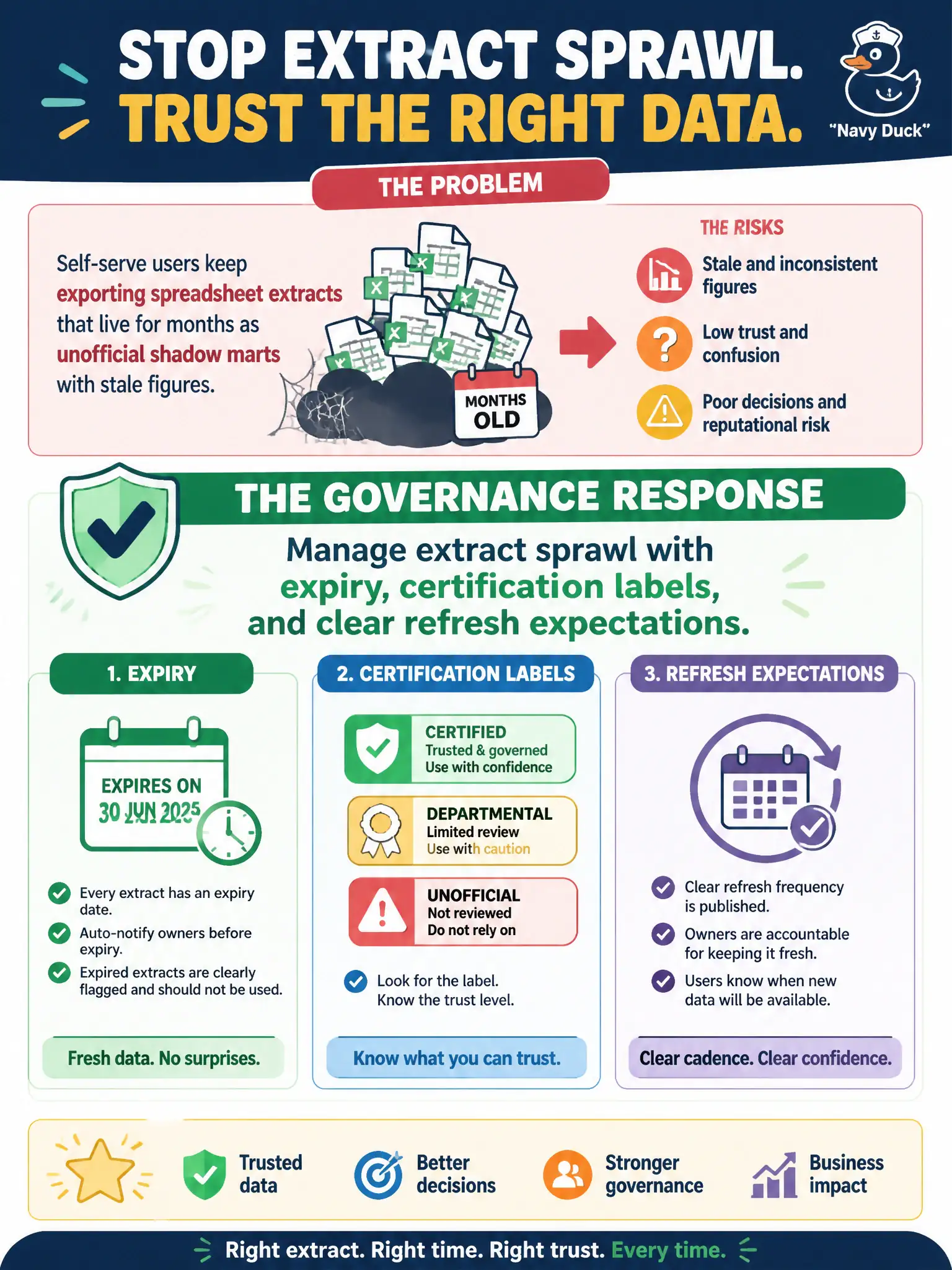
Self-serve users keep exporting spreadsheet extracts that live for months as unofficial shadow marts with stale figures. What governance response fits?
Select an answer to reveal the explanation.
Short Explanation
Those forever-living spreadsheet extracts are like leftovers that never get dated—eventually somebody serves them at a meeting and wonders why the numbers smell off. Put expiry, certification, and refresh rules around extracts. Self-serve stays useful when shadow marts don't go rancid.
Full Explanation
Self-serve users who export spreadsheet extracts that live for months as unofficial shadow marts create stale, conflicting figures across the city. Governance should manage extract sprawl with expiry, certification labels, and clear refresh expectations rather than pretending every download remains authoritative. Banning self-serve access entirely so only one central team can ever see data often recreates bottlenecks and underground extracts. Encouraging larger extracts so fewer files are created worsens retention of stale bulk data. Treating any saved extract as permanently authoritative once a director opens it freezes outdated numbers into decision lore. Exam caveat: some extracts are legitimate work files—govern duration and labeling; certified live semantic sources should be preferred for official packets. Operational check: inventory long-lived extracts, apply expiry and certification labels, publish refresh SLAs, redirect official reporting to certified sources, and educate directors that opened files are not automatically systems of record. In municipal information-management practice, record the rationale so future staff know which failure modes the rejected options would create for city services, and re-validate after the next cycle that the same control still holds.