
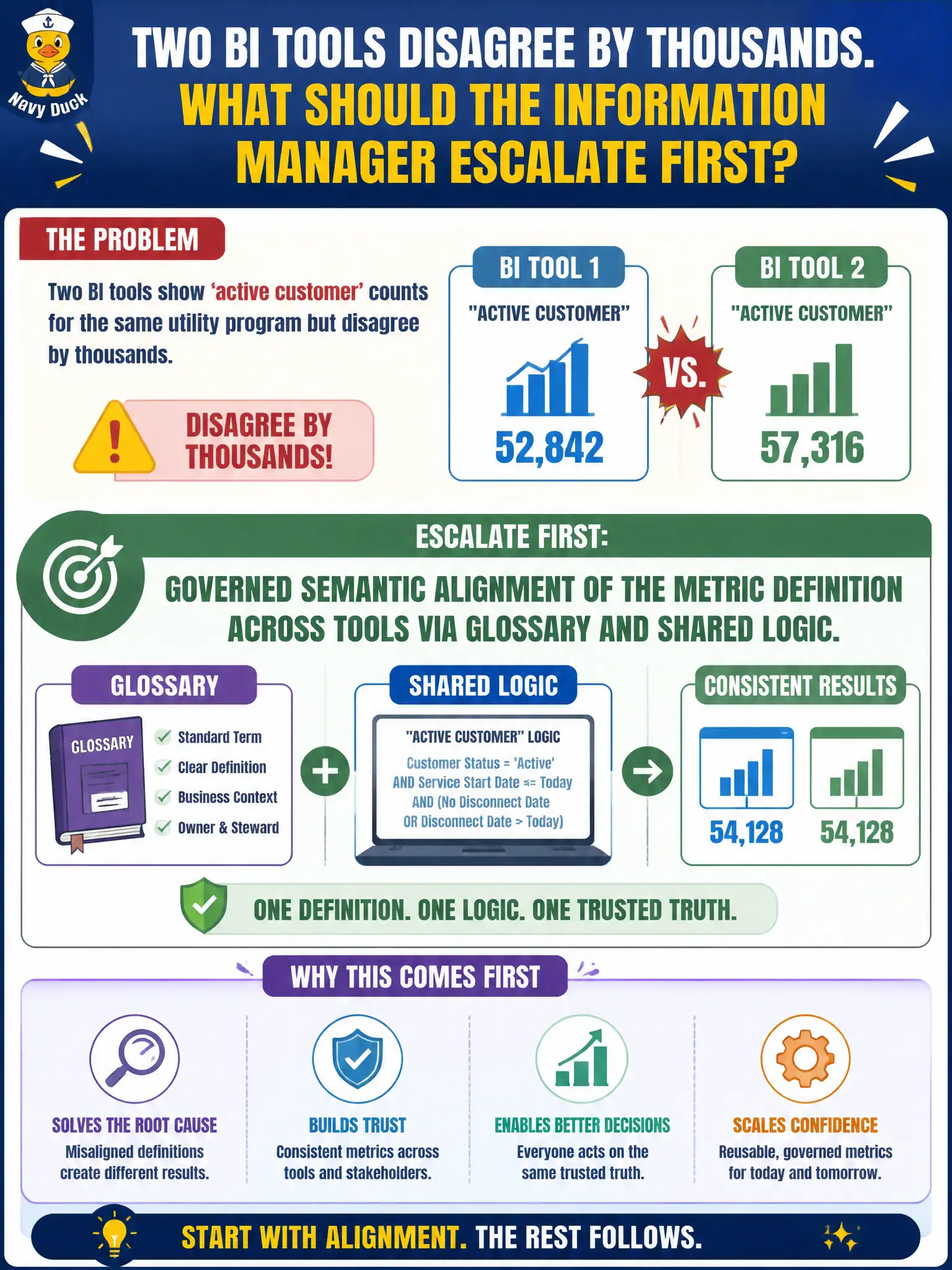
Two BI tools both show 'active customer' counts for the same utility program but disagree by thousands. What should the information manager escalate first?
Select an answer to reveal the explanation.
Short Explanation
When two dashboards quarrel about 'active customer,' the fight is usually about definitions, not who's better at clicking refresh. Get the glossary and calculation logic aligned so both tools speak the same language. Otherwise every meeting becomes a tool beauty contest instead of a decision.
Full Explanation
When two BI tools disagree by thousands on “active customer” counts for the same utility program, the information manager should escalate governed semantic alignment first: glossary definition, shared calculation logic, certified sources, and refresh expectations across tools. The conflict is usually definitional—activity windows, account statuses, test accounts, exclusions—not a reason to pick the flattering number for grants. Choosing whichever tool shows the higher count for grant reporting this quarter institutionalizes metric shopping and audit risk. Hiding one dashboard so leaders never notice the conflict again suppresses the symptom without fixing semantics or lineage. Averaging the two counts and treating the midpoint as official invents a third undefined metric with no steward. Exam caveat: after definitional alignment, one tool may still be wrong due to refresh lag or filter bugs—but start with semantics and lineage, then repair pipelines. Operational check: convene stewards, publish one active-customer definition with logic and exclusions, point both tools at the semantic layer or certified extract, reconcile historical deltas, and ban grant reporting from non-certified local calculations.