
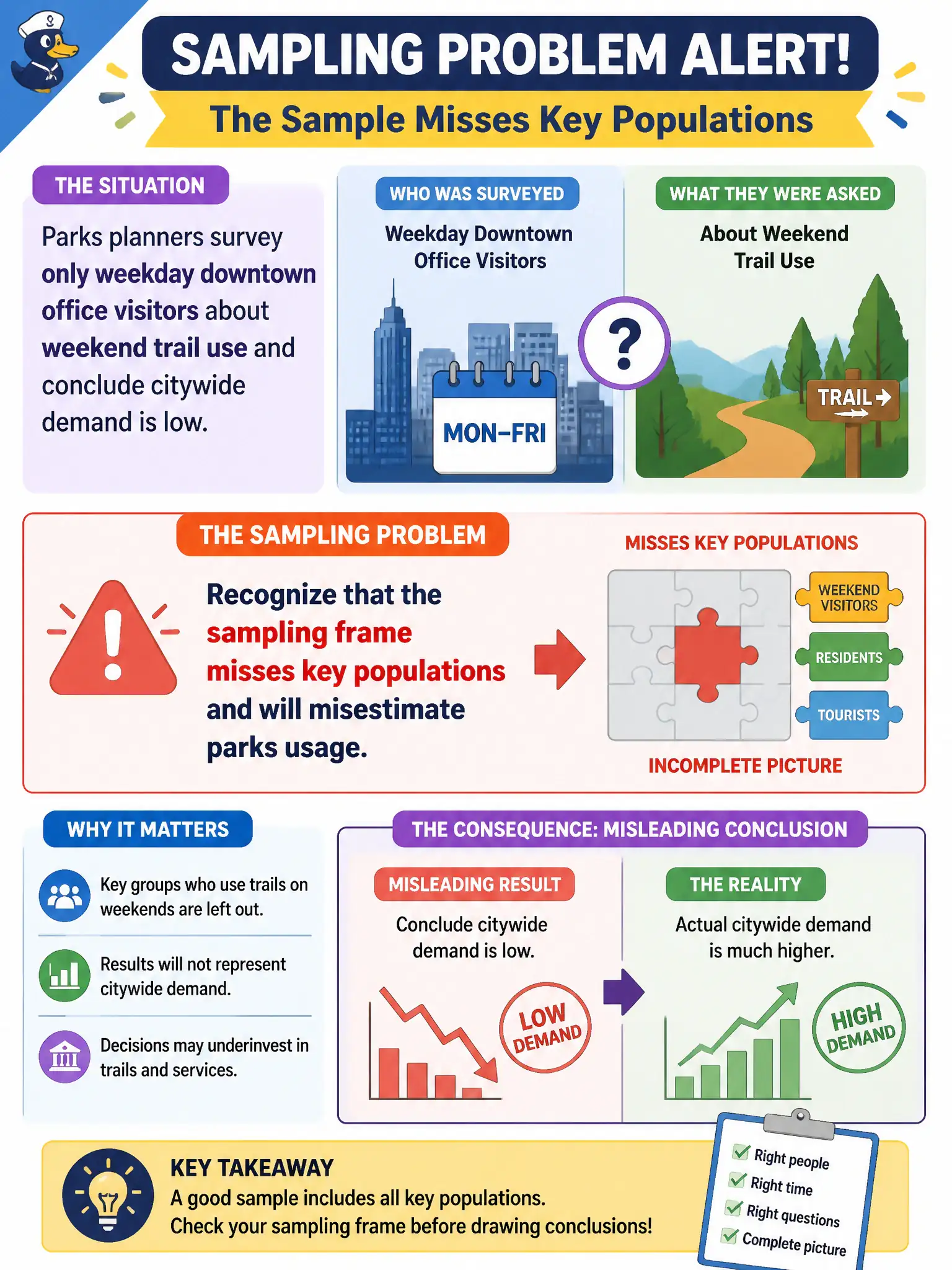
Parks planners survey only weekday downtown office visitors about weekend trail use and conclude citywide demand is low. What sampling problem should the information manager flag?
Select an answer to reveal the explanation.
Short Explanation
Asking weekday office folks about weekend trails is like polling only lunch-rush diners about midnight menu demand—you'll miss the people who actually show up later. The sampling frame left out evenings, weekends, and other neighborhoods. Fix who you ask before you trust the 'citywide' number.
Full Explanation
Surveying only weekday downtown office visitors about weekend trail use, then concluding citywide demand is low, is a sampling-frame failure: the frame misses key populations such as weekend users, residents outside downtown, families, night-shift workers, and visitors who never pass those offices. Estimates will systematically misrepresent parks usage and can underfund trails that other groups use. Claiming weekday office samples always overestimate weekend trail use so scores should be raised automatically invents a correction without evidence and may be directionally wrong. Declaring surveys invalid unless every resident is interviewed rejects legitimate probability or carefully designed convenience sampling and makes ongoing measurement impossible. Restricting trail questions to seasonal employees alone narrows the frame further rather than fixing coverage of weekend trail users. Exam caveat: all surveys have coverage limits that should be documented, but knowingly using a frame that excludes the behavior under study is a critical design flaw for civic planning claims. Operational check: redefine the target population for weekend trail demand, redesign sampling to include weekend and non-downtown respondents, report coverage limitations on the brief, and withhold citywide demand claims until the frame matches the question.