
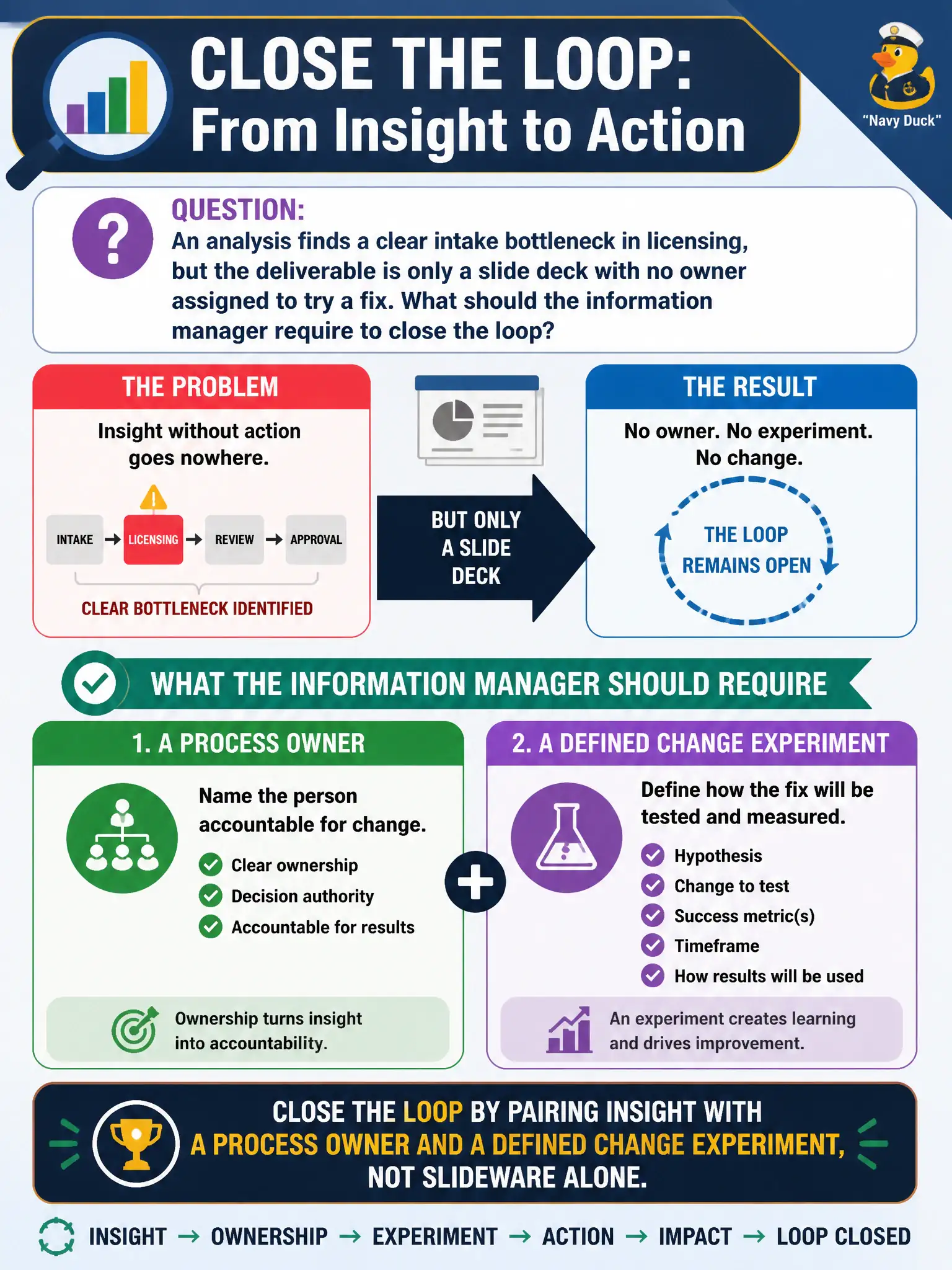
An analysis finds a clear intake bottleneck in licensing, but the deliverable is only a slide deck with no owner assigned to try a fix. What should the information manager require to close the loop?
Select an answer to reveal the explanation.
Short Explanation
A beautiful slide about a bottleneck that nobody owns is like a map to a pothole that never gets a work order. Assign a process owner and a small change experiment so the insight can become a testable fix. Analysis earns its keep when someone tries something and measures it.
Full Explanation
When analysis finds a clear intake bottleneck in licensing, closing the loop requires pairing the insight with a process owner and a defined change experiment—not slideware alone. Analytic value in civic settings is realized when someone owns a trial fix, success criteria, timeline, and a follow-up measure tied to the original finding. Archiving the deck until the next annual report cycle abandons a timely operational finding while residents continue waiting. Adding more chart colors so leadership remembers the bottleneck visually confuses memorability with management action. Duplicating slides into three other tools spreads awareness without assigning ownership or designing an experiment. Exam caveat: not every finding warrants a large capital project; even a small time-boxed experiment with an owner and stop/go criteria beats orphaned slides that never change the queue. Operational check: name a licensing process owner, define one change to trial, set success metrics and a review date, track results beside the original bottleneck measure, and update the analytic product to show experiment status until closure. In municipal practice, keep the rationale and rejected alternatives visible to on-call analysts and stewards so the next briefing cycle does not reintroduce the same failure mode for city services.