
A 311 analytics pilot proposes auto-tagging free-text service notes to prioritize neighborhoods, but the corpus mixes languages and informal slang. What caution should guide next steps?
Select an answer to reveal the explanation.
Short Explanation
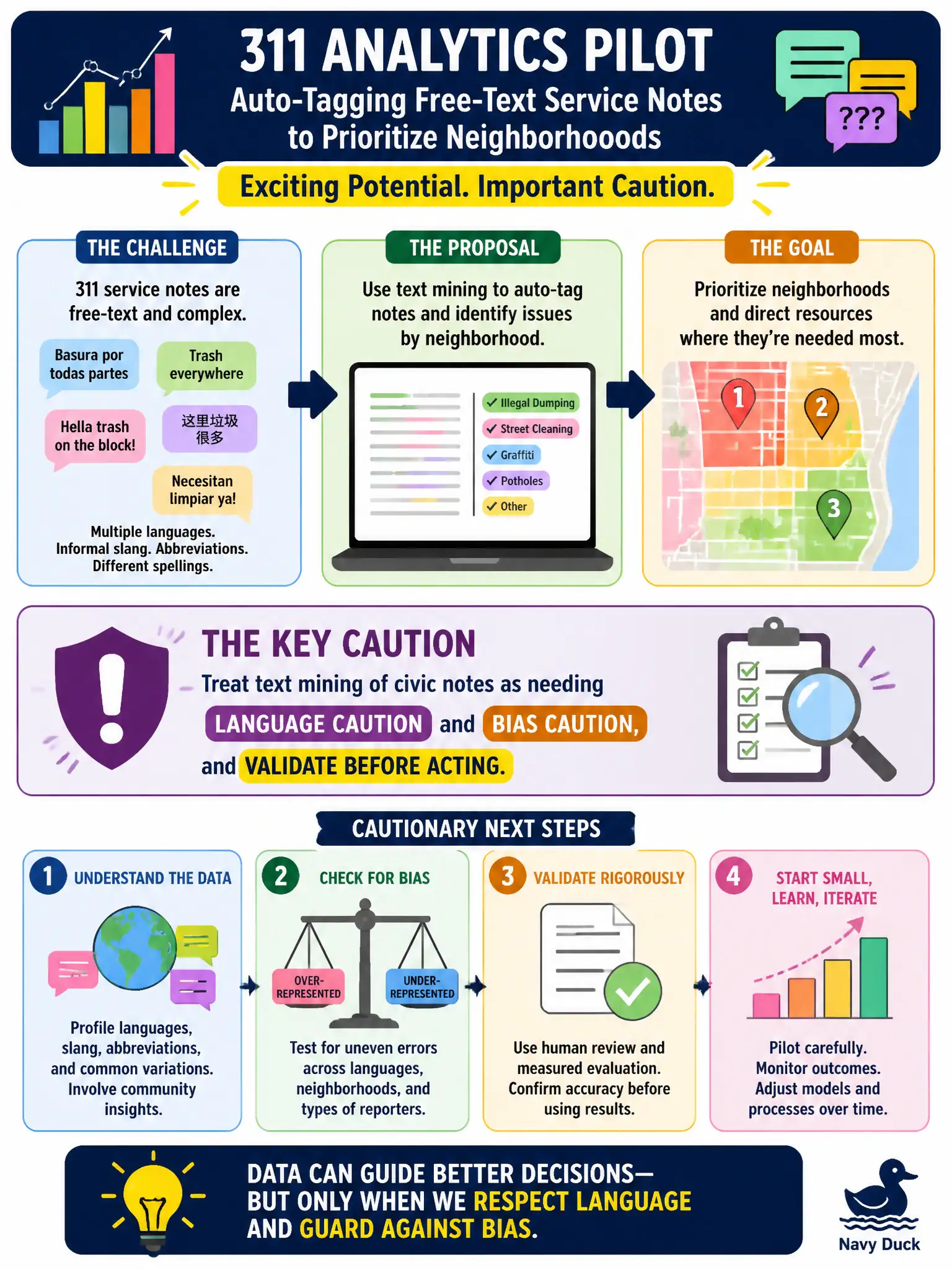
Free-text 311 notes are messy human talk—slang, typos, and more than one language—not a tidy spreadsheet column. Mining them without checking language coverage and bias can quietly punish communities that write differently. Validate the tags before anyone uses them to steer crews or money.
Full Explanation
Text mining of civic 311 notes to auto-tag and prioritize neighborhoods needs language and bias caution, with validation before any funding or routing action. Corpora that mix languages, dialects, and informal slang will mis-score communities if English-only keyword lists or unreviewed models are applied as if neutral and complete. Assuming English keywords fairly score every neighborhood without review encodes linguistic and cultural bias into prioritization. Publishing ranked neighborhood scores immediately to create urgency for funding weaponizes unvalidated NLP against places whose residents write differently. Deleting free-text fields so unstructured content never enters analysis again abandons a rich operational signal instead of governing multilingual use. Exam caveat: multilingual and slang-rich notes can still be valuable after sampling, bilingual review, error analysis, bias checks, and human-in-the-loop validation; the exam rejects naive automated ranking for civic prioritization. Operational check: sample tagged notes across languages and neighborhoods, measure precision/recall and disparate error, involve community or operations reviewers, withhold public rankings until validation thresholds pass, and document residual limitations beside any internal pilot scores.