
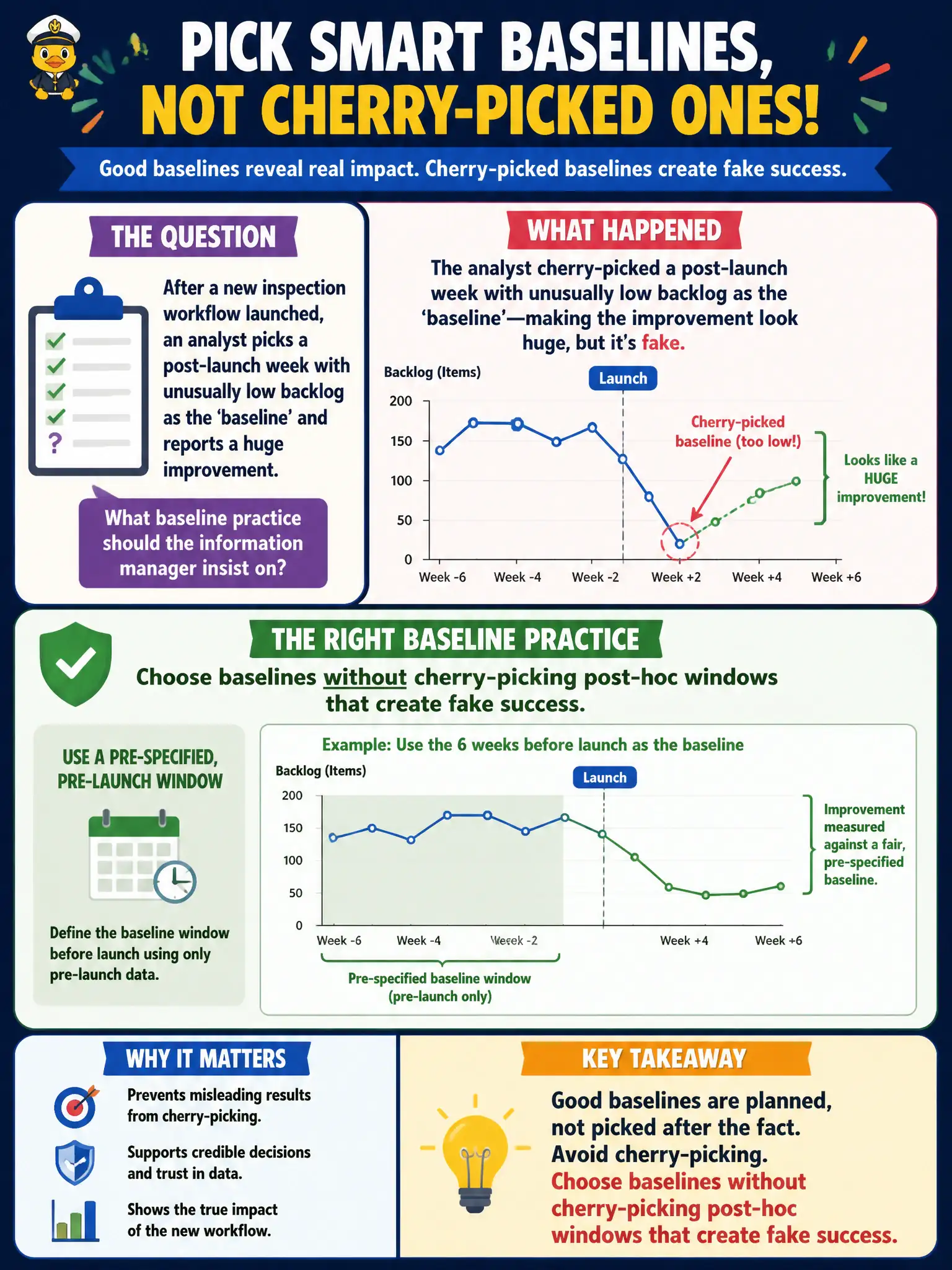
After a new inspection workflow launched, an analyst picks a post-launch week with unusually low backlog as the 'baseline' and reports a huge improvement. What baseline practice should the information manager insist on?
Select an answer to reveal the explanation.
Short Explanation
Picking the easiest week after go-live as your baseline is like measuring a diet starting on the day you already lost five pounds—congratulations, you invented success. Honest baselines come from pre-intervention periods or pre-specified windows, not cherry-picked after seeing the results. Auditors notice; so will staff who lived through the real backlog.
Full Explanation
Baselines for post-intervention evaluation must be chosen without cherry-picking post-hoc windows that create fake success. Selecting an unusually low-backlog week after a new inspection workflow launches as the permanent baseline manufactures improvement and misleads leaders about sustained performance and staffing needs. Always using the single best week after go-live as the comparison point institutionalizes that bias in every future chart. Ignoring pre-intervention history because “new systems make older data irrelevant by default” discards the contrast needed to evaluate whether the change worked. Setting the baseline equal to the target so every chart shows zero gap hides performance gaps rather than measuring them. Exam caveat: legitimate baseline choices include pre-period averages, matched seasonal weeks, or agreed control periods—and the rule should be documented before inspecting which post-period week looks best. Operational check: pre-register the baseline window and metric definition, compare the post-launch series to that baseline and to a longer pre-trend, display uncertainty, and refuse briefings that swap in best-week baselines after seeing results. In municipal practice, keep the rationale and rejected alternatives visible to on-call analysts and stewards so the next briefing cycle does not reintroduce the same failure mode for city services.