
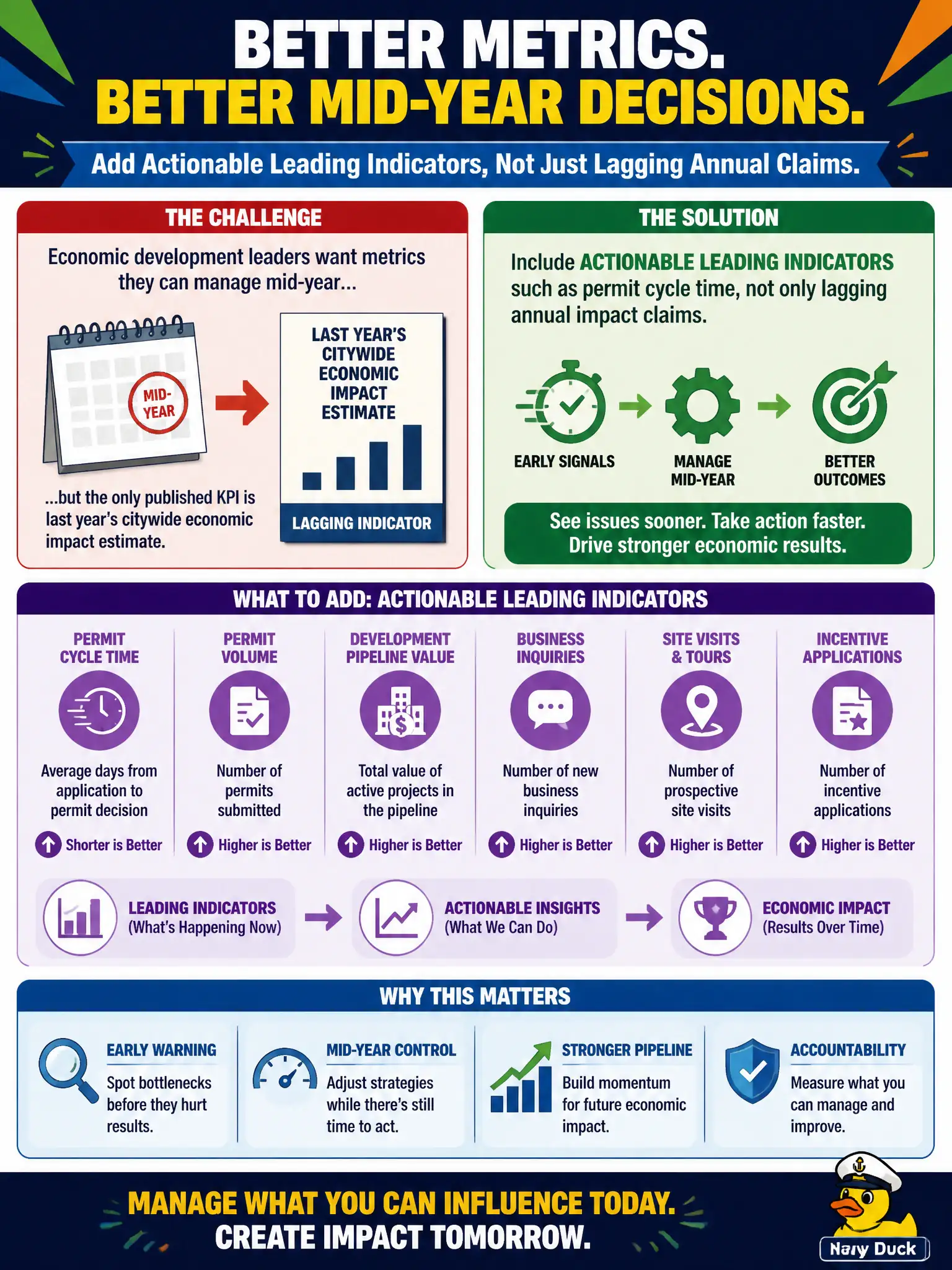
Economic development leaders want metrics they can manage mid-year, but the only published KPI is last year's citywide economic impact estimate. What should the information manager add?
Select an answer to reveal the explanation.
Short Explanation
Annual economic impact is the final scoreboard—useful, but you can't change last season's game mid-quarter. Permit cycle time is more like watching the play clock while you still have time to act. Pair leading indicators with lagging outcomes so managers can steer, not just reminisce.
Full Explanation
Economic development leaders who need metrics they can manage mid-year should receive actionable leading indicators such as permit cycle time, application volume, milestone clearance, and backlog aging—not only a lagging annual citywide economic impact estimate. Leading operational measures create feedback loops while staff can still intervene on process and capacity. Replacing all operational metrics with a single annual impact score collapses manageability into a once-a-year claim that arrives too late for course correction. Waiting until year-end impact reports before discussing permit performance abandons mid-year control of a known driver. Dropping permit data because impact claims “already summarize everything” confuses a high-level outcome narrative with the levers leaders can actually pull. Exam caveat: lagging impact estimates may still belong in annual reporting and marketing; they simply cannot be the only KPI for in-year management of development operations. Operational check: add stewarded leading indicators to the mid-year pack with definitions and owners, keep annual impact as a separate lagging view, set thresholds and review cadence, and verify monthly whether leading indicators move before the annual score arrives.