
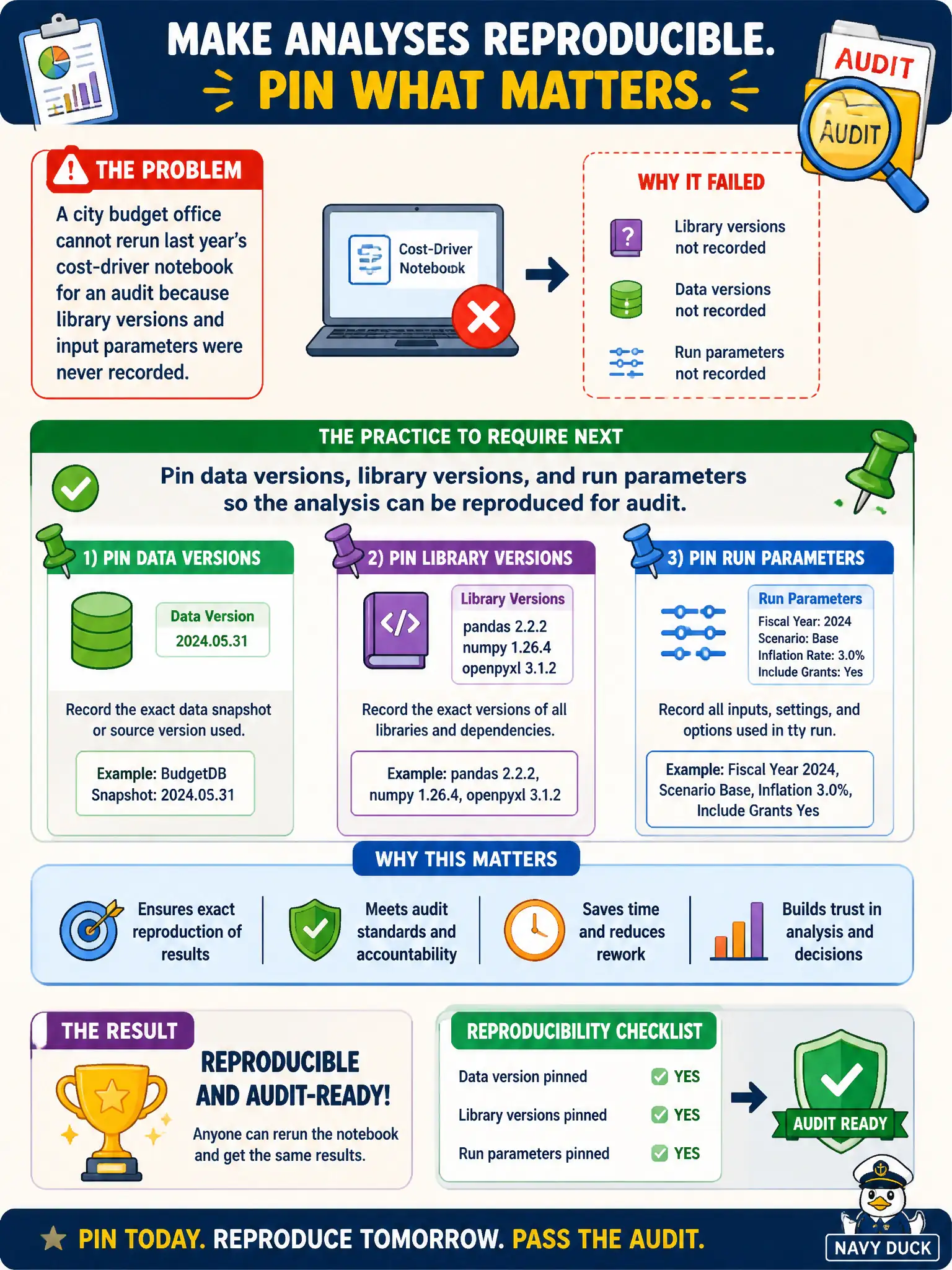
A city budget office cannot rerun last year's cost-driver notebook for an audit because library versions and input parameters were never recorded. What practice should the information manager require next?
Select an answer to reveal the explanation.
Short Explanation
Think of an analysis notebook like a recipe—if you never wrote the oven temperature or which flour bag you used, nobody can bake the same cake for the auditors. Pinning data versions, libraries, and parameters is how you make the work reproducible. Without that, last year's 'insight' is just a one-time performance.
Full Explanation
When a city budget office cannot rerun last year’s cost-driver notebook for an audit because library versions and input parameters were never recorded, the information manager should require reproducibility controls: pin data versions, library versions, and run parameters so analyses can be regenerated under scrutiny. Auditability is part of civic analytic quality because contested numbers affect budgets, fees, and public trust. Deleting the notebook and rebuilding the chart from memory during an exit conference destroys evidence and invites inconsistency under questioning. Publishing only the final PDF and treating analytic steps as disposable once leadership saw the slide prevents verification when auditors or council challenge the drivers. Replacing the notebook with a handwritten summary so auditors cannot request a rerun actively obstructs oversight. Exam caveat: reproducibility can be lightweight—environment pins, parameter files, hashed input snapshots—without demanding perfect research-lab packaging for every exploratory chart; official decision analyses need the bar. Operational check: for official budget analyses, store pinned environment and parameter manifests beside the notebook, snapshot input extracts with version IDs, test a clean rerun on a clean machine or container, and include the reproducibility package in the audit folder.