
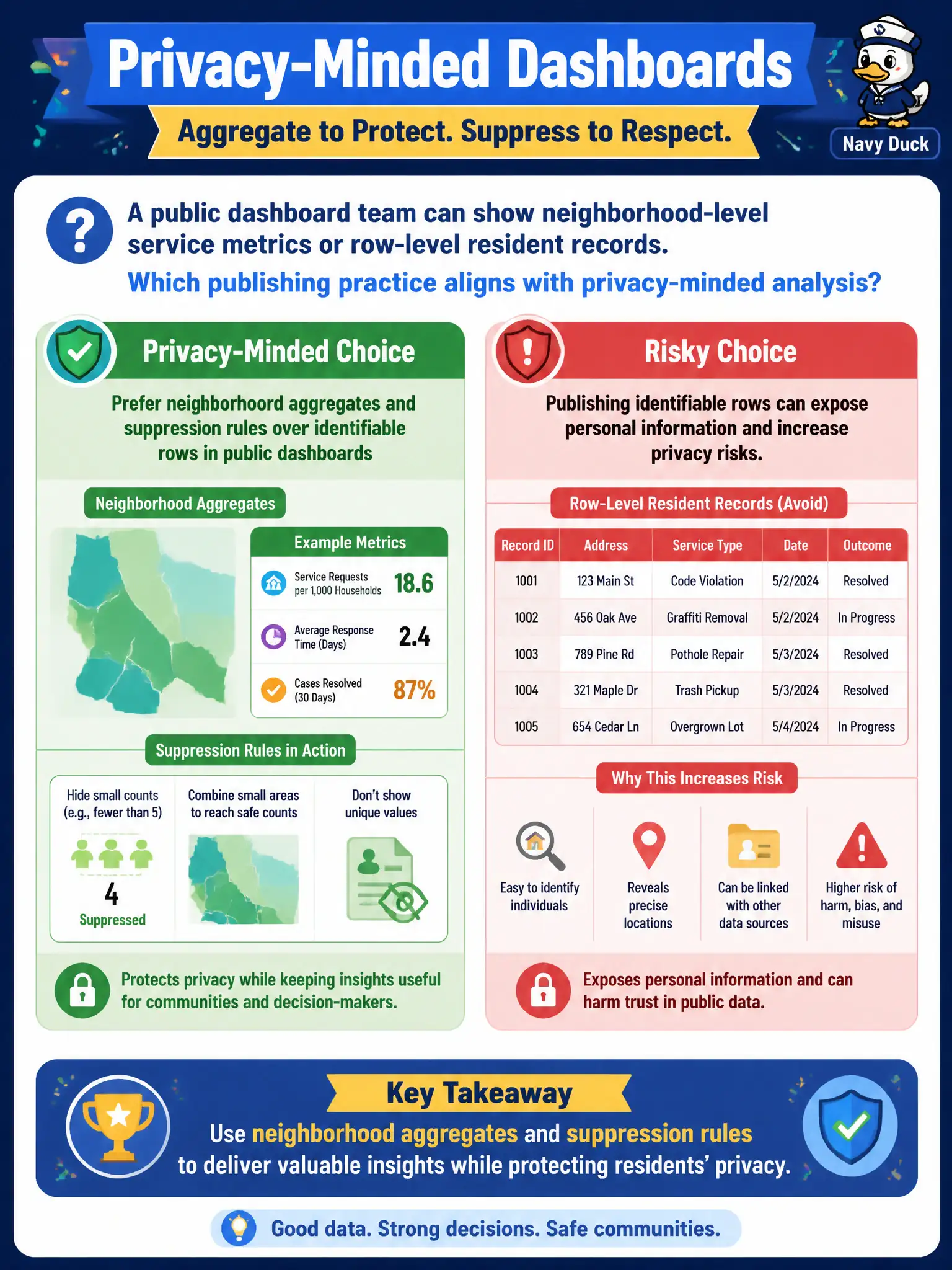
A public dashboard team can show neighborhood-level service metrics or row-level resident records. Which publishing practice aligns with privacy-minded analysis?
Select an answer to reveal the explanation.
Short Explanation
Public dashboards are a storefront, not a filing cabinet. Show neighborhood aggregates with sensible suppression—not identifiable rows that out residents. Privacy-minded publishing keeps insight without the creepy zoom.
Full Explanation
Privacy-minded public dashboards should prefer neighborhood aggregates and suppression rules over identifiable resident rows. Civic transparency goals are usually met by showing where service levels differ without exposing individuals who contacted the city, received benefits, or were inspected. Publishing identifiable resident rows whenever analysts find them interesting violates data minimization and can harm vulnerable residents through stigma or targeting. Releasing microdata without suppression because aggregation “loses nuance” prioritizes analyst curiosity over privacy and policy obligations that typically govern open civic data. Adding names to map points to increase engagement is an especially clear misuse of public-dashboard practice. Exam caveat: some legitimate research or oversight uses of microdata exist under controlled access agreements, ethics review, and need-to-know rules; the exam focus is public dashboard publishing, where aggregates and small-cell suppression are the default. Operational check: define public grain as neighborhood or higher, apply small-cell suppression thresholds, ban names and precise addresses from the public layer, log exceptions, and review any microdata request through privacy/governance before release.