
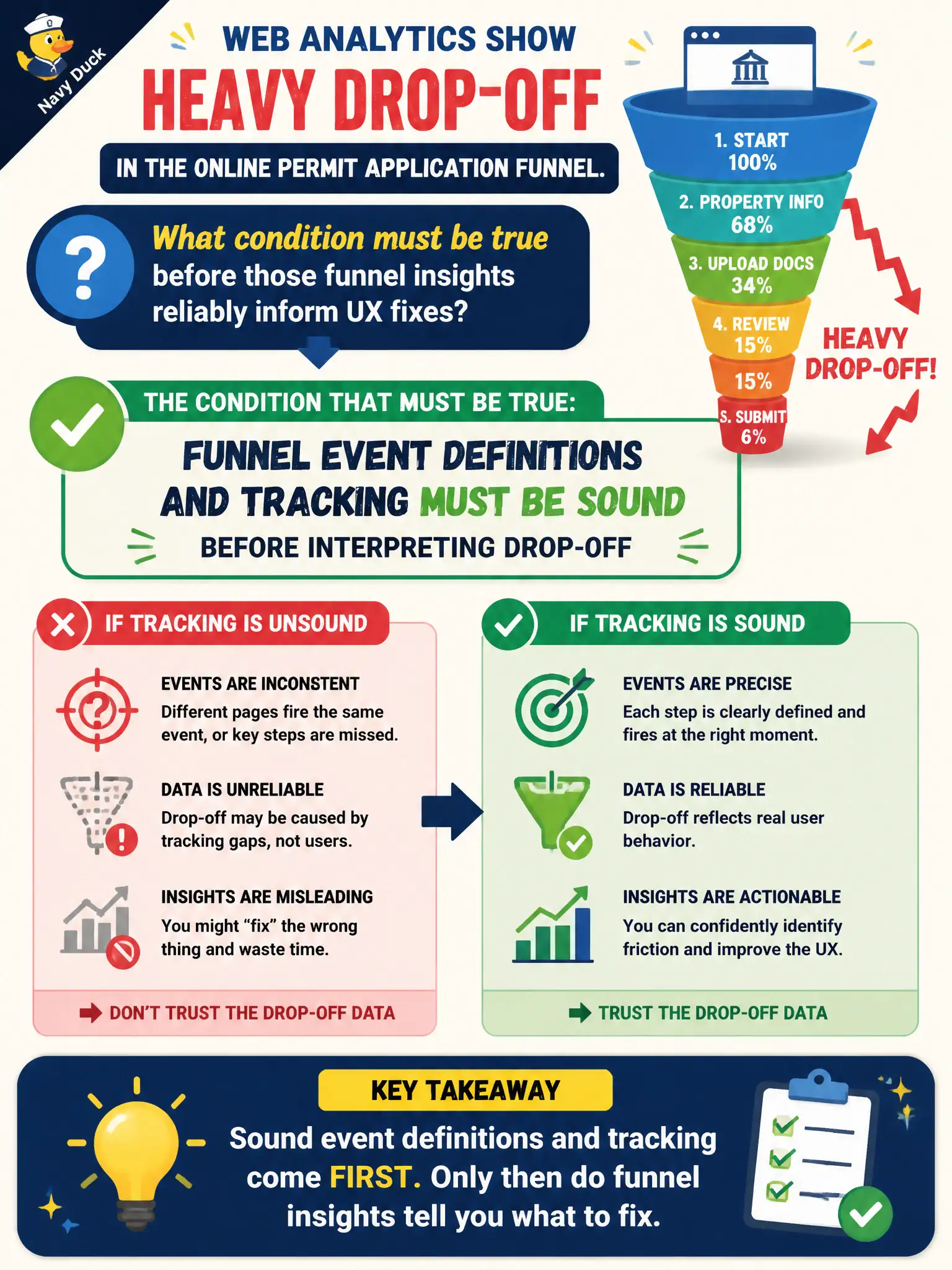
Web analytics show heavy drop-off in the online permit application funnel. What condition must be true before those funnel insights reliably inform UX fixes?
Select an answer to reveal the explanation.
Short Explanation
A funnel with mushy event names is a leaky measuring cup—you cannot tell where people really bail. Get tracking definitions straight, then use drop-off to guide UX fixes. Pretty charts do not fix bad instrumentation.
Full Explanation
Web analytics showing heavy drop-off in an online permit application funnel only reliably inform UX fixes when funnel event definitions and tracking are sound across releases, devices, and channels. Events must map to real application steps with documented instrumentation, stable naming, and known gaps. Inconsistent event names “as long as the chart is colorful” produce visualization theater rather than diagnosis of where residents abandon the journey. Changing tracking definitions mid-week without documentation breaks period comparisons and can fabricate improvement or decline after a tagging change. Ignoring definition quality to optimize only for page bounce rate answers a different question and can miss step-specific abandonment inside the permit workflow. Exam caveat: perfect tracking is rare—document known gaps—but major UX or staffing investment should wait until the funnel’s step definitions are trustworthy enough that drop-off maps to real user behavior rather than instrumentation noise. Operational check: inventory funnel events with a data steward, freeze a certified tracking spec for the analysis window, reconcile counts to application starts in the system of record, then prioritize UX fixes on the largest validated drop-off steps and re-measure after release.