
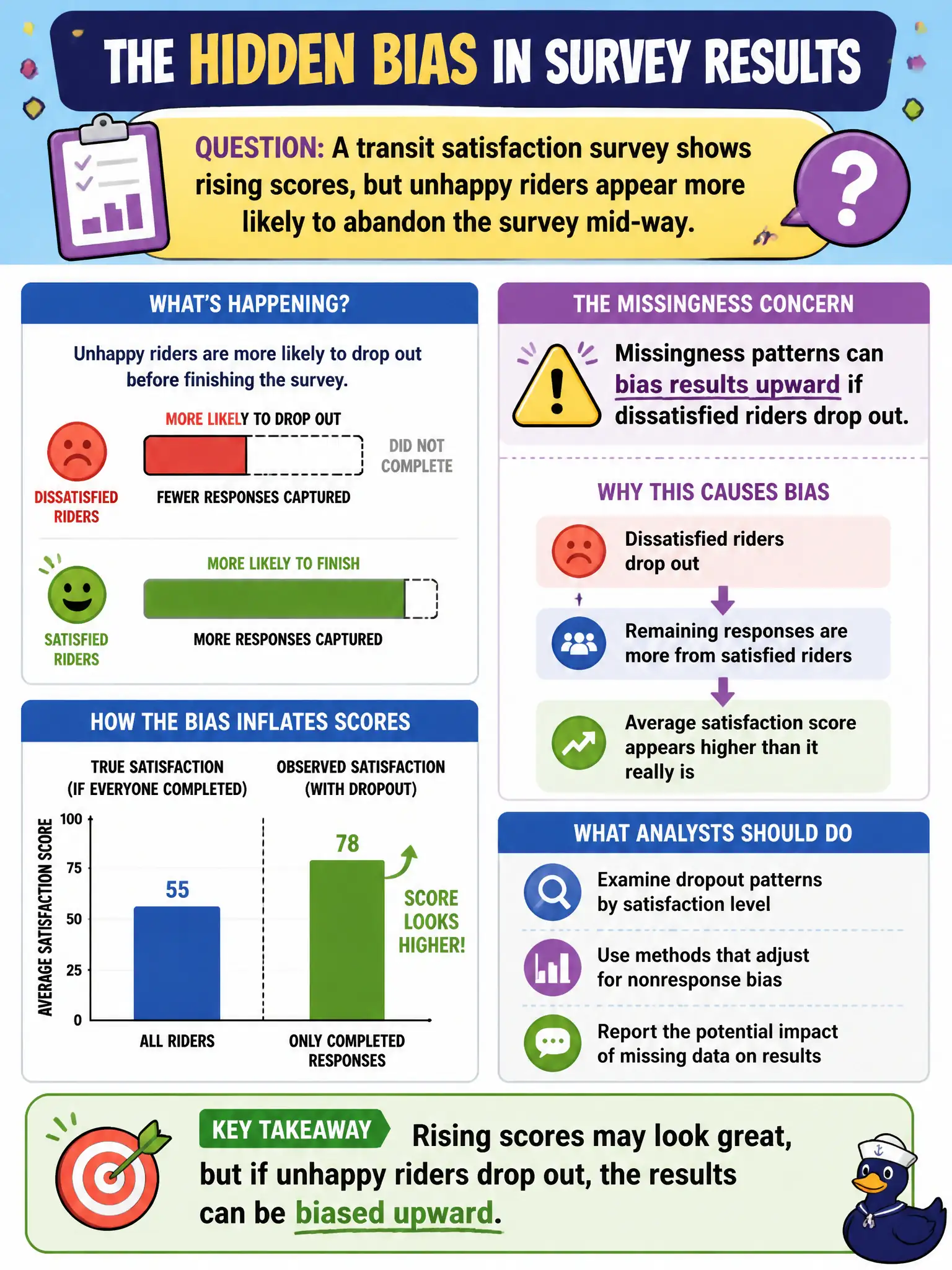
A transit satisfaction survey shows rising scores, but unhappy riders appear more likely to abandon the survey mid-way. What missingness concern should the analyst raise?
Select an answer to reveal the explanation.
Short Explanation
If unhappy riders bail mid-survey, the remaining smiles are a skewed sample—like reviewing a restaurant using only people who finished dessert. Ask who is missing before celebrating the average. Missingness can be the bias engine.
Full Explanation
A transit satisfaction survey with rising scores where unhappy riders appear more likely to abandon mid-way raises a missingness concern: missingness patterns can bias results upward if dissatisfied riders drop out. Non-random missingness related to the outcome distorts trend interpretation and can mislead transit investment decisions. Assuming missing answers always improve precision and can be ignored fails because informative dropout reduces effective representation of unhappy riders. Claiming only demographic item nonresponse matters while outcome skips are harmless fails when the outcome itself drives abandonment. Imputing every blank with the maximum satisfaction score by default fails by systematically inflating results. Exam caveat: not all missingness is disastrous—missing-at-random assumptions sometimes hold after checks—but outcome-related dropout is a classic bias risk and must be examined before celebrating rising scores. Operational check: compare completion rates and score distributions for dropouts versus completers, report response and completion rates with the trend, consider follow-up of abandoners or weighting adjustments, and caveat public briefings that rising scores may partly reflect who finishes the survey.