
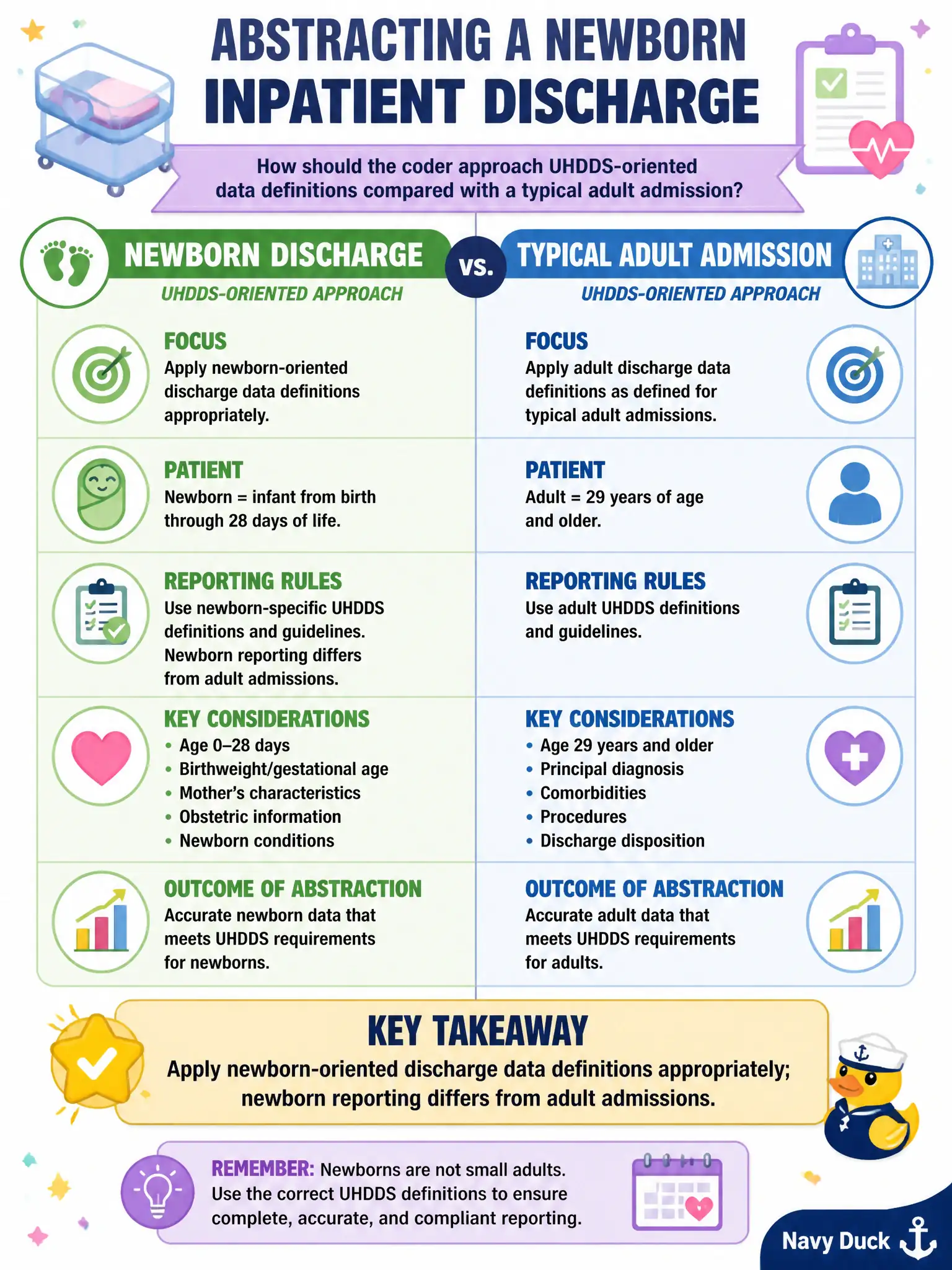
When abstracting a newborn inpatient discharge, how should the coder approach UHDDS-oriented data definitions compared with a typical adult admission?
Select an answer to reveal the explanation.
Short Explanation
Newborns are not tiny adults in the data set. UHDDS-oriented newborn reporting has its own definitional twists—birth and perinatal context matter. Use the newborn-appropriate framework, not a wholesale adult copy-paste.
Full Explanation
When abstracting a newborn inpatient discharge at a civic hospital, coders must apply newborn-oriented discharge data definitions appropriately because newborn reporting differs from adult admissions. Perinatal and birth context shape principal and other diagnosis logic in ways adult medical admissions do not. Using identical adult principal-diagnosis logic without newborn-specific definitional rules mis-sequences birth-related conditions. Coding newborns only with outpatient first-listed rules even for inpatient nursery stays ignores inpatient newborn abstracting. Omitting diagnoses because UHDDS supposedly excludes perinatal data is false and empties newborn datasets. Exam caveat: newborn and perinatal reporting frameworks are distinct—do not wholesale adultify the nursery abstract. Operational check: use newborn/perinatal guideline and UHDDS-oriented definitions, capture birth weight and relevant perinatal conditions per policy, avoid adult-only sequencing shortcuts, and review newborn abstracts with perinatal coding resources. Keep UHDDS definitions visible at the desk so civic discharge abstracts remain comparable, auditable, and faithful to care actually delivered this stay. Re-read the authenticated record before finalizing whenever tools, payers, or dashboards push a result the documentation does not support.