
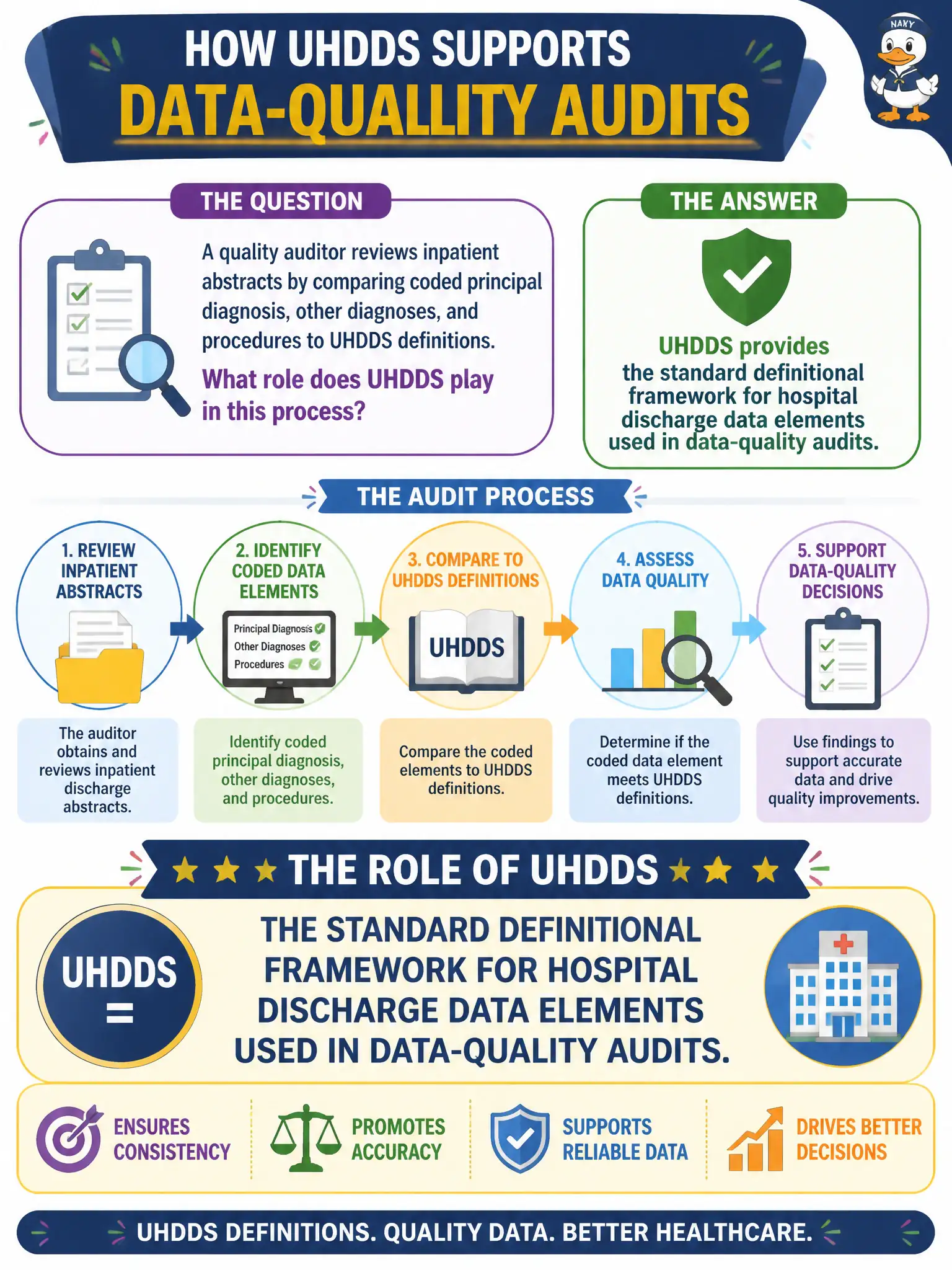
A quality auditor reviews inpatient abstracts by comparing coded principal diagnosis, other diagnoses, and procedures to UHDDS definitions. What role does UHDDS play in this process?
Select an answer to reveal the explanation.
Short Explanation
UHDDS is the rulebook for what hospital discharge data elements mean. Auditors lean on those definitions to check whether abstracts match the standard—not a fee schedule and not a marketing slide. Data quality starts with shared definitions.
Full Explanation
When a quality auditor reviews inpatient abstracts by comparing coded principal diagnosis, other diagnoses, and procedures to UHDDS definitions, UHDDS supplies the standard definitional framework for hospital discharge data elements used in data-quality audits. Civic transparency audits need that shared vocabulary. Treating UHDDS as only a billing fee schedule unrelated to audit criteria misidentifies its purpose. Claiming UHDDS applies solely to physician professional-fee coding misses facility discharge-data scope. Ignoring UHDDS in favor of marketing dashboards replaces standards with optics. Exam caveat: UHDDS definitions are audit criteria for discharge data integrity, not a chargemaster. Operational check: map audit worksheets to UHDDS element definitions, score principal/other/procedure accuracy against those definitions, remediate systemic drifts, and keep marketing metrics secondary to definitional compliance. Keep UHDDS definitions visible at the desk so civic discharge abstracts remain comparable, auditable, and faithful to care actually delivered this stay. Re-read the authenticated record before finalizing whenever tools, payers, or dashboards push a result the documentation does not support.