
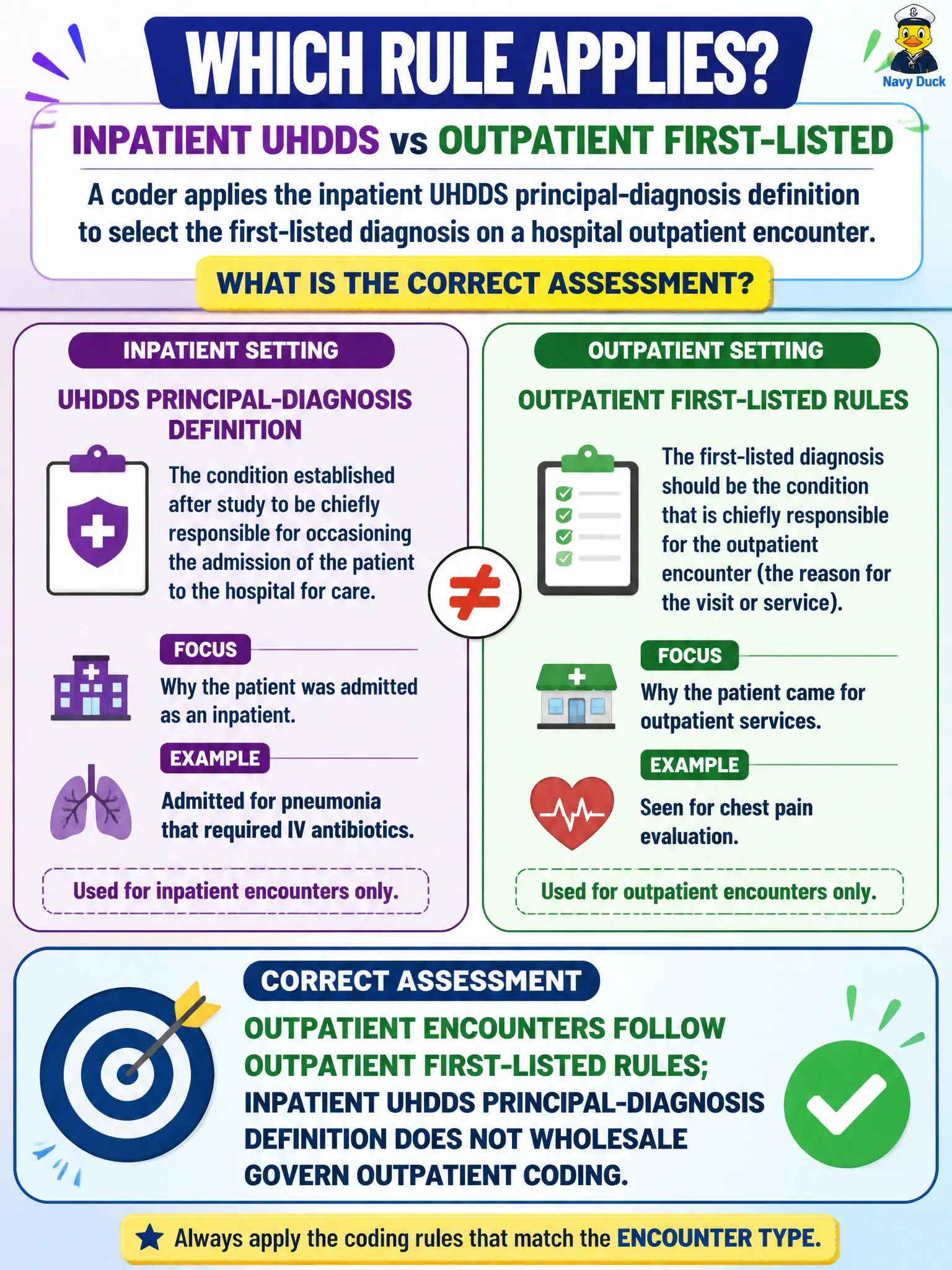
A coder applies the inpatient UHDDS principal-diagnosis definition to select the first-listed diagnosis on a hospital outpatient encounter. What is the correct assessment?
Select an answer to reveal the explanation.
Short Explanation
UHDDS principal diagnosis is an inpatient discharge concept. Outpatient and many ambulatory visits use first-listed rules instead—do not paste the inpatient definition onto every setting. Right rulebook for the right encounter.
Full Explanation
Applying the inpatient UHDDS principal-diagnosis definition to select the first-listed diagnosis on a hospital outpatient encounter at a civic facility is incorrect: outpatient encounters follow outpatient first-listed rules, and inpatient UHDDS principal-diagnosis definition does not wholesale govern outpatient coding. Setting-appropriate rulebooks protect public data quality across ED, clinics, and inpatient units. Claiming UHDDS inpatient rules always override outpatient first-listed guidelines conflates settings. Choosing whatever diagnosis maximizes APC payment as first-listed is reimbursement-driven, not guideline-driven. Sequencing ED diagnoses with newborn UHDDS rules imports an unrelated population framework. Exam caveat: know which definitional set applies to the encounter setting before sequencing. Operational check: identify setting (inpatient vs outpatient/ED), apply Official Guidelines for that setting's first-listed or principal rules, avoid pasting UHDDS inpatient principal logic onto ambulatory claims, and audit cross-setting sequencing errors. Keep UHDDS definitions visible at the desk so civic discharge abstracts remain comparable, auditable, and faithful to care actually delivered this stay.