
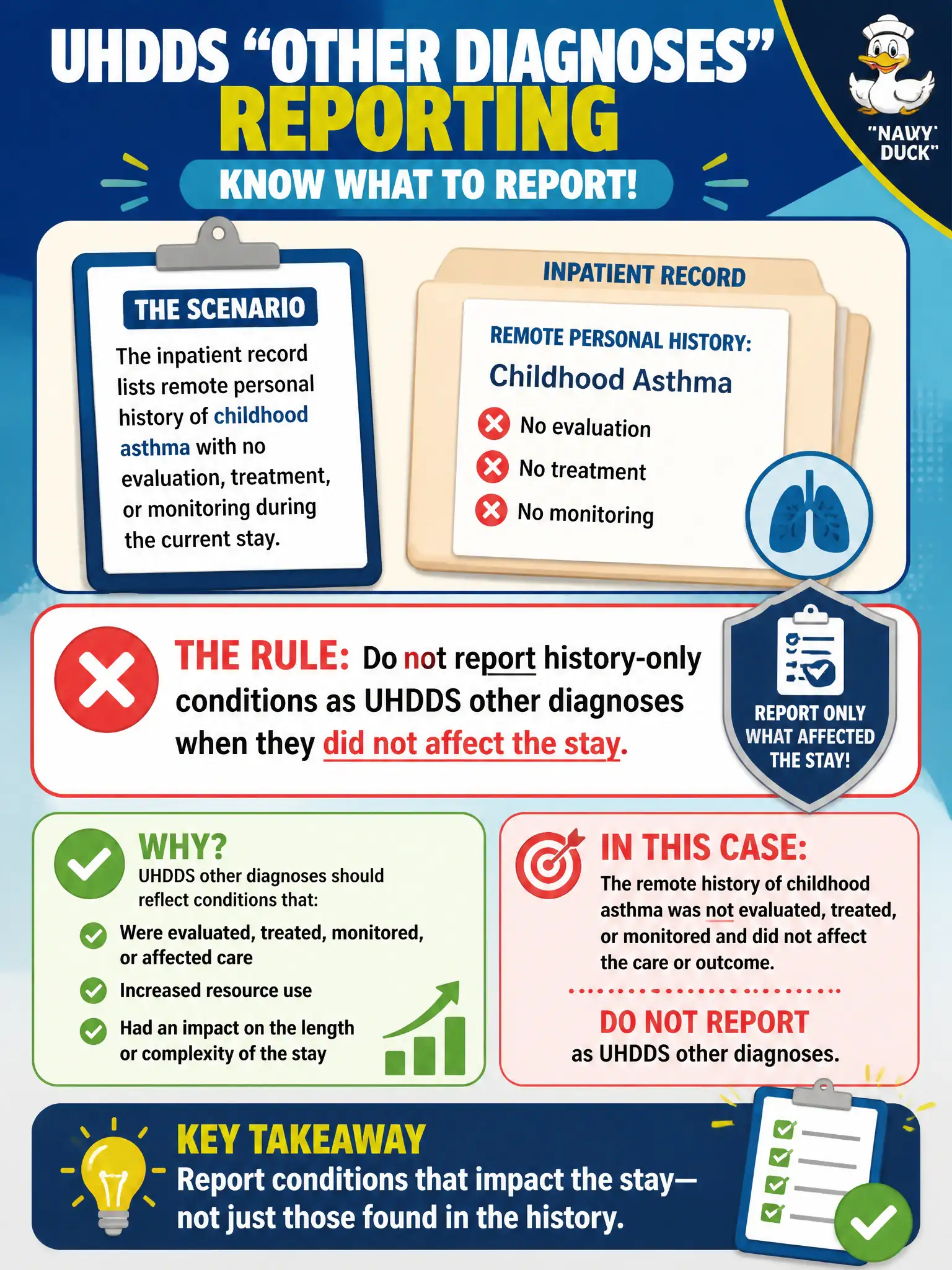
The inpatient record lists remote personal history of childhood asthma with no evaluation, treatment, or monitoring during the current stay. How should this be handled for UHDDS “other diagnoses” reporting?
Select an answer to reveal the explanation.
Short Explanation
A childhood asthma footnote that nobody touched this stay is history, not an active “other diagnosis.” UHDDS does not want souvenir codes. Leave it off unless it actually affected care.
Full Explanation
When an inpatient record at a municipal hospital lists remote personal history of childhood asthma with no evaluation, treatment, or monitoring during the current stay, that history should not be reported as a UHDDS other diagnosis because it did not affect the stay. Civic abstracts stay trustworthy when souvenir history codes stay off the bill. Always reporting personal history codes as secondary diagnoses for risk adjustment over-reports inactive conditions. Reporting the history as a CC because any pulmonary history supposedly affects DRG assignment ethically still fails UHDDS affect-on-care tests when nothing was done. Converting history to acute asthma to meet reporting criteria fabricates acuity. Exam caveat: history-only conditions without impact on this stay are not UHDDS other diagnoses. Operational check: scan for orders, meds, monitoring, or evaluation tied to the history; omit if none; query only if indicators suggest active disease misdocumented as history; and educate staff against history padding. Keep UHDDS definitions visible at the desk so civic discharge abstracts remain comparable, auditable, and faithful to care actually delivered this stay. Re-read the authenticated record before finalizing whenever tools, payers, or dashboards push a result the documentation does not support.