
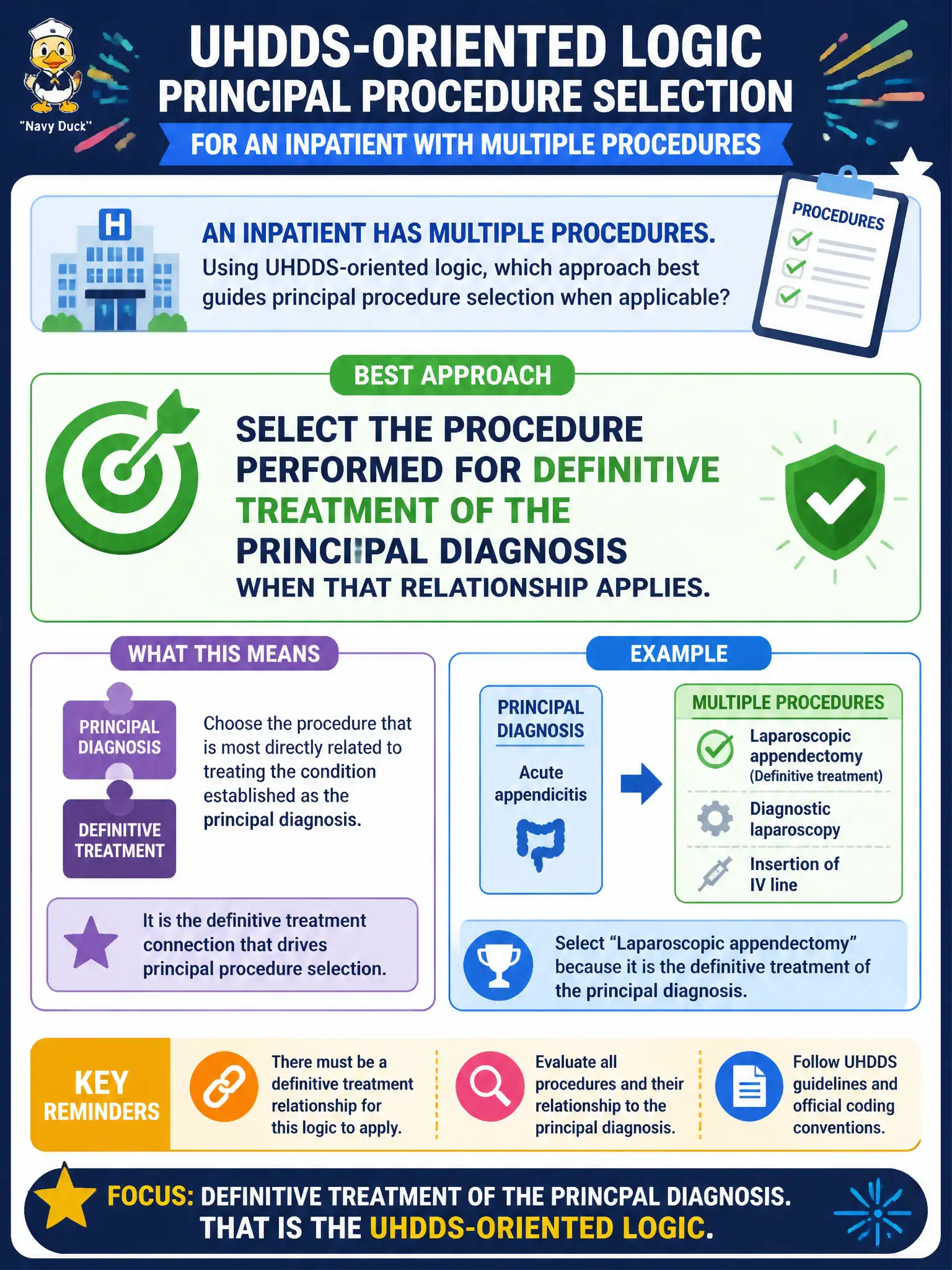
An inpatient has multiple procedures. Using UHDDS-oriented logic, which approach best guides principal procedure selection when applicable?
Select an answer to reveal the explanation.
Short Explanation
When UHDDS logic fits, the principal procedure is the one that definitively treats the principal diagnosis—not the longest clock time or the outpatient APC champ. Match treatment to the main reason for admission.
Full Explanation
Using UHDDS-oriented logic for an inpatient with multiple procedures at a county hospital, principal procedure selection—when applicable—favors the procedure performed for definitive treatment of the principal diagnosis. That linkage keeps civic surgical statistics coherent with why the patient was admitted. Always selecting the longest operating-room time regardless of diagnosis relationship substitutes duration for therapeutic purpose. Always selecting the highest APC weight, even for inpatient stays, imports outpatient payment logic into an inpatient UHDDS decision. Selecting the first procedure chronologically on the operative schedule ignores which procedure actually treated the principal condition. Exam caveat: clock time, schedule order, and outpatient APC weights are not UHDDS principal-procedure rules. Operational check: identify the principal diagnosis, determine which procedure provided definitive treatment for it, sequence that as principal when the relationship applies, and document rationale when multiple major procedures compete. Keep UHDDS definitions visible at the desk so civic discharge abstracts remain comparable, auditable, and faithful to care actually delivered this stay.