
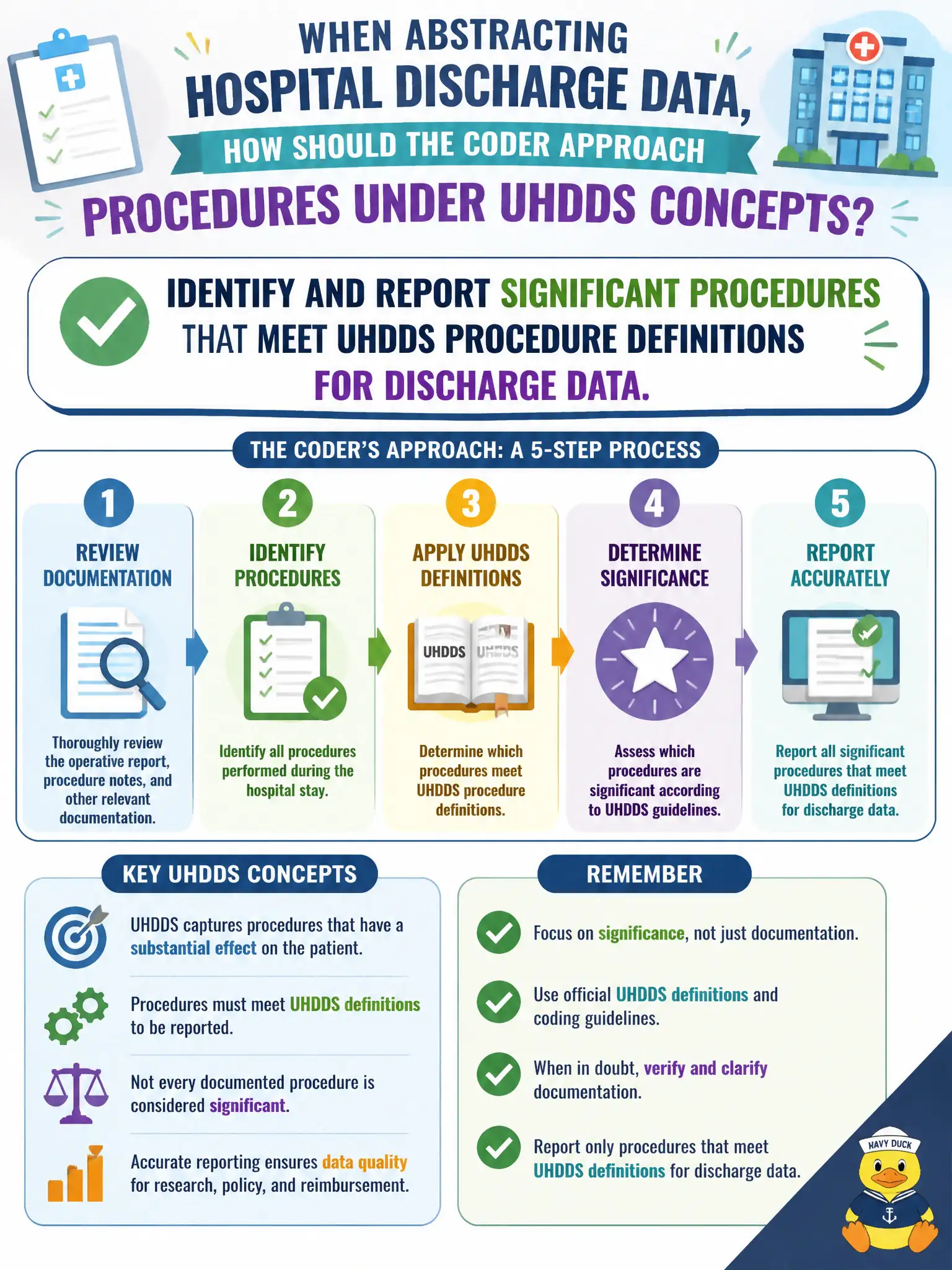
When abstracting hospital discharge data, how should the coder approach procedures under UHDDS concepts?
Select an answer to reveal the explanation.
Short Explanation
UHDDS cares about significant procedures—not every glove change or supply tick. Flag the procedures that meet the data-set definition and leave trivia off the abstract. Diagnoses and procedures both live in the discharge data world.
Full Explanation
When abstracting hospital discharge data for a civic facility under UHDDS concepts, coders should identify and report significant procedures that meet UHDDS procedure definitions rather than every bedside task or supply. Public procedure statistics depend on consistent significance thresholds. Reporting only bedside nursing tasks such as vital-sign checks as significant procedures misclassifies routine care as procedural data. Omitting all procedures because UHDDS supposedly covers diagnoses only ignores that UHDDS includes procedure data elements. Reporting every supply charge as a significant procedure floods the abstract with charge-master noise. Exam caveat: UHDDS procedure reporting is definition-driven significance, not a dump of all charges. Operational check: map operative and interventional documentation to UHDDS-significant procedures, exclude routine nursing tasks and supplies, validate principal procedure relationships when applicable, and reconcile abstracts to operative logs for missed significant procedures. Keep UHDDS definitions visible at the desk so civic discharge abstracts remain comparable, auditable, and faithful to care actually delivered this stay. Re-read the authenticated record before finalizing whenever tools, payers, or dashboards push a result the documentation does not support.