
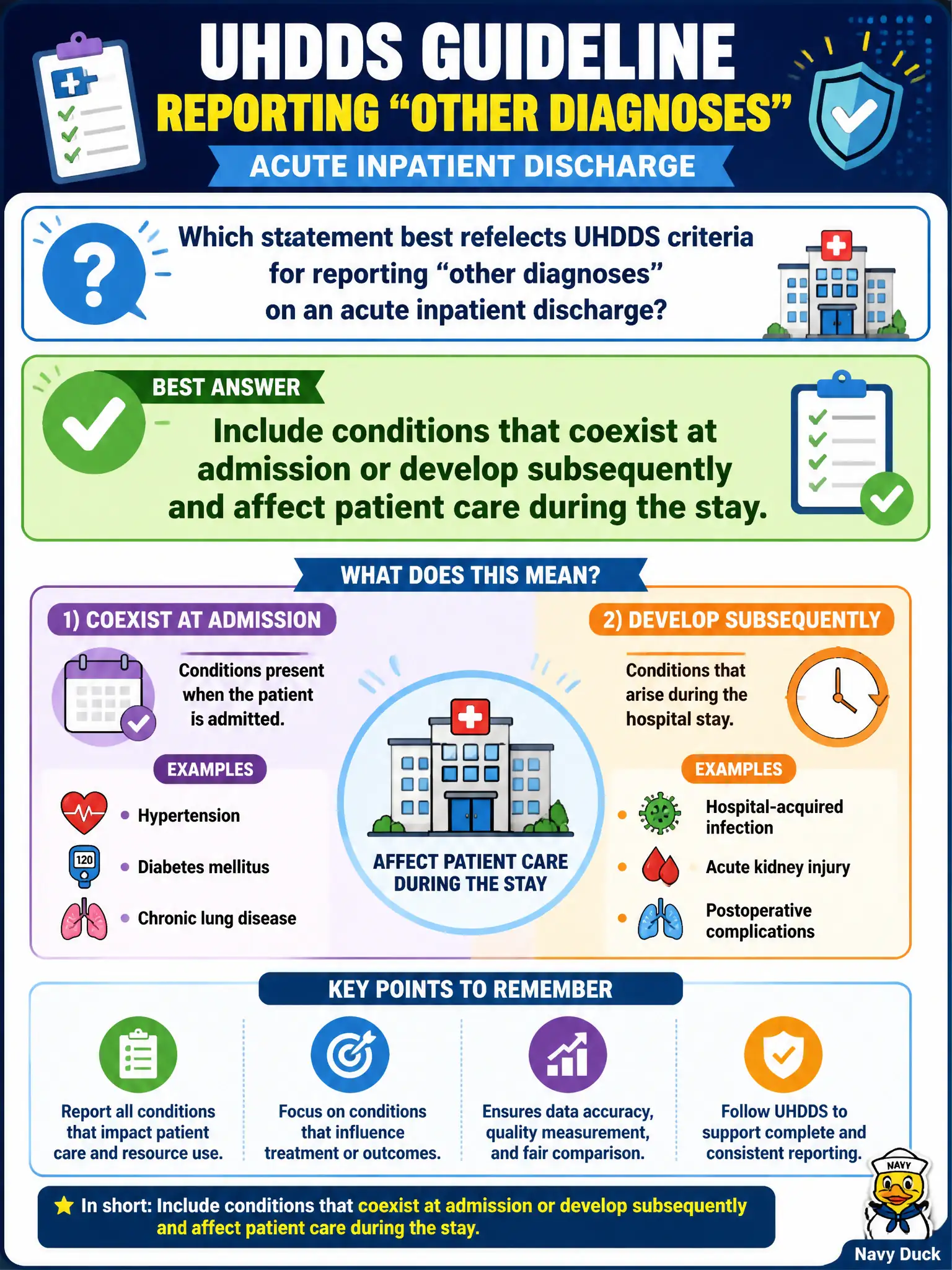
Which statement best reflects UHDDS criteria for reporting “other diagnoses” on an acute inpatient discharge?
Select an answer to reveal the explanation.
Short Explanation
Other diagnoses are not a scrapbook of every past illness. UHDDS wants conditions that actually tagged along or showed up and affected care this admission. If it did not touch evaluation, treatment, or monitoring, it usually does not belong.
Full Explanation
UHDDS criteria for other diagnoses on an acute inpatient discharge at a municipal medical center call for including conditions that coexist at admission or develop subsequently and that affect patient care during the stay—through clinical evaluation, therapeutic treatment, diagnostic procedures, extended stay, or increased nursing care. Civic abstracts should reflect care that actually mattered this episode, not a lifetime problem inventory. Listing every historical problem mentioned anywhere, even if untreated this stay, over-reports inactive history. Reporting only diagnoses in the attending's first progress note misses later-developing or elsewhere-documented conditions that affected care. Limiting other diagnoses to those that change MS-DRG payment subordinates clinical reporting to reimbursement mechanics. Exam caveat: reportability hinges on impact on this stay, not on payment delta alone. Operational check: test each secondary candidate against UHDDS affect-on-care criteria, omit untouched remote history, include treated or monitored comorbidities, and use coding quality reviews to catch both over- and under-reporting. Keep UHDDS definitions visible at the desk so civic discharge abstracts remain comparable, auditable, and faithful to care actually delivered this stay.