
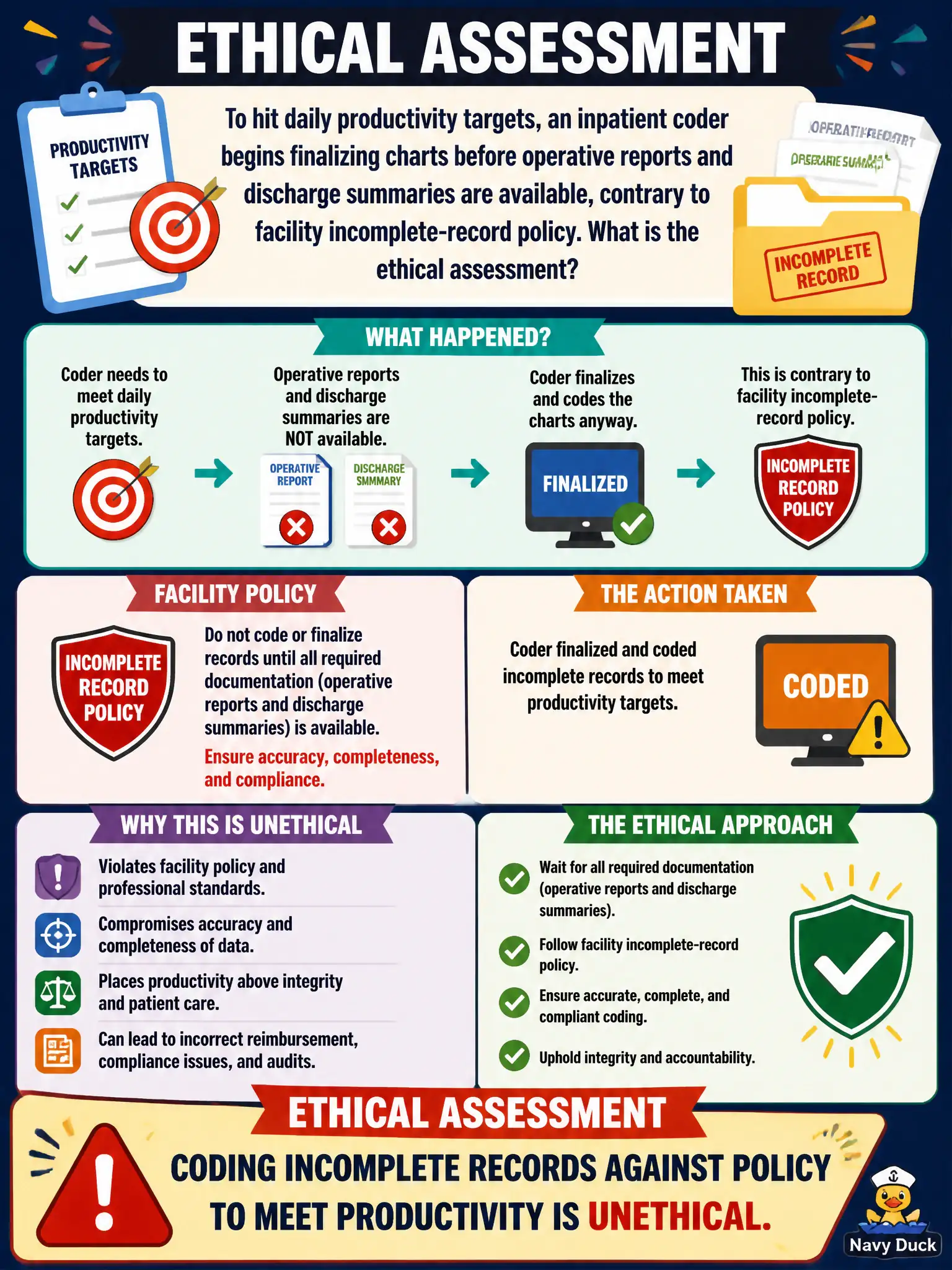
To hit daily productivity targets, an inpatient coder begins finalizing charts before operative reports and discharge summaries are available, contrary to facility incomplete-record policy. What is the ethical assessment?
Select an answer to reveal the explanation.
Short Explanation
Racing the clock by coding a half-built chart is productivity theater. Ethical coding waits for the documentation the policy requires. Speed goals never authorize incomplete or unsupported abstracts.
Full Explanation
Finalizing inpatient charts before operative reports and discharge summaries are available, contrary to a civic facility's incomplete-record policy, solely to hit productivity targets is unethical. Public hospitals need complete clinical stories before codes become official statistics and claims. Treating productivity targets as always overriding incomplete-record holds subordinates accuracy to throughput. Guessing the principal diagnosis from the ED note alone and calling partial coding ethical abandons after-study UHDDS logic. Claiming incomplete-record policies apply only to outpatient encounters invents a false inpatient exemption. Exam caveat: productivity metrics do not authorize premature final coding against policy. Operational check: honor incomplete holds until required documents arrive, escalate chronic OR report delays to HIM leadership, adjust workloads rather than skip documents, and audit premature finals for clinical and payment errors. Ethical coding in public facilities means the record and Official Guidelines outrank productivity, CMI, or dashboard pressure every time the two conflict. Re-read the authenticated record before finalizing whenever tools, payers, or dashboards push a result the documentation does not support.