
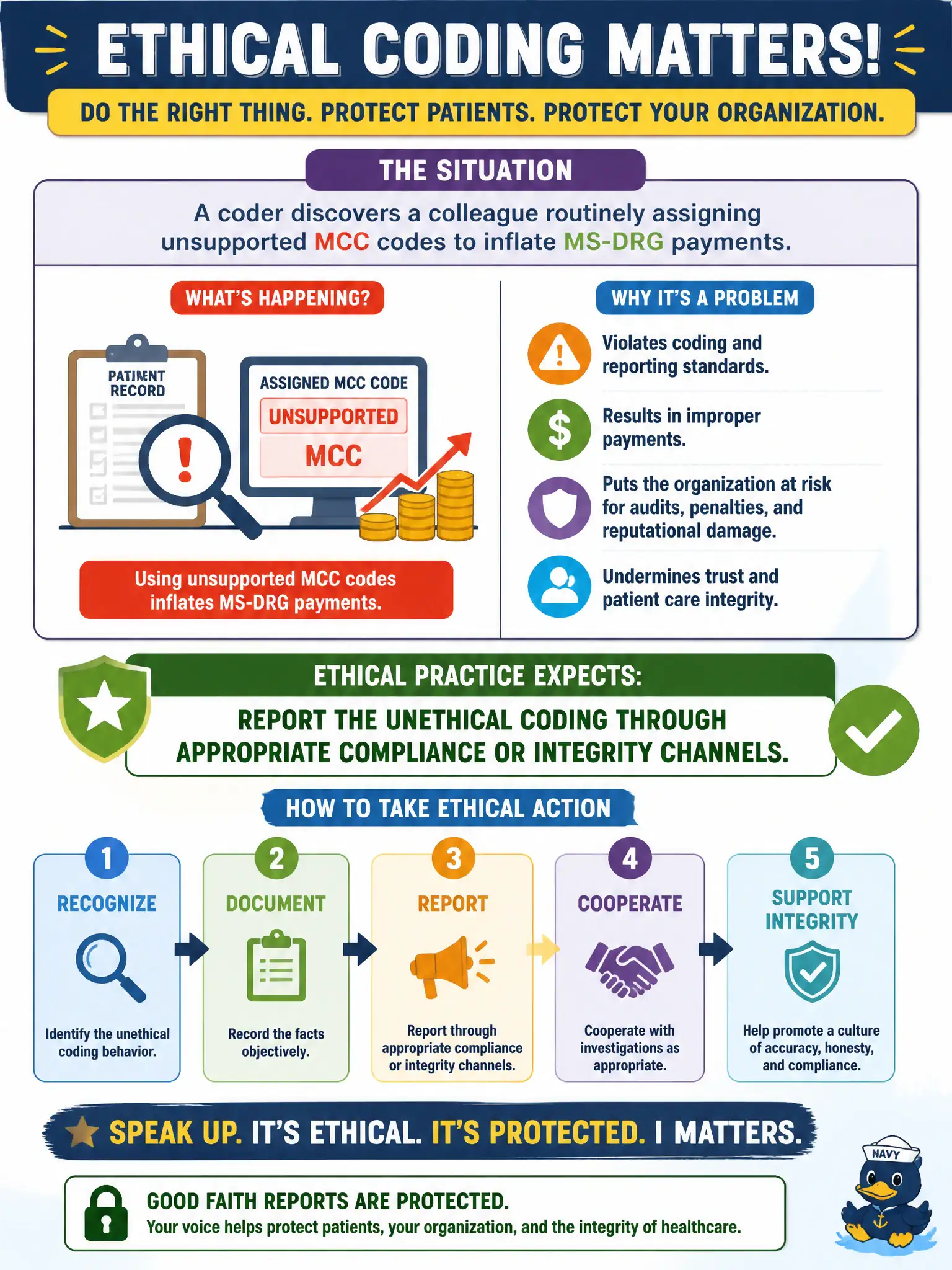
A coder discovers a colleague routinely assigning unsupported MCC codes to inflate MS-DRG payments. What does ethical practice expect?
Select an answer to reveal the explanation.
Short Explanation
Seeing systematic unsupported MCCs and staying quiet helps the problem grow. Ethical standards expect you to report misconduct through the right compliance channels. Protect the data—and the patients behind it—by escalating properly.
Full Explanation
When a coder discovers a colleague routinely assigning unsupported MCC codes to inflate MS-DRG payments at a county hospital, ethical practice expects reporting through appropriate compliance or integrity channels. Protecting public payment integrity and patients' data quality outweighs workplace discomfort. Confronting the colleague publicly during standup so peers can vote on codes is neither confidential nor a proper investigation path. Ignoring the pattern because peer reporting supposedly sits outside the coding role abandons ethical duty. Copying the practice to compete on dashboards multiplies the fraud risk. Exam caveat: observed systematic upcoding triggers reporting obligations, not silent coexistence. Operational check: gather objective examples, report via compliance hotline or chain, avoid gossip forums, protect whistleblowers from retaliation, and let integrity investigate and remediate. Ethical coding in public facilities means the record and Official Guidelines outrank productivity, CMI, or dashboard pressure every time the two conflict. Re-read the authenticated record before finalizing whenever tools, payers, or dashboards push a result the documentation does not support.