
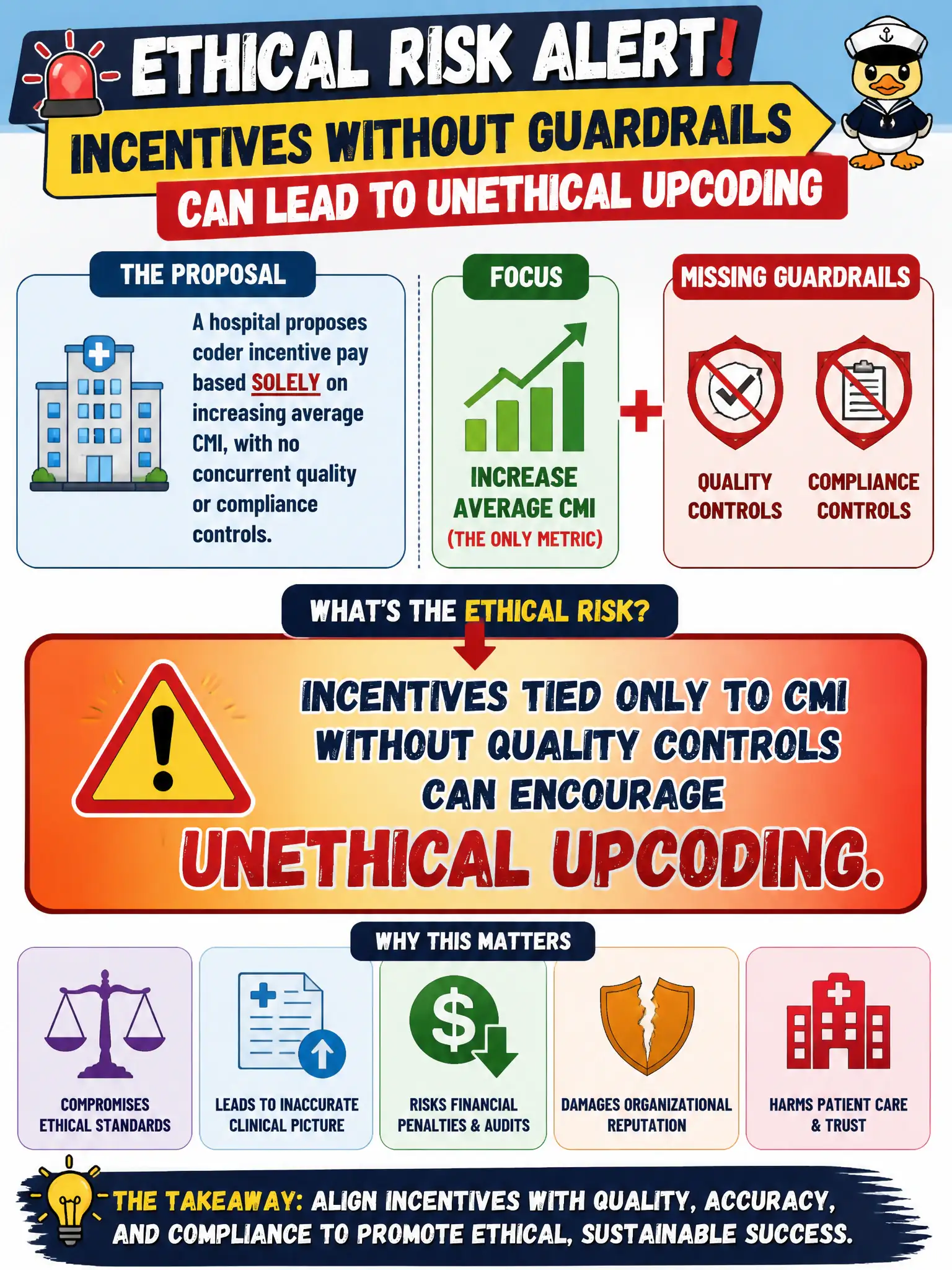
A hospital proposes coder incentive pay based solely on increasing average CMI, with no concurrent quality or compliance controls. What ethical risk should leadership recognize?
Select an answer to reveal the explanation.
Short Explanation
Pay that only rewards a bigger CMI is like tipping drivers only for speeding—you get what you pay for. Without quality guardrails, incentives can push unethical coding. Align rewards with accuracy, not just case-mix climb.
Full Explanation
Hospital leadership proposing coder incentive pay based solely on increasing average CMI without concurrent quality or compliance controls creates ethical risk of encouraging upcoding. Civic payment and quality reputations suffer when incentives reward severity numbers alone. Assuming CMI incentives always improve documentation quality automatically ignores how pure financial pressure can distort coding behavior. Claiming AHIMA prohibits all HIM incentive pay overstates the rule—the issue is unbalanced metrics, not pay itself. Believing ethical risk appears only after payers complain delays prevention until after harm. Exam caveat: incentive design is a compliance control; CMI-only scorecards are a classic integrity red flag. Operational check: balance incentives with accuracy, query compliance, and audit findings; monitor unsupported MCC rates; and involve compliance in any productivity or CMI bonus plan before launch. Ethical coding in public facilities means the record and Official Guidelines outrank productivity, CMI, or dashboard pressure every time the two conflict. Re-read the authenticated record before finalizing whenever tools, payers, or dashboards push a result the documentation does not support.