
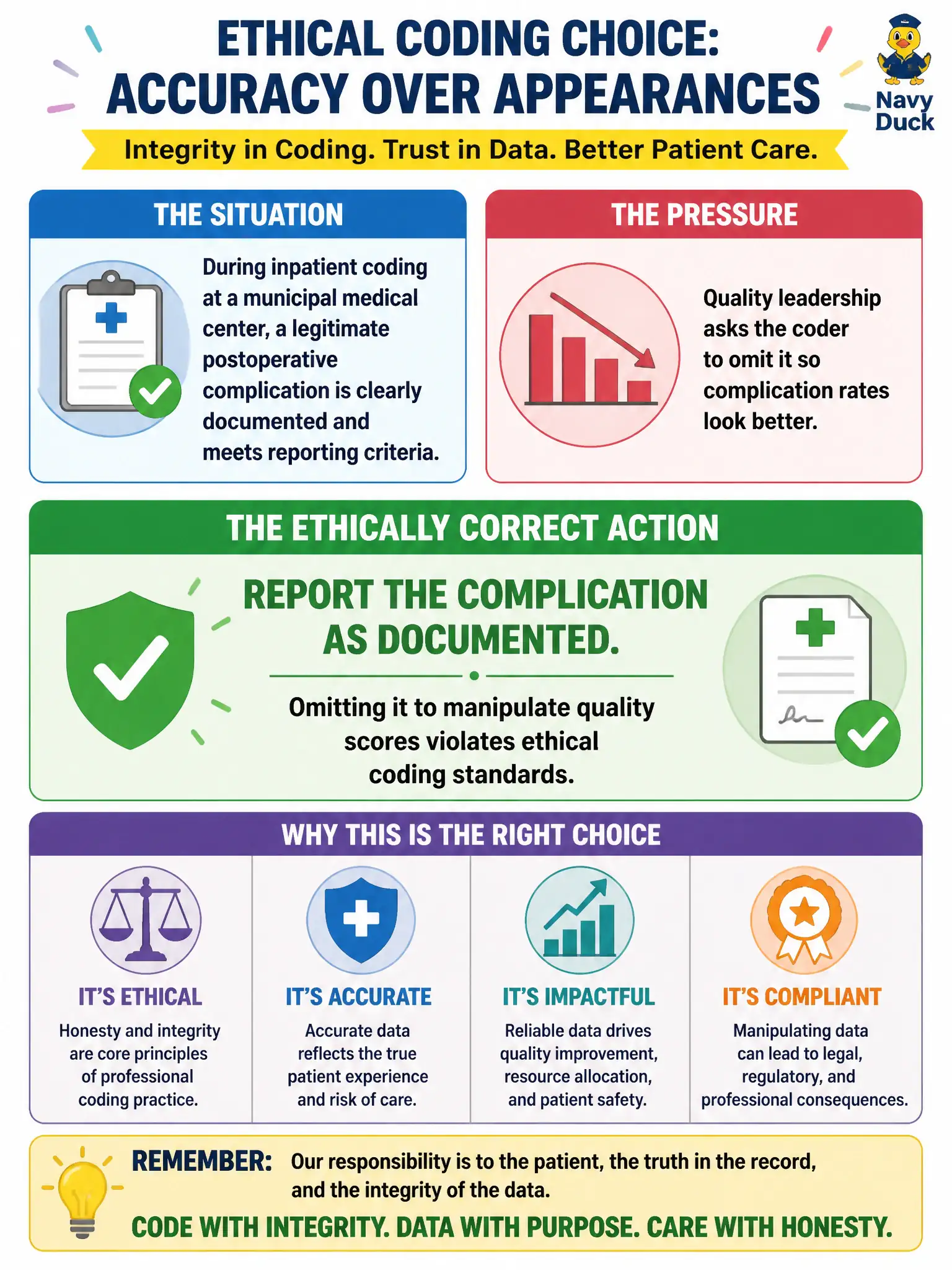
During inpatient coding at a municipal medical center, a legitimate postoperative complication is clearly documented and meets reporting criteria, but quality leadership asks the coder to omit it so complication rates look better. What is the ethically correct action?
Select an answer to reveal the explanation.
Short Explanation
Hiding a real complication to polish a scoreboard is undercoding in a lab coat. If it happened, was documented, and met reporting rules, it belongs on the abstract. Ethical coding does not edit clinical truth for vanity metrics.
Full Explanation
During inpatient coding at a municipal medical center, a legitimate postoperative complication that is clearly documented and meets reporting criteria must be reported; omitting it so complication rates look better violates ethical coding standards. Civic quality transparency requires that real events remain visible in administrative data. Omitting the complication because quality metrics outrank coding completeness inverts ethical priorities. Reporting it only if the payer requests complication codes treats payment curiosity as the reporting trigger instead of documentation and guidelines. Moving the complication to an outpatient claim to spare inpatient scores falsifies setting and corrupts both datasets. Exam caveat: ethical standards prohibit manipulating abstracts to manage publicly reported rates. Operational check: code the complication when criteria are met, confirm POA/timing, refuse omission requests, escalate through compliance, and educate quality leaders that improvement comes from care processes, not code suppression. Ethical coding in public facilities means the record and Official Guidelines outrank productivity, CMI, or dashboard pressure every time the two conflict.