
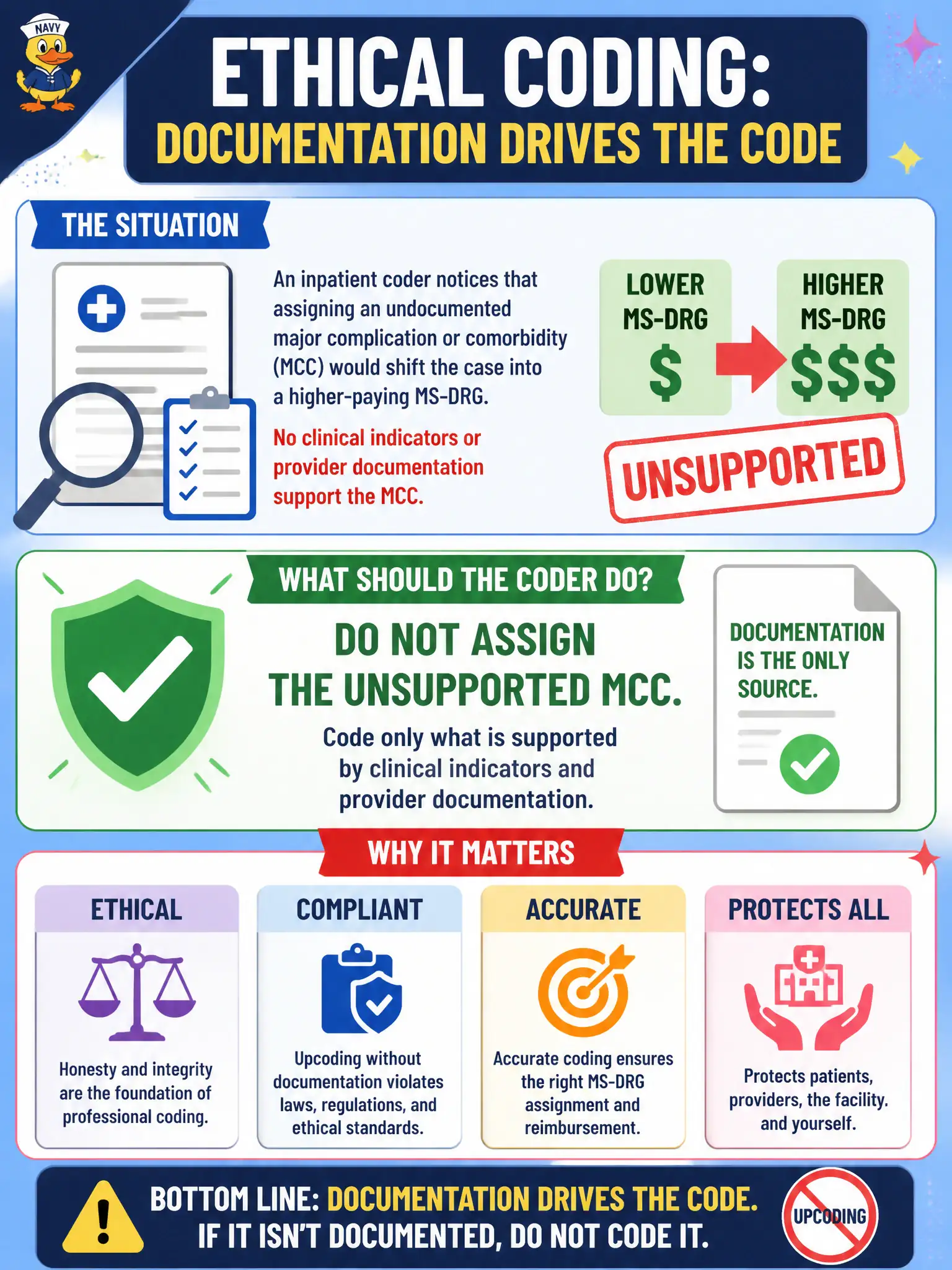
An inpatient coder notices that assigning an undocumented major complication or comorbidity (MCC) would shift the case into a higher-paying MS-DRG. No clinical indicators or provider documentation support the MCC. What should the coder do?
Select an answer to reveal the explanation.
Short Explanation
Guessing an MCC for a bigger DRG is upcoding with a smile. No documentation, no code—full stop. Ethical hospital coding follows the record, not the wish list for payment.
Full Explanation
If assigning an undocumented MCC would shift a civic inpatient case into a higher-paying MS-DRG without clinical indicators or provider documentation, the coder must not assign the unsupported MCC; upcoding without documentation violates ethical coding standards. Public payment integrity depends on honest severity reporting. Trusting the grouper to validate payment automatically mistakes payment calculation for clinical validation—the grouper groups what it is fed. Assigning the MCC and relying on a retrospective audit to fix it later knowingly submits incorrect data. Assigning a related CC instead because any comorbidity supposedly improves reimbursement ethically still inserts unsupported severity. Exam caveat: MS-DRG opportunity never authorizes codes the record does not support. Operational check: verify MCC candidates against notes and guidelines, query only with compliant clinical indicators, leave unsupported MCCs off, and report pressure to upcode through integrity channels. Ethical coding in public facilities means the record and Official Guidelines outrank productivity, CMI, or dashboard pressure every time the two conflict. Re-read the authenticated record before finalizing whenever tools, payers, or dashboards push a result the documentation does not support.