
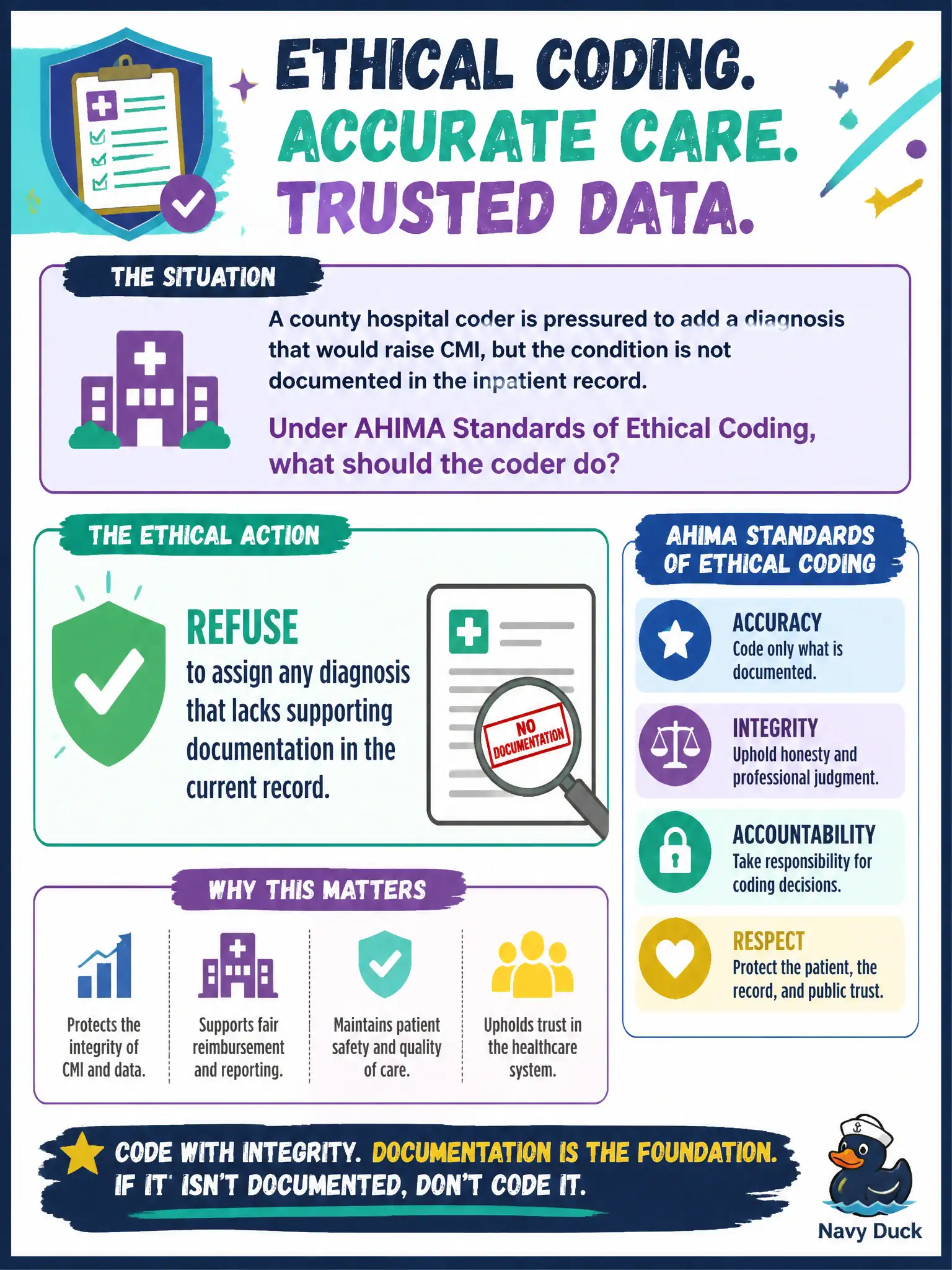
A county hospital coder is pressured to add a diagnosis that would raise CMI, but the condition is not documented in the inpatient record. Under AHIMA Standards of Ethical Coding, what should the coder do?
Select an answer to reveal the explanation.
Short Explanation
Coding without documentation is like booking a charge on a receipt that never existed. Ethical coding means every code has support in the record—productivity pressure does not change that. Skip the unsupported diagnosis and stick to what is written.
Full Explanation
Under AHIMA Standards of Ethical Coding, a county hospital coder pressured to add a diagnosis that would raise CMI but is not documented in the inpatient record must refuse any unsupported code. Civic case-mix integrity is meaningless if diagnoses are invented for averages. Assigning the diagnosis to meet productivity and CMI targets then querying later reverses the ethical sequence—codes require current-record support first. Coding it as a queryable possibility marked ruled out fabricates clinical status. Using a previous admission's documentation to support a new code on this stay misapplies another encounter's record to the current abstract. Exam caveat: ethical coding forbids assigning codes lacking support in the current health record regardless of CMI pressure. Operational check: decline the unsupported add, offer a compliant query only if clinical indicators warrant clarification, escalate pressure through compliance, and keep CMI goals tied to documentation improvement rather than forced codes. Ethical coding in public facilities means the record and Official Guidelines outrank productivity, CMI, or dashboard pressure every time the two conflict. Re-read the authenticated record before finalizing whenever tools, payers, or dashboards push a result the documentation does not support.