
A facility expands remote inpatient coding. Which practice best aligns with HIPAA safeguards for remote HIM work?
Select an answer to reveal the explanation.
Short Explanation
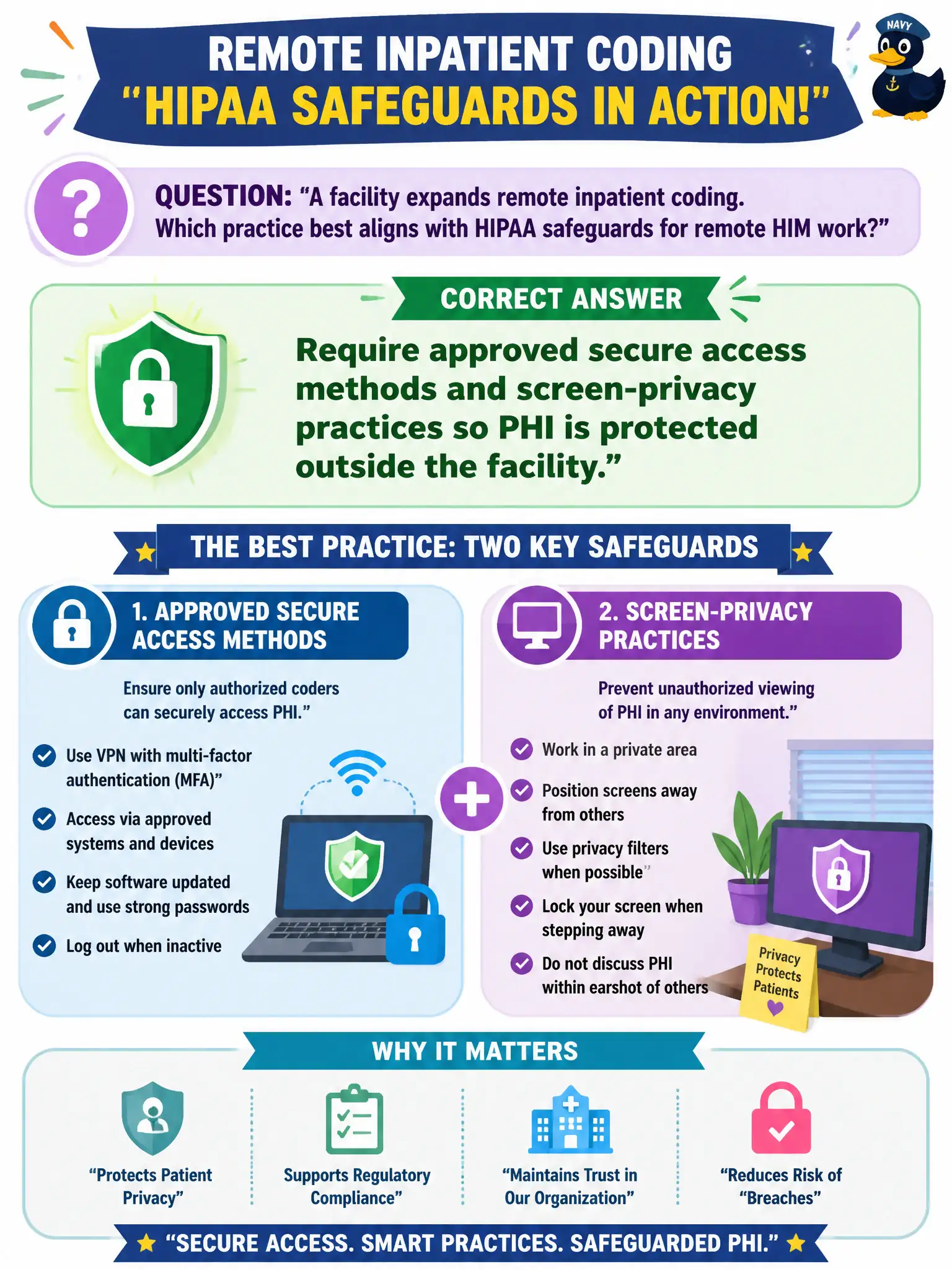
Remote coding still means hospital PHI on the screen. Use the approved secure tunnel, shield the monitor, and lock the session—not open Wi-Fi and sticky-note passwords. Home office is still a HIPAA zone.
Full Explanation
When a civic facility expands remote inpatient coding, HIPAA-aligned practice requires approved secure access methods and screen-privacy practices so PHI remains protected outside the building. Home and remote sites are still extensions of the hospital's privacy perimeter for public trust. Allowing coding from any café Wi-Fi solely to meet productivity ignores network and shoulder-surfing risks. Sharing encoder passwords among remote teammates destroys unique-user accountability and audit integrity. Leaving the EHR logged in overnight on a home laptop for faster starts leaves ePHI exposed to household members or theft. Exam caveat: remote productivity goals never override administrative, physical, and technical safeguard expectations. Operational check: mandate VPN or approved virtual desktop, enforce automatic screen lock, prohibit public Wi-Fi for ePHI unless policy-approved secure methods exist, ban password sharing, and spot-check remote privacy compliance. Sustain civic accountability by pairing correct code assignment with transparent denial, quality, and privacy escalation paths so public reporting and payment integrity move together. Re-read the authenticated record before finalizing whenever tools, payers, or dashboards push a result the documentation does not support.