
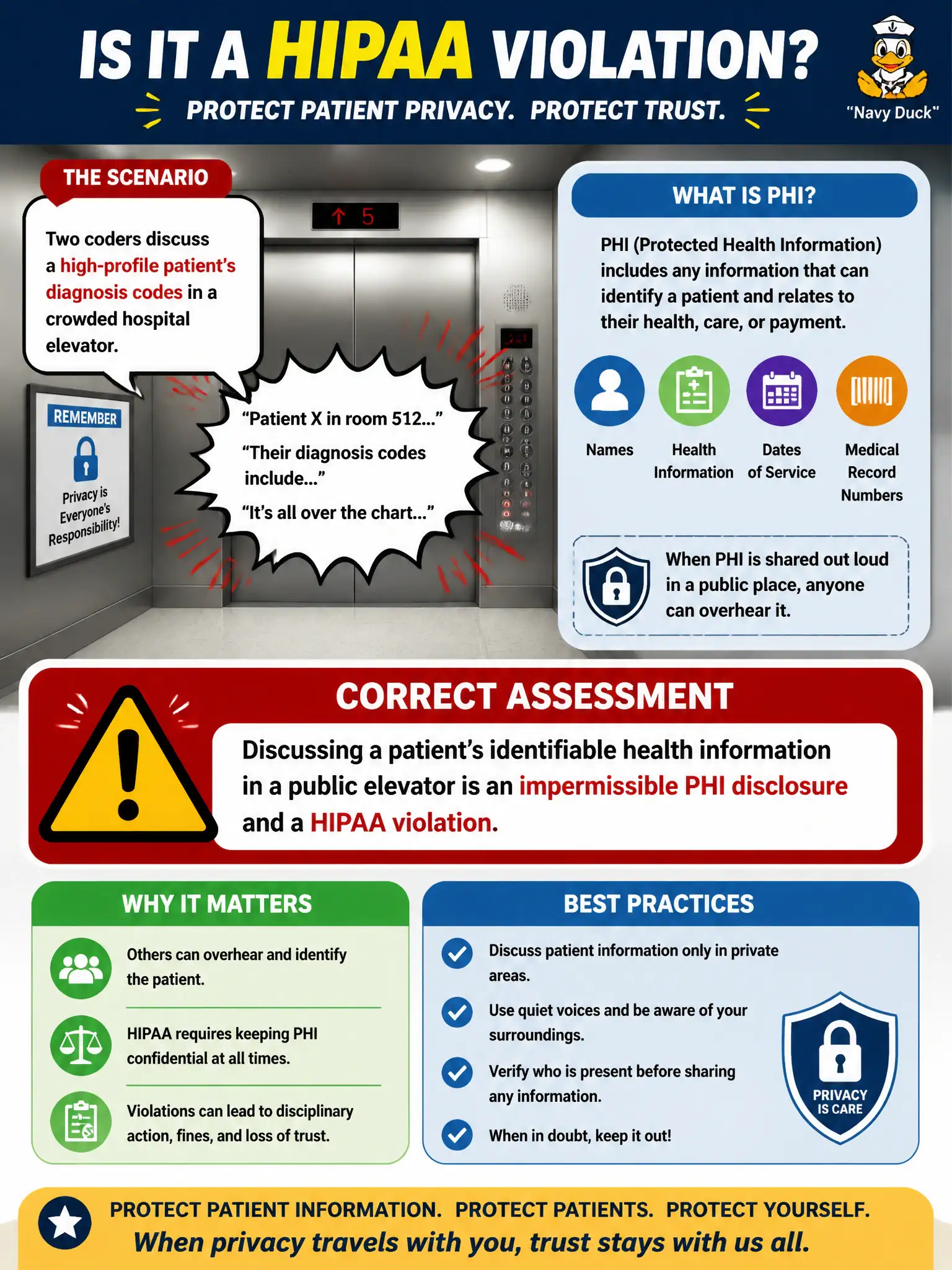
Two coders discuss a high-profile patient's diagnosis codes in a crowded hospital elevator. What is the correct assessment?
Select an answer to reveal the explanation.
Short Explanation
Elevators have ears. Talking through a patient's codes in public—even with a coworker—is a disclosure, not shop talk. Save the case review for a private, secure space.
Full Explanation
Discussing a high-profile patient's identifiable diagnosis codes in a crowded civic hospital elevator is an impermissible PHI disclosure and a HIPAA violation, even when both speakers are HIM employees. Public corridors and elevators are not secure workspaces; community members and visitors can overhear protected details. Accepting elevator talk if no full medical record number is spoken still allows identification when names, rare diagnoses, or high-profile context make the patient recognizable. Permitting the conversation because both speakers are HIM employees mistakes workforce status for a private setting—need-to-know does not create a public hallway exception. Claiming only nursing staff can violate HIPAA wrongly excludes coding professionals from privacy duties. Exam caveat: incidental disclosure rules do not bless intentional case discussion in public spaces. Operational check: move case reviews to private offices or secure huddle rooms, avoid identifiable details in transit, reinforce elevator privacy in orientation, and investigate overheard PHI events through privacy/compliance channels. Sustain civic accountability by pairing correct code assignment with transparent denial, quality, and privacy escalation paths so public reporting and payment integrity move together.