
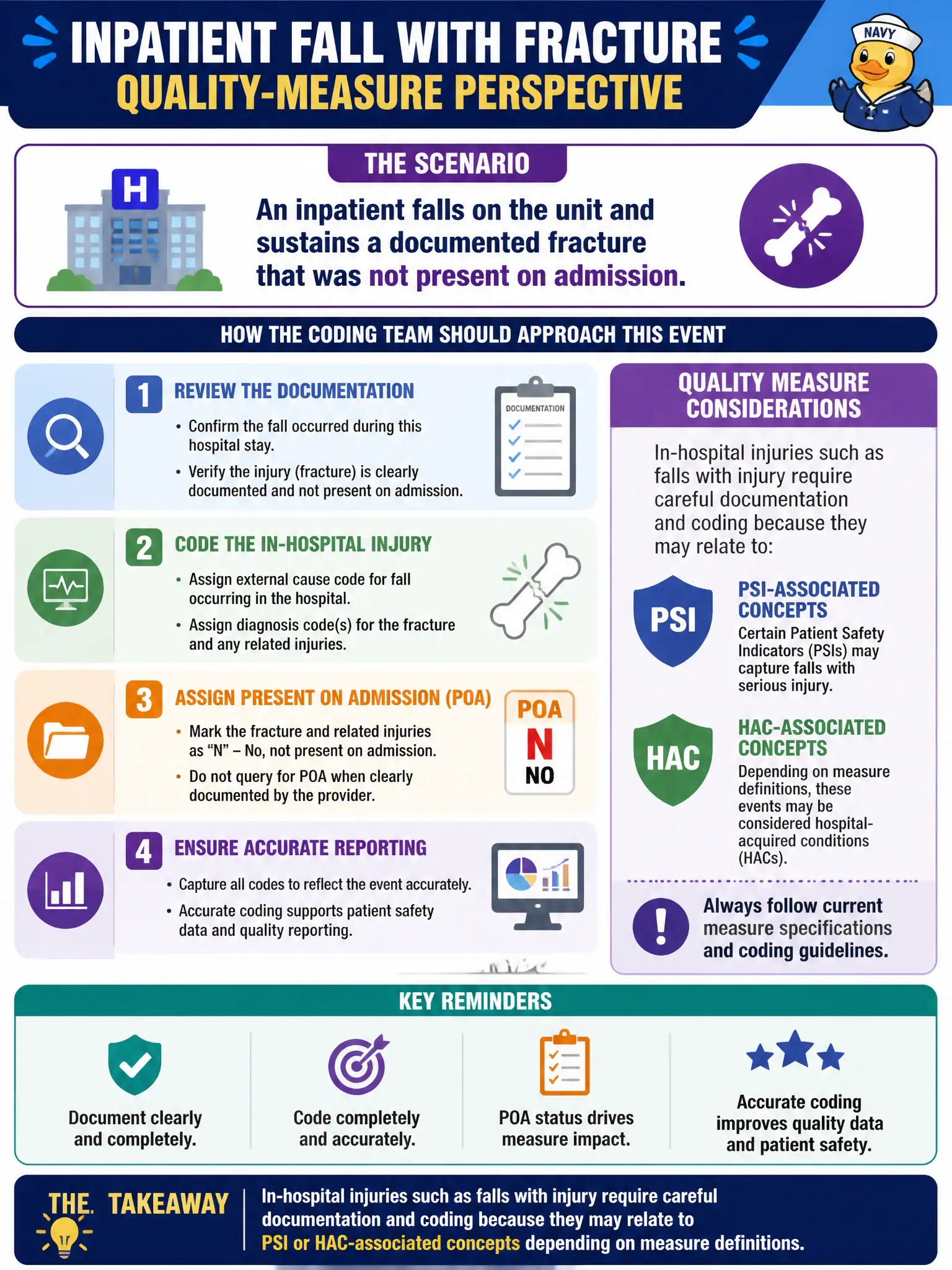
An inpatient falls on the unit and sustains a documented fracture that was not present on admission. How should the coding team approach this event from a quality-measure perspective?
Select an answer to reveal the explanation.
Short Explanation
A fall with a new fracture in-house is a quality hot potato—code the injury and the circumstances the chart supports. Skipping the fracture to protect scores just hides the truth. Careful POA and external-cause detail keep the measure honest.
Full Explanation
When an inpatient falls on a county hospital unit and sustains a documented fracture not present on admission, coding must carefully capture the injury and supported circumstances because in-hospital injuries may relate to PSI or HAC-associated concepts depending on measure definitions. Civic facilities owe accurate injury reporting for patient safety learning, not cosmetic score protection. Never coding in-hospital injuries because quality prefers lower counts is deliberate underreporting. Coding only the fall as an external cause while omitting the fracture diagnosis hides the clinical harm that quality measures and care teams need to see. Reassigning the fracture as principal diagnosis for every fall regardless of admission reason may violate UHDDS principal-diagnosis logic when the fall was not the reason for admission. Exam caveat: report supported injury and external cause detail with correct POA; do not reshape sequencing solely to manage indicators. Operational check: verify fracture documentation and timing versus admission, assign POA N when the injury occurred in-house, add supported external-cause codes, keep principal diagnosis aligned with the reason for admission after study, and notify quality/risk per facility policy without suppressing codes. Sustain civic accountability by pairing correct code assignment with transparent denial, quality, and privacy escalation paths so public reporting and payment integrity move together.