
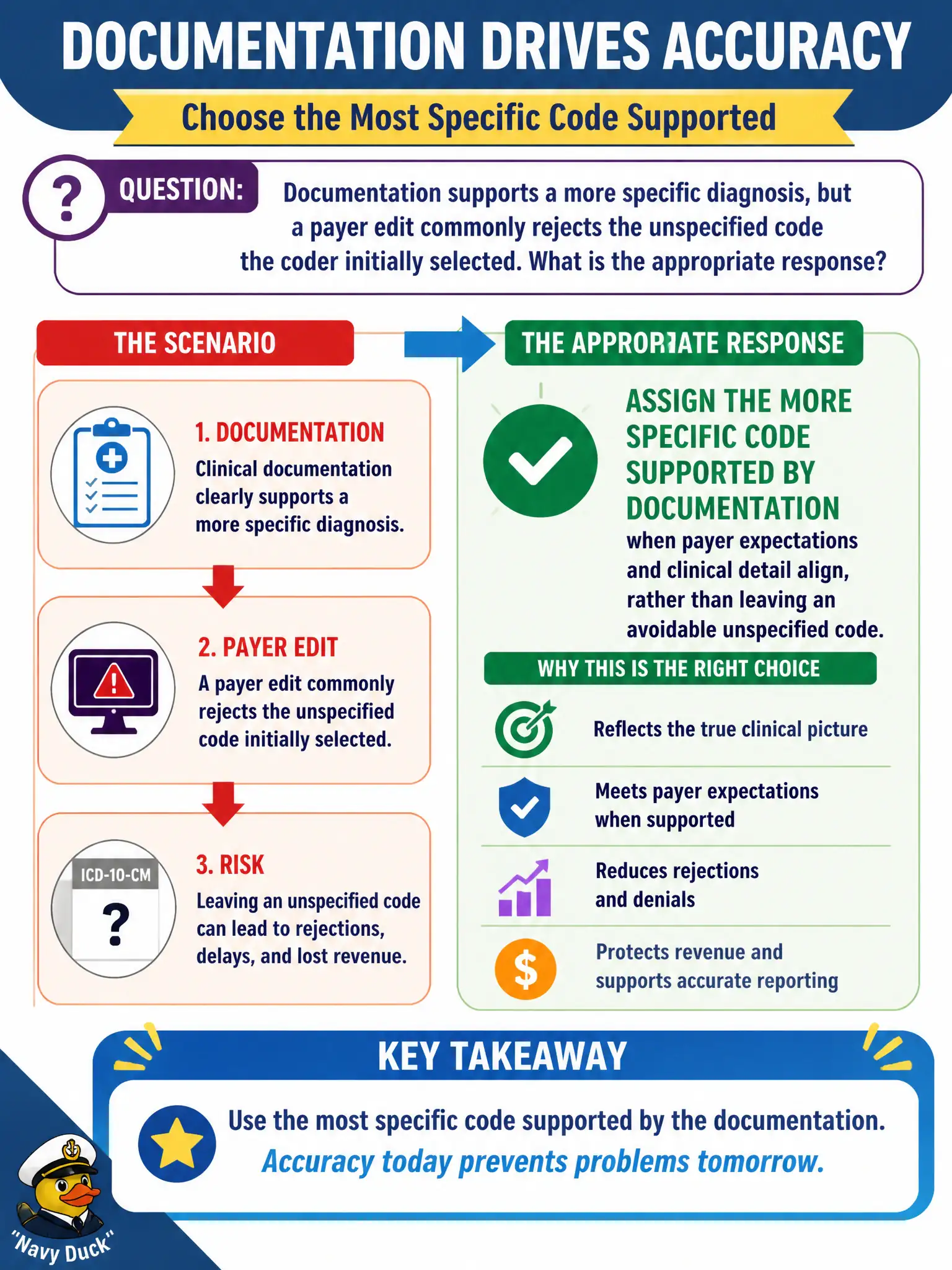
Documentation supports a more specific diagnosis, but a payer edit commonly rejects the unspecified code the coder initially selected. What is the appropriate response?
Select an answer to reveal the explanation.
Short Explanation
If the chart already gives you the sharper diagnosis and the payer hates the vague code, sharpen the code — do not stay fuzzy for comfort. Specificity has to come from documentation, though; you still do not guess a subtype. Match the record and the reasonable payer expectation.
Full Explanation
When documentation supports a more specific diagnosis but a payer edit commonly rejects the unspecified code the coder initially selected, the appropriate response is to assign the more specific code supported by documentation when payer expectations and clinical detail align, rather than leaving an avoidable unspecified code. Specificity should come from the record, and if the record already provides it, using the sharper code is both clinically faithful and often operationally necessary. Keeping the unspecified code permanently because unspecified codes are always safer is a false comfort when greater specificity is documented. Selecting any specific code from the same chapter even if the record does not support it invents detail to satisfy an edit. Deleting the diagnosis so the payer edit cannot fire underreports care. Exam caveat: never up-code beyond documentation to appease edits; only refine to specificity the chart actually supports. Operational check for civic claims: re-read the diagnostic statements, assign the most specific supported code, validate against the edit, and query only if true clinical specificity remains unclear. This discipline protects patients, supports accurate public reporting for municipal hospitals, and keeps the coded abstract defensible when auditors compare codes to the authenticated record.