
A hospital outpatient pain-management procedure is subject to a Local Coverage Determination that lists covered diagnoses. What is the coder's responsibility regarding that LCD?
Select an answer to reveal the explanation.
Short Explanation
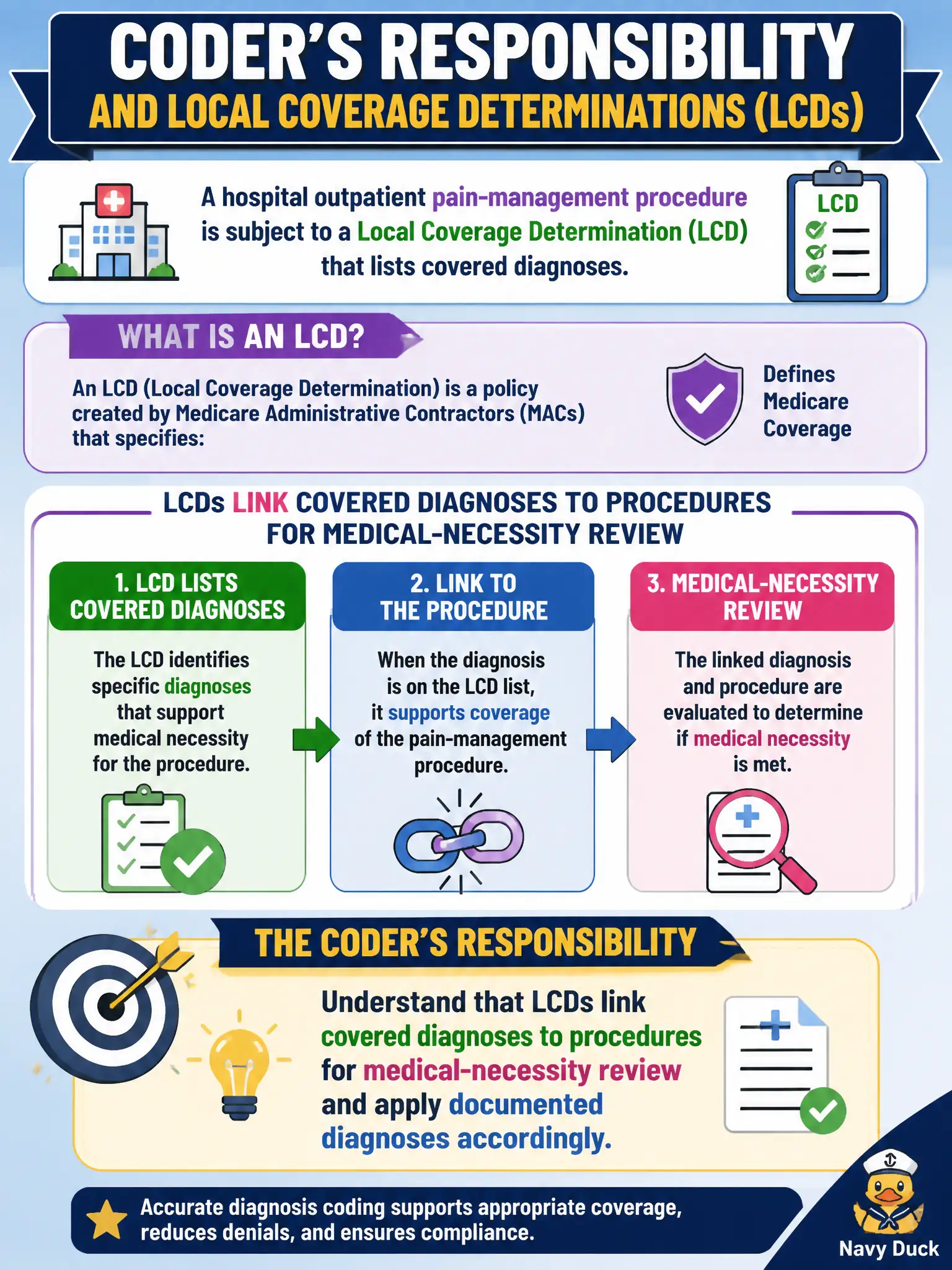
An LCD is the local coverage map for medical necessity — it shows which diagnoses usually support a service. You still code what was documented and done; you just understand how that map affects coverage review. Do not spray LCD diagnoses onto the claim for luck.
Full Explanation
A hospital outpatient pain-management procedure subject to a Local Coverage Determination that lists covered diagnoses requires the coder to understand that LCDs link covered diagnoses to procedures for medical-necessity review and to apply documented diagnoses accordingly. LCDs inform coverage expectations; they do not authorize inventing diagnoses or changing performed procedures. Ignoring LCDs because only national CPT guidelines matter overlooks Medicare administrative contractor medical-necessity policy that affects municipal outpatient claims. Adding every diagnosis on the LCD list even when unsupported in the record is diagnosis padding. Replacing the performed procedure with an LCD-favored alternative code falsifies the service rendered. Exam caveat: code what was documented and performed, then evaluate coverage risk against the LCD; query for missing but clinically supported covered diagnoses rather than fabricating them. Operational check: map documented diagnoses to the LCD covered list, confirm procedure coding matches the record, and route coverage issues through compliant documentation improvement—not code substitution. This discipline protects patients, supports accurate public reporting for municipal hospitals, and keeps the coded abstract defensible when auditors compare codes to the authenticated record.