
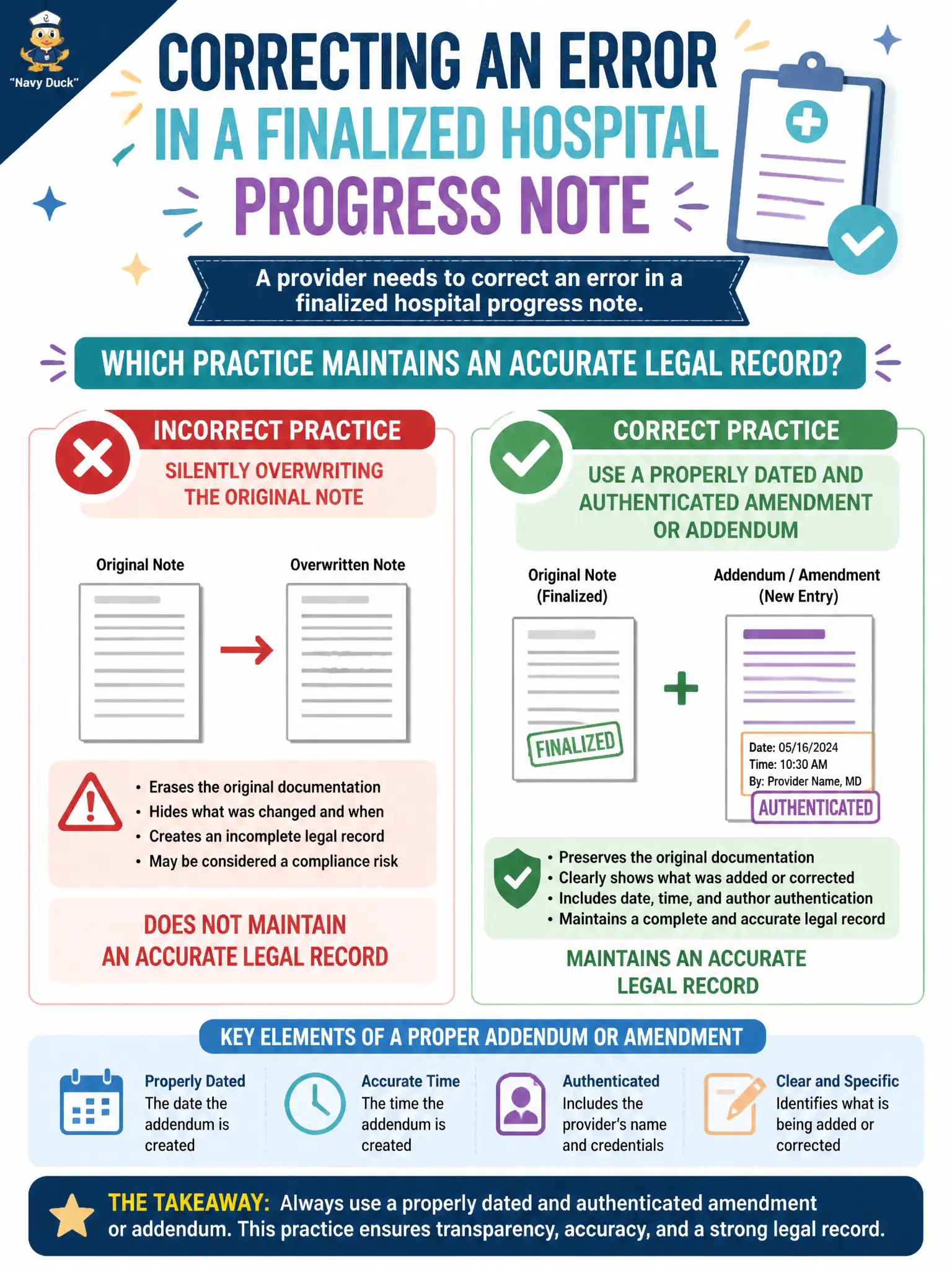
A provider needs to correct an error in a finalized hospital progress note. Which practice maintains an accurate legal record?
Select an answer to reveal the explanation.
Short Explanation
Corrections in a legal record are sticky notes with a timestamp, not invisible eraser marks. Amendments and addenda stay dated and signed so the history remains honest. Silent overwrites break accuracy and trust.
Full Explanation
When a provider needs to correct an error in a finalized hospital progress note, the practice that maintains an accurate legal record is using a properly dated and authenticated amendment or addendum rather than silently overwriting the original note. Amendments preserve the chronology of what was documented when, which is essential for audits, quality review, and patient safety in municipal hospitals. Deleting the original note entirely so only corrected text remains destroys the historical record and is generally improper. Asking coding staff to change codes quietly without any documentation trail creates unsupported code changes. Editing another clinician's note under the original author's name is identity falsification. Exam caveat: soft deletes and silent EHR edits may be technically possible but are not compliant correction methods—follow facility amendment policy. Operational check: route corrections through authenticated addendum/amendment workflows with date/time and author, then update coding only to the extent the corrected documentation supports. This discipline protects patients, supports accurate public reporting for municipal hospitals, and keeps the coded abstract defensible when auditors compare codes to the authenticated record.