
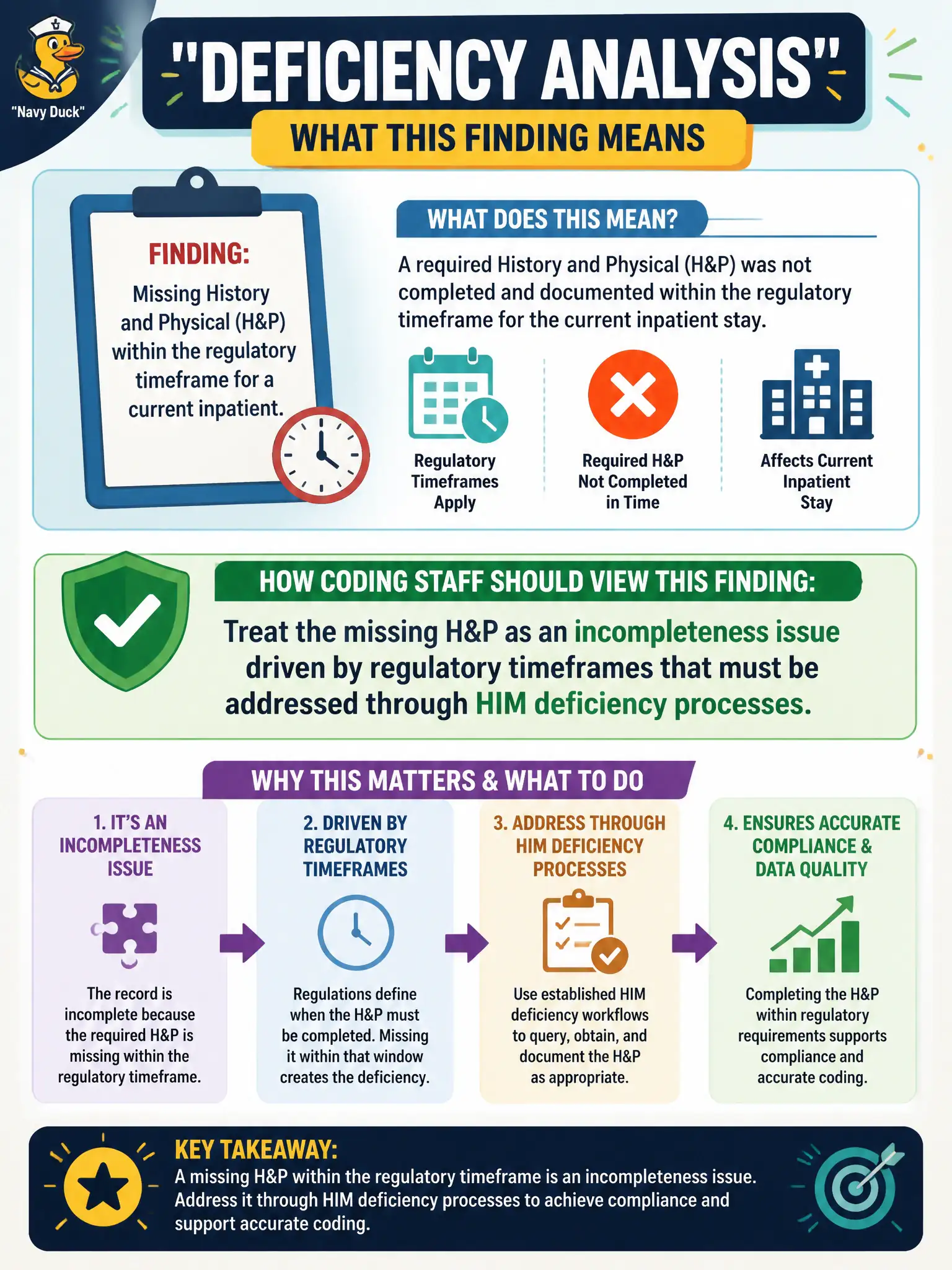
Deficiency analysis shows a missing history and physical within the regulatory timeframe for a current inpatient. How should coding staff view this finding?
Select an answer to reveal the explanation.
Short Explanation
H&P timing rules are the hospital's documentation clock. If deficiency analysis says the H&P is late or missing, that is an HIM incompleteness problem — not a cue for coders to write clinical history. Route it through deficiency workflows.
Full Explanation
Deficiency analysis showing a missing history and physical within the regulatory timeframe for a current inpatient is an incompleteness issue driven by regulatory timeframes that must be addressed through HIM deficiency processes. Coding staff should recognize the documentation clock problem, not invent clinical history. Bypassing the H&P requirement because coding can start from nursing notes alone ignores medical-staff and regulatory documentation standards for admissions. Completing the H&P using the coder's abstract so accreditation surveys pass is unauthorized clinical authorship and falsification. Canceling the inpatient admission type to avoid H&P documentation rules manipulates status to dodge compliance rather than completing the record. Exam caveat: H&P timing rules are distinct from coding guideline content, but incomplete required documents commonly create coding/billing holds in hospital policy. Operational check for county admissions: confirm H&P deficiency status, escalate through HIM to the responsible provider, and avoid coder-authored H&P content while the deficiency is cleared. This discipline protects patients, supports accurate public reporting for municipal hospitals, and keeps the coded abstract defensible when auditors compare codes to the authenticated record.