
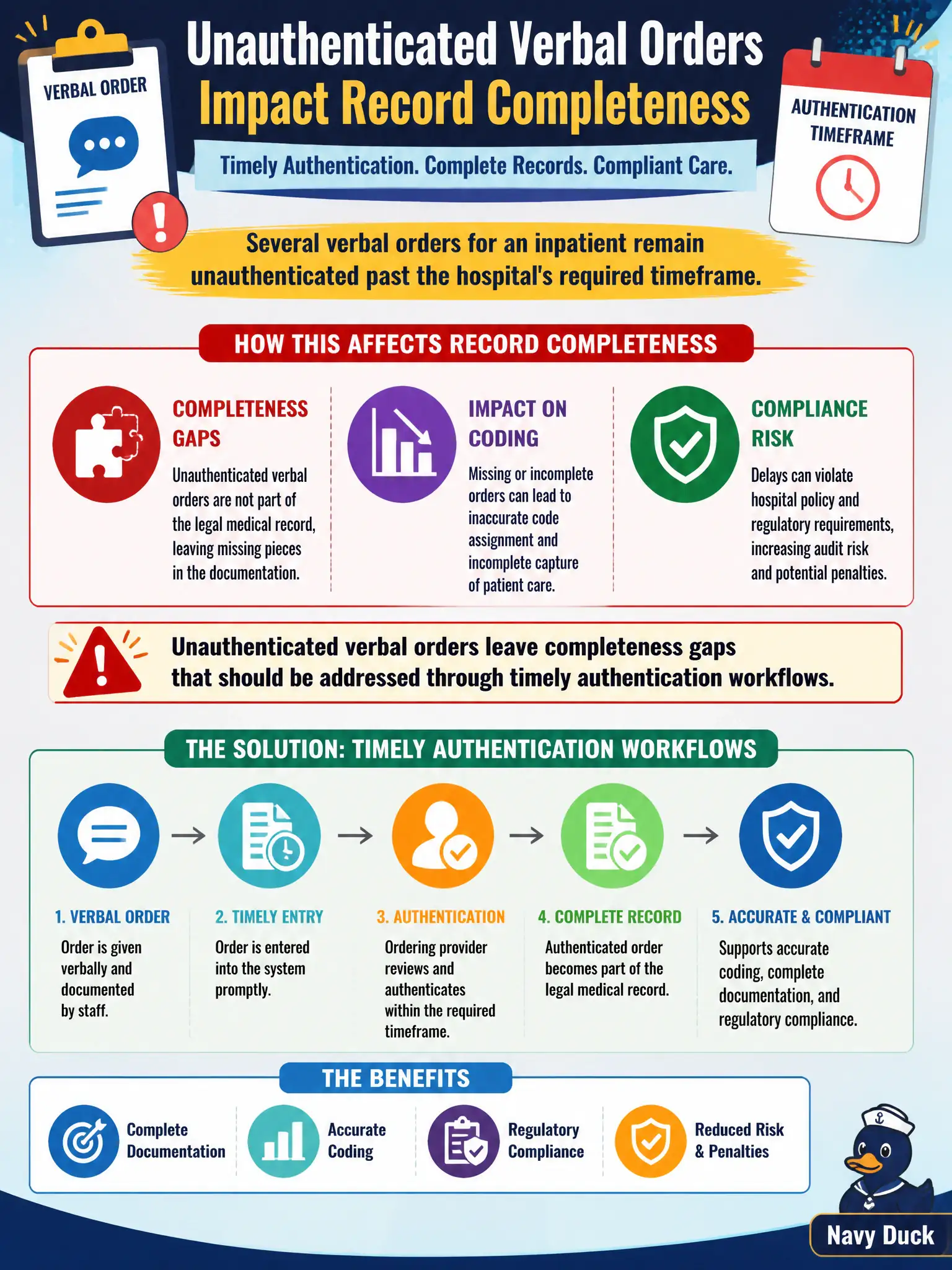
Several verbal orders for an inpatient remain unauthenticated past the hospital's required timeframe. How does this affect record completeness for coding and compliance?
Select an answer to reveal the explanation.
Short Explanation
A verbal order without a timely signature is like a handshake that never got written down — the legal record still has a hole. Completeness means authentication happens on time, not that coders forge paperwork. Push the authentication workflow; do not invent orders.
Full Explanation
Several verbal orders for an inpatient that remain unauthenticated past the hospital's required timeframe create completeness gaps that should be addressed through timely authentication workflows. Verbal orders are allowed in defined situations but typically require timely countersignature or authentication to complete the legal record. Claiming verbal orders never require authentication once nursing has carried them out contradicts standard medical-staff and regulatory expectations. Coders inventing corresponding written orders so the chart looks complete engage in documentation falsification. Unauthenticated orders do not automatically void all diagnosis codes on the claim; the correct response is to pursue authentication and completeness, not to discard unrelated validated diagnoses. Exam caveat: authentication timeframes vary by bylaws and regulation—apply the facility's policy when assessing deficiency impact on coding holds. Operational check for municipal inpatient units: identify aged unauthenticated verbal orders, route them for provider authentication, and avoid coder-authored order fabrication while completeness is restored. This discipline protects patients, supports accurate public reporting for municipal hospitals, and keeps the coded abstract defensible when auditors compare codes to the authenticated record.