
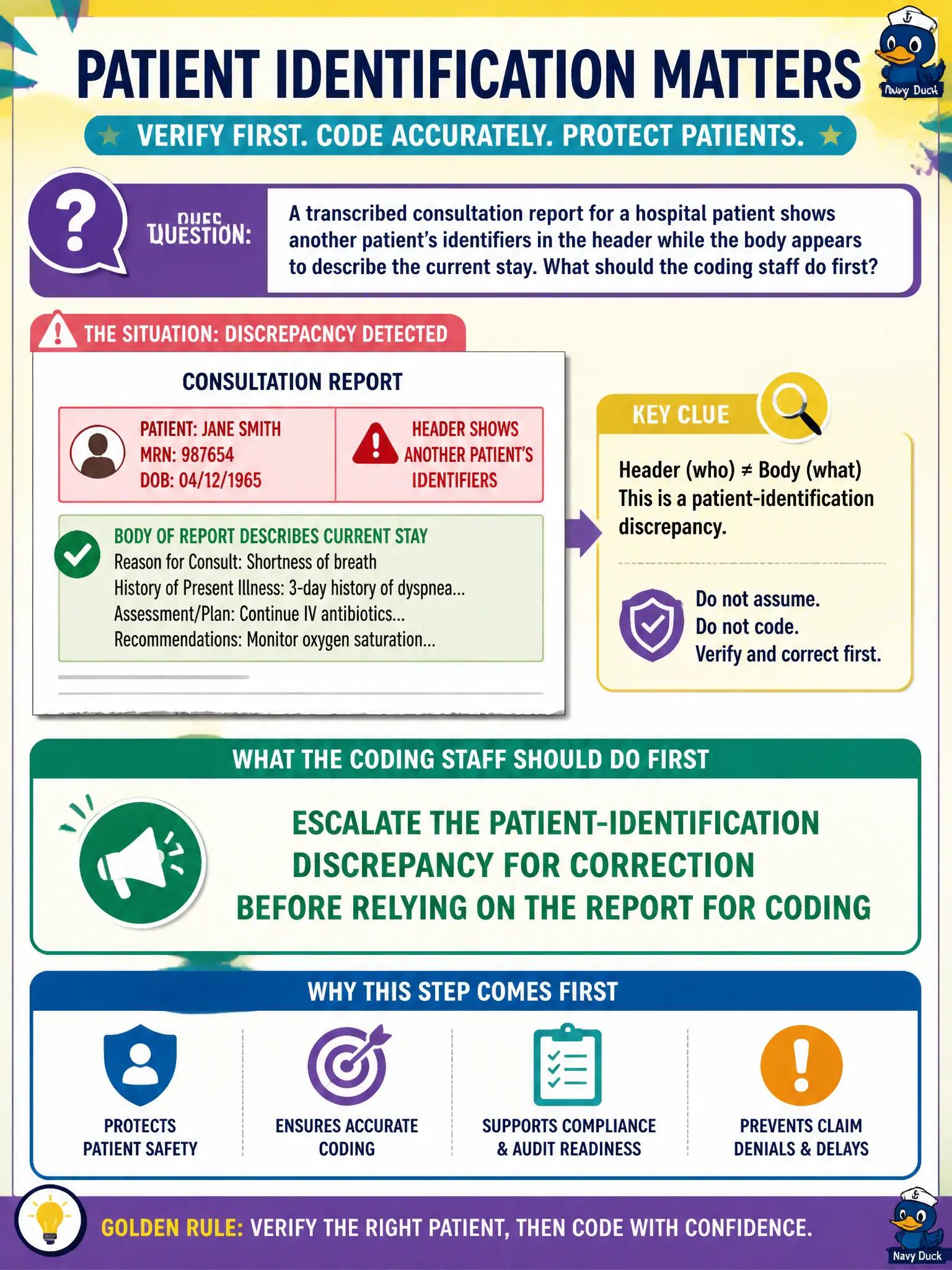
A transcribed consultation report for a hospital patient shows another patient's identifiers in the header while the body appears to describe the current stay. What should the coding staff do first?
Select an answer to reveal the explanation.
Short Explanation
Identity mismatches are red sirens, not fine print. If the header belongs to someone else, you escalate for correction — you do not code past the wrong name. Demographics accuracy is the foundation of record integrity.
Full Explanation
A transcribed consultation report showing another patient's identifiers in the header while the body appears to describe the current stay is a patient-identification discrepancy that coding staff must escalate for correction before relying on the report for coding. Identity integrity is foundational; coding past a wrong header risks attributing clinical content to the wrong person. Coding from the narrative body while ignoring mismatched header demographics accepts potentially contaminated documentation. Merging both medical record numbers so future reports auto-correct is an improper identity-management action outside coding authority and may worsen chart corruption. Assigning codes to both patients named anywhere on the page spreads the error across accounts. Exam caveat: wrong-patient documentation is a patient-safety and privacy event—stop, escalate, and wait for corrected authenticated documents. Operational check in county HIM: freeze use of the tainted consult for coding, notify transcription/HIM identity integrity workflows, and resume only after a corrected report is filed on the correct encounter. This discipline protects patients, supports accurate public reporting for municipal hospitals, and keeps the coded abstract defensible when auditors compare codes to the authenticated record.