
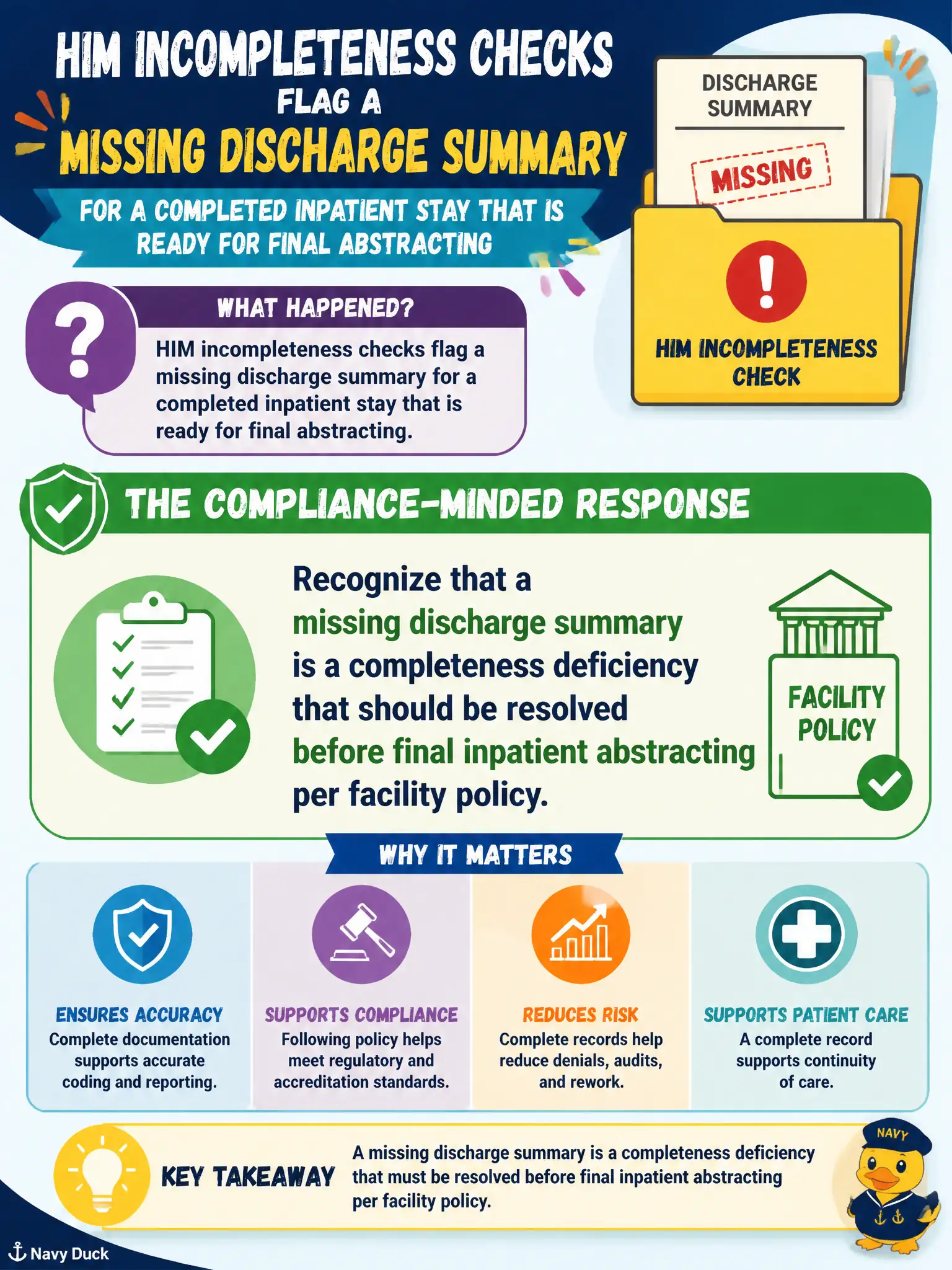
HIM incompleteness checks flag a missing discharge summary for a completed inpatient stay that is ready for final abstracting. What is the coder's compliance-minded response?
Select an answer to reveal the explanation.
Short Explanation
The discharge summary is the inpatient story's last chapter — if HIM says it is missing, you do not write fan fiction from flowsheets. Completeness checks exist so final abstracts wait for that required document. Fix the deficiency, then finish coding.
Full Explanation
HIM incompleteness checks that flag a missing discharge summary for a completed inpatient stay ready for final abstracting identify a completeness deficiency that should be resolved before final inpatient abstracting per facility policy. The discharge summary is a core legal document for the inpatient episode; abstracting without it when policy requires it undermines authentication and continuity of the coded story. Abstracting the stay using only nursing flowsheets and closing the account bypasses required physician discharge documentation. Creating a discharge summary from the coder's own clinical summary of the chart places coding staff in an unauthorized authorship role. Marking the discharge summary as complete because length of stay was short falsifies deficiency status. Exam caveat: know which documents are hard stops before final bill at your municipal facility and how deficiency aging workflows interact with coding holds. Operational check: confirm discharge-summary presence and authentication, keep the account on incomplete hold if missing, and finalize the abstract only after the required summary is available. This discipline protects patients, supports accurate public reporting for municipal hospitals, and keeps the coded abstract defensible when auditors compare codes to the authenticated record.