
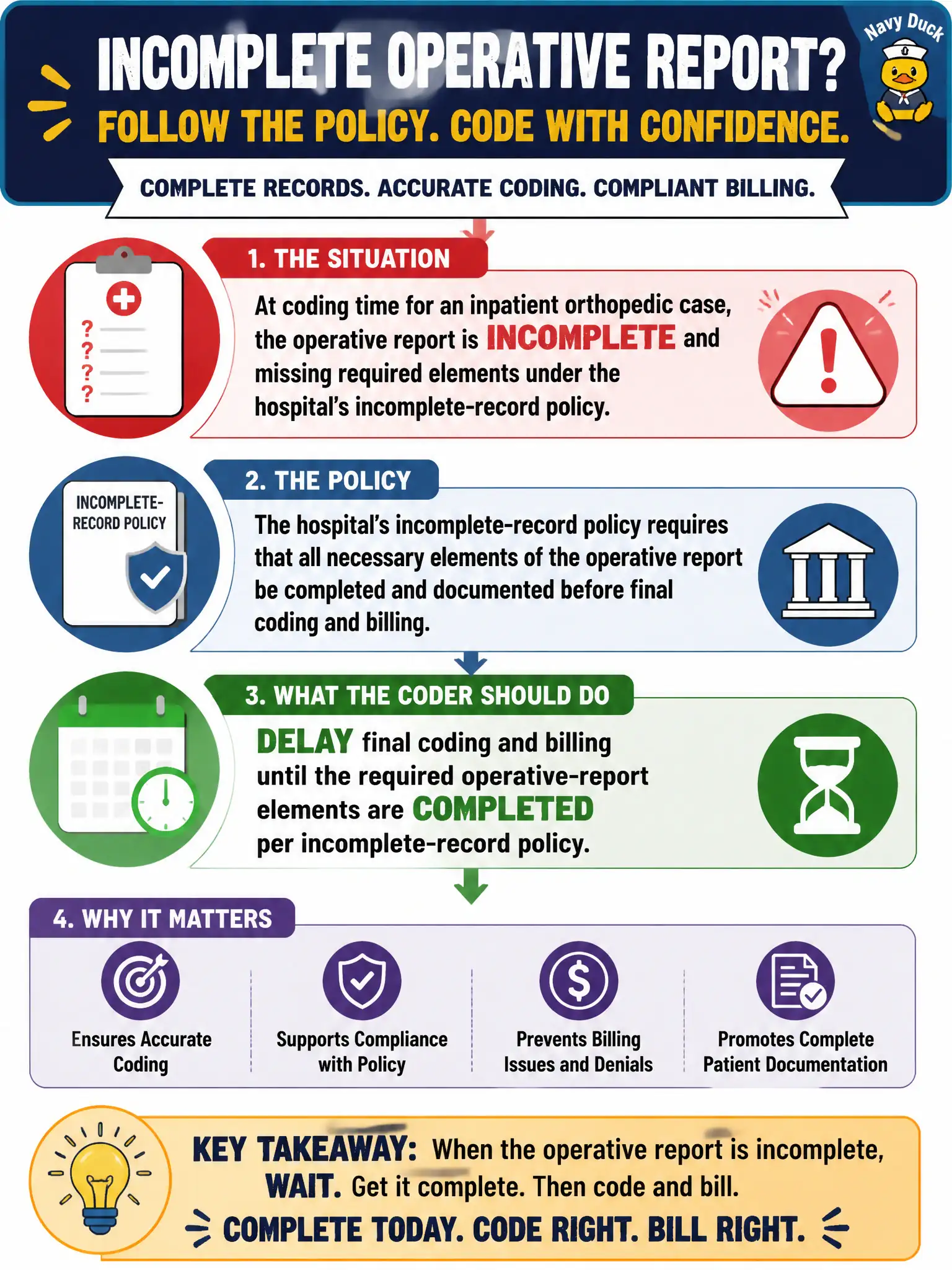
At coding time for an inpatient orthopedic case, the operative report is incomplete and missing required elements under the hospital's incomplete-record policy. What should the coder do?
Select an answer to reveal the explanation.
Short Explanation
An incomplete op report is like shipping a package with no packing list — you wait for the missing pieces. Hospital incomplete-record policies exist so coders do not invent procedures from stickers or someone else's note. Hold final coding until the required elements are there.
Full Explanation
At coding time for an inpatient orthopedic case, an incomplete operative report missing required elements under the hospital's incomplete-record policy means the coder should delay final coding and billing until those elements are completed. Preference cards and implant stickers can corroborate devices used but do not replace the surgeon's authenticated operative narrative for procedure coding. Billing an unlisted procedure code so revenue posts while the report is unfinished prioritizes cash flow over documentation integrity and may still be wrong. Using a prior similar operative report from another patient as a template for codes is identity and documentation fraud. Exam caveat: incomplete-record holds are a standard HIM control; CCS scenarios expect coders to honor them rather than invent workarounds. Operational check for civic orthopedic services: list missing required operative elements, route the deficiency through HIM, and release final codes only after the completed authenticated report supports the procedure abstract. This discipline protects patients, supports accurate public reporting for municipal hospitals, and keeps the coded abstract defensible when auditors compare codes to the authenticated record.