
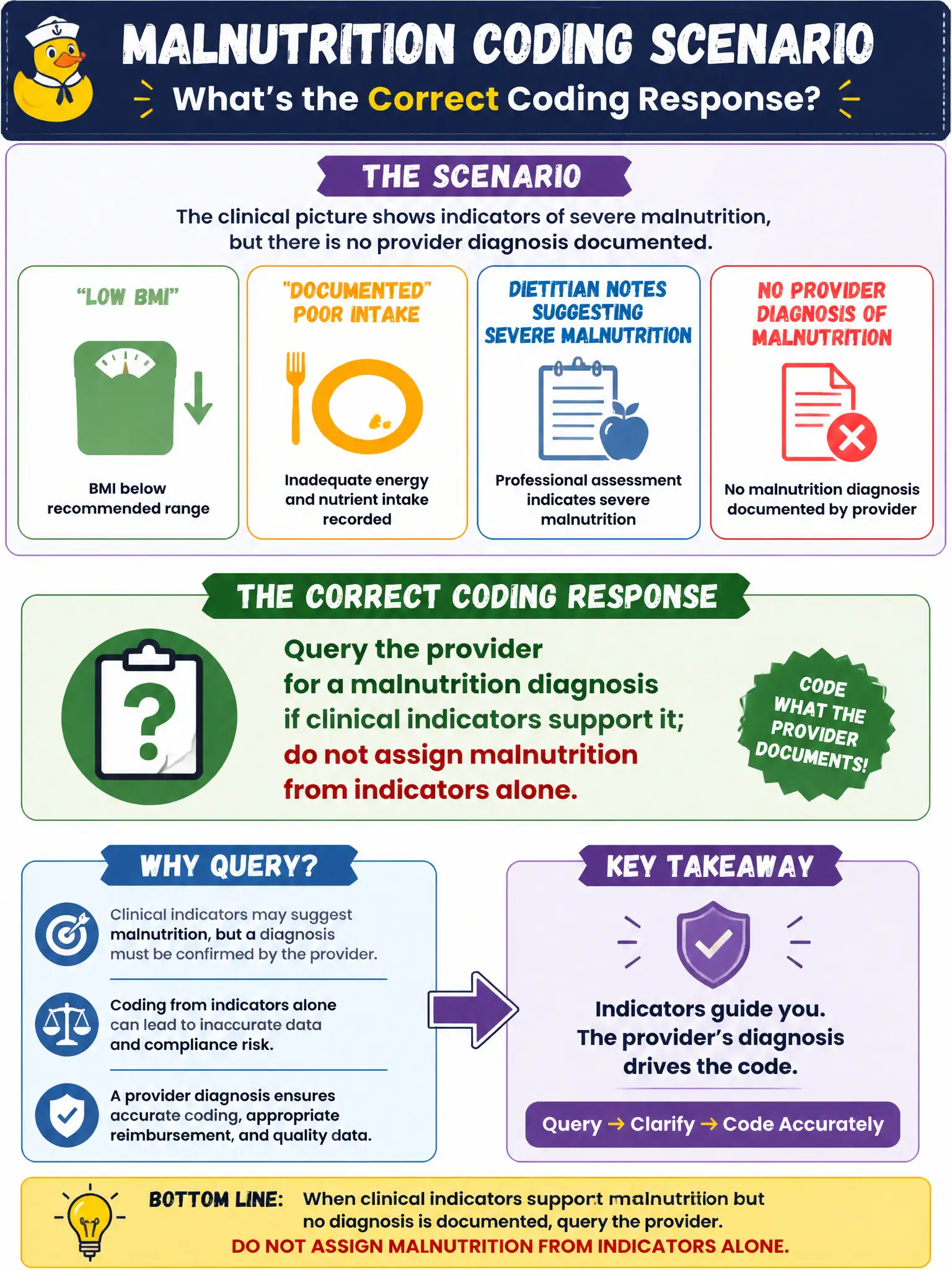
A hospital record shows low BMI, documented poor intake, and dietitian notes suggesting severe malnutrition, but no provider diagnosis of malnutrition appears. What is the correct coding response?
Select an answer to reveal the explanation.
Short Explanation
Clinical indicators are clues on the table; the provider diagnosis is the call that puts the piece in the score. Malnutrition findings without a provider diagnosis mean you ask — you do not invent the code from BMI and dietitian notes alone. Query opportunity, not coder inference.
Full Explanation
A hospital record showing low BMI, documented poor intake, and dietitian notes suggesting severe malnutrition—but no provider diagnosis of malnutrition—calls for querying the provider for a malnutrition diagnosis if clinical indicators support it; do not assign malnutrition from indicators alone. Dietitian assessments are valuable clinical indicators but typically do not independently establish the provider diagnosis required for coding. Ignoring nutrition findings because malnutrition is never a secondary diagnosis is false and may miss clinically significant comorbidity. Coding obesity instead because BMI values always override malnutrition concerns misreads low BMI and invents the opposite condition. Exam caveat: malnutrition severity and clinical criteria evolve; cite the indicators present and use nonleading options rather than asserting severe malnutrition as fact in the query stem. Operational check for municipal hospitals: assemble BMI, intake notes, dietitian assessment, and related labs; query for presence and severity; code malnutrition only after authenticated provider documentation supports it. This discipline protects patients, supports accurate public reporting for municipal hospitals, and keeps the coded abstract defensible when auditors compare codes to the authenticated record.