
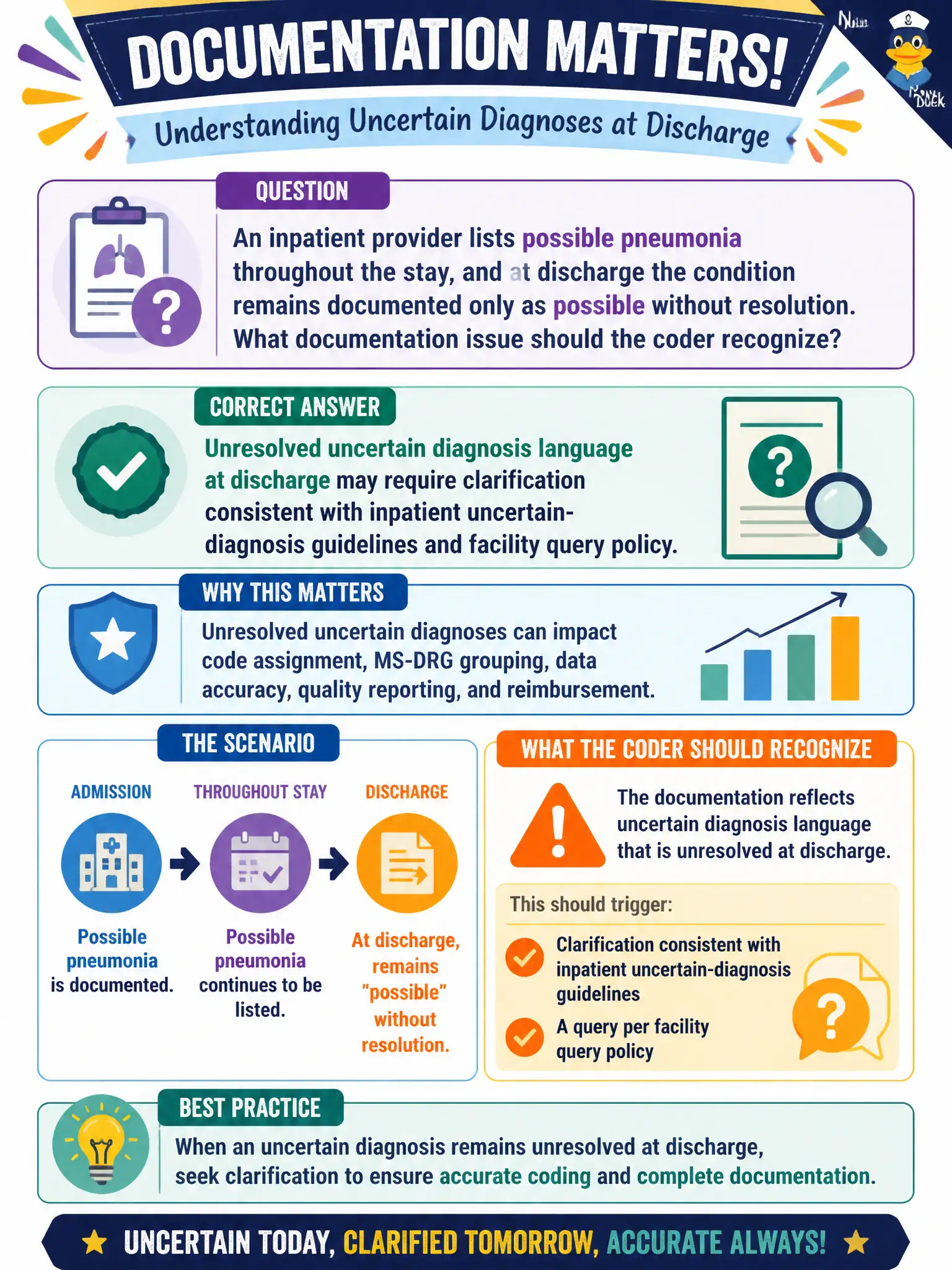
An inpatient provider lists possible pneumonia throughout the stay, and at discharge the condition remains documented only as possible without resolution. What documentation issue should the coder recognize?
Select an answer to reveal the explanation.
Short Explanation
Inpatient uncertain wording is a special rule set — like a sticky note that can count if it is still stuck at discharge. When possible stays possible with no resolution, you may need clarification rather than silently upgrading or deleting it. Follow the uncertain-diagnosis guidance and your query policy.
Full Explanation
When an inpatient provider lists possible pneumonia throughout the stay and at discharge the condition remains documented only as possible without resolution, the coder should recognize that unresolved uncertain diagnosis language at discharge may require clarification consistent with inpatient uncertain-diagnosis guidelines and facility query policy. It is incorrect that possible diagnoses are never coded for hospital inpatients under any circumstance; Official Guidelines provide pathways for uncertain diagnoses at discharge in the inpatient setting. Coding confirmed sepsis instead because possible pneumonia always implies bloodstream infection invents a different disease. Changing possible to confirmed without a query so the claim can drop sooner falsifies certainty. Exam caveat: know when inpatient uncertain diagnosis coding applies versus when facility policy expects clarification for conflicting or hanging possible language. Operational check: review the discharge summary for final certainty; if possible language persists without guideline-supported coding clarity, query per civic hospital policy before final pneumonia coding. This discipline protects patients, supports accurate public reporting for municipal hospitals, and keeps the coded abstract defensible when auditors compare codes to the authenticated record.