
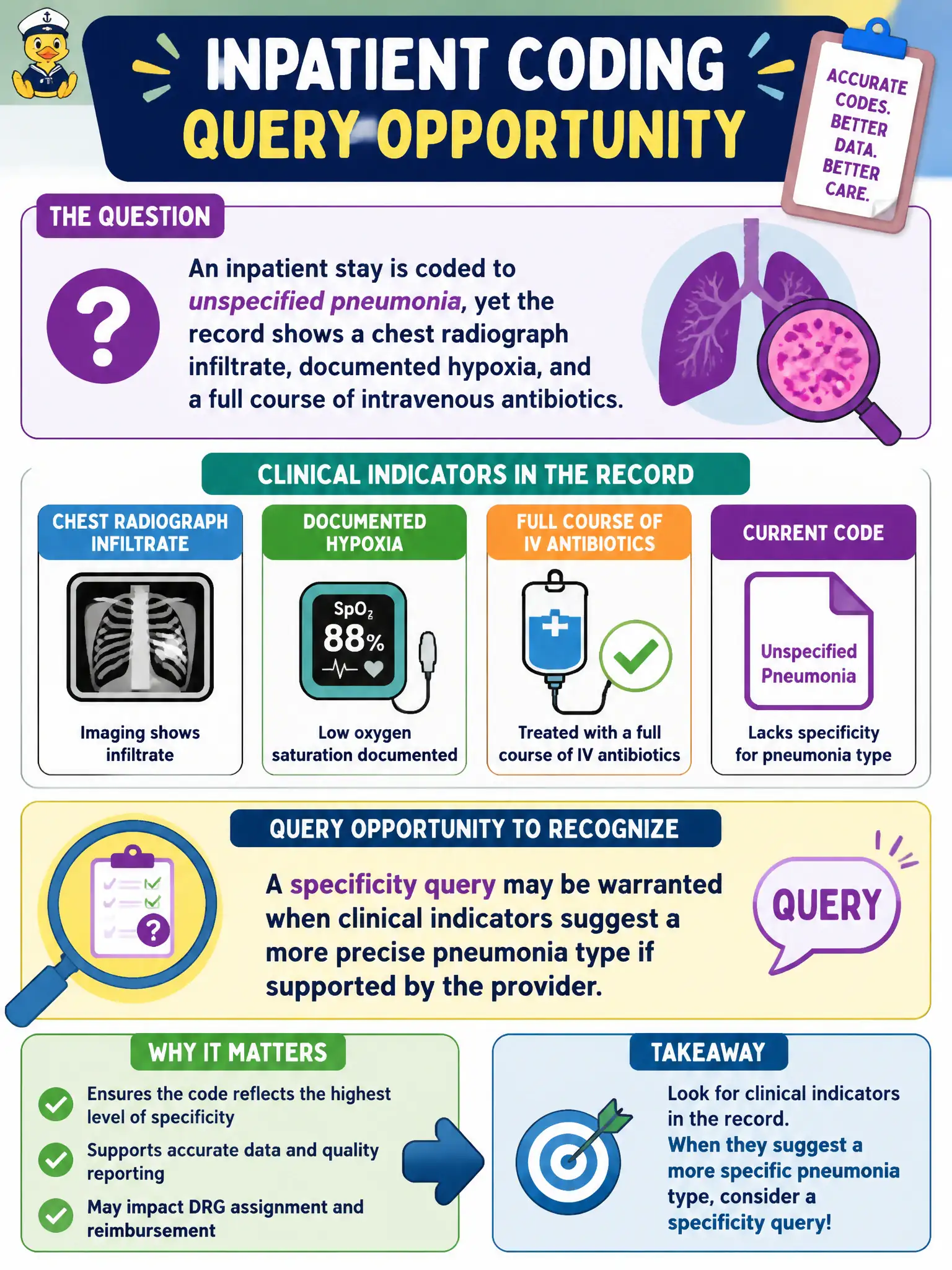
An inpatient stay is coded to unspecified pneumonia, yet the record shows a chest radiograph infiltrate, documented hypoxia, and a full course of intravenous antibiotics. What query opportunity should the inpatient coder recognize?
Select an answer to reveal the explanation.
Short Explanation
Unspecified pneumonia with a rich clinical picture is like a blank name tag on a full patient chart — the story is there, but the label is thin. When infiltrates, hypoxia, and IV antibiotics sit in the record, that is often a cue to ask the provider whether a more specific pneumonia type fits. Do not invent the type yourself; ask.
Full Explanation
An inpatient stay coded to unspecified pneumonia while the record shows a chest radiograph infiltrate, documented hypoxia, and a full course of intravenous antibiotics presents a specificity query opportunity when clinical indicators suggest a more precise pneumonia type if supported by the provider. The coder should not automatically upgrade unspecified pneumonia to aspiration pneumonia based on hypoxia alone, because hypoxia does not equal aspiration etiology. Deleting the pneumonia code because unspecified codes are never reportable for inpatients is false; unspecified codes remain valid when specificity is unsupported. Querying only for present-on-admission status and never for pneumonia specificity ignores a legitimate clarification pathway. Exam caveat: query for type only when indicators reasonably support greater specificity; do not invent aspiration, bacterial species, or ventilator association without basis. Operational check in civic medical wards: assemble imaging, oxygen needs, cultures, and antibiotic rationale; if they suggest a more specific pneumonia, send a nonleading specificity query before leaving an avoidable unspecified code. This discipline protects patients, supports accurate public reporting for municipal hospitals, and keeps the coded abstract defensible when auditors compare codes to the authenticated record.