
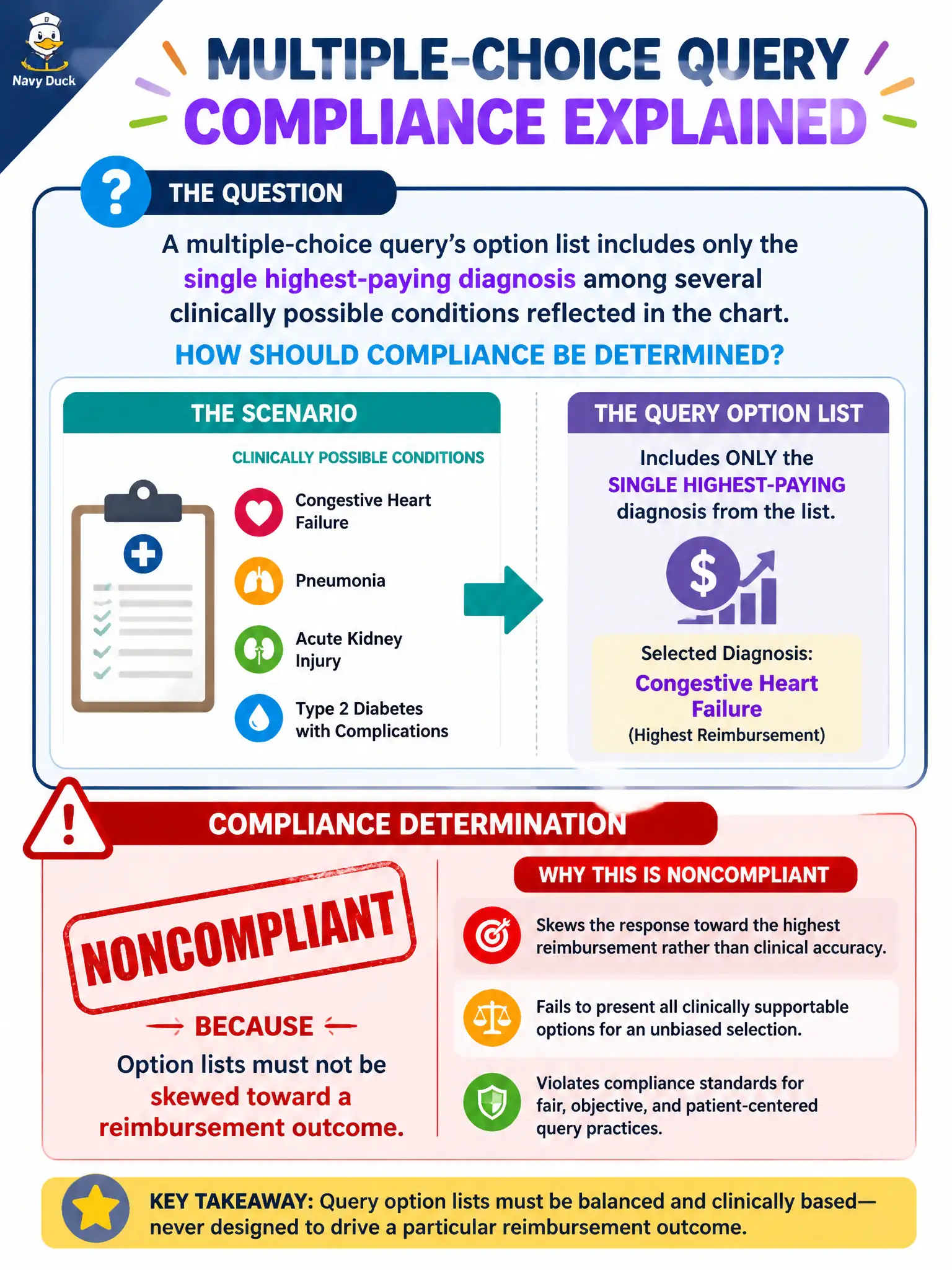
A multiple-choice query’s option list includes only the single highest-paying diagnosis among several clinically possible conditions reflected in the chart. How should compliance be determined?
Select an answer to reveal the explanation.
Short Explanation
If the option list is really just the jackpot diagnosis, the deck is stacked. Skewing choices toward payment is noncompliant. Balance the list to the clinical picture.
Full Explanation
A multiple-choice query whose option list includes only the single highest-paying diagnosis among several clinically possible conditions reflected in the chart is noncompliant because option lists must not be skewed toward a reimbursement outcome. Ethical design requires clinically reasonable alternatives supported by indicators, not a payment shortlist. Brevity helping busy providers does not excuse biased options. An encoder suggesting that diagnosis first does not make a one-option lucrative list compliant. Having at least one clinical word in the stem cannot salvage a reimbursement-skewed choice set. Exam caveat: include other or unable to determine and omit financial ranking cues when constructing options for municipal CDI programs. Operational check: list every clinically reasonable condition supported by this record, present them evenly, remove payment ordering, and peer-review before sending. This discipline protects patients, supports accurate public reporting for municipal hospitals, and keeps the coded abstract defensible when auditors compare codes to the authenticated record. This discipline protects patients, supports accurate public reporting for municipal hospitals, and keeps the coded abstract defensible when auditors compare codes to the authenticated record.