
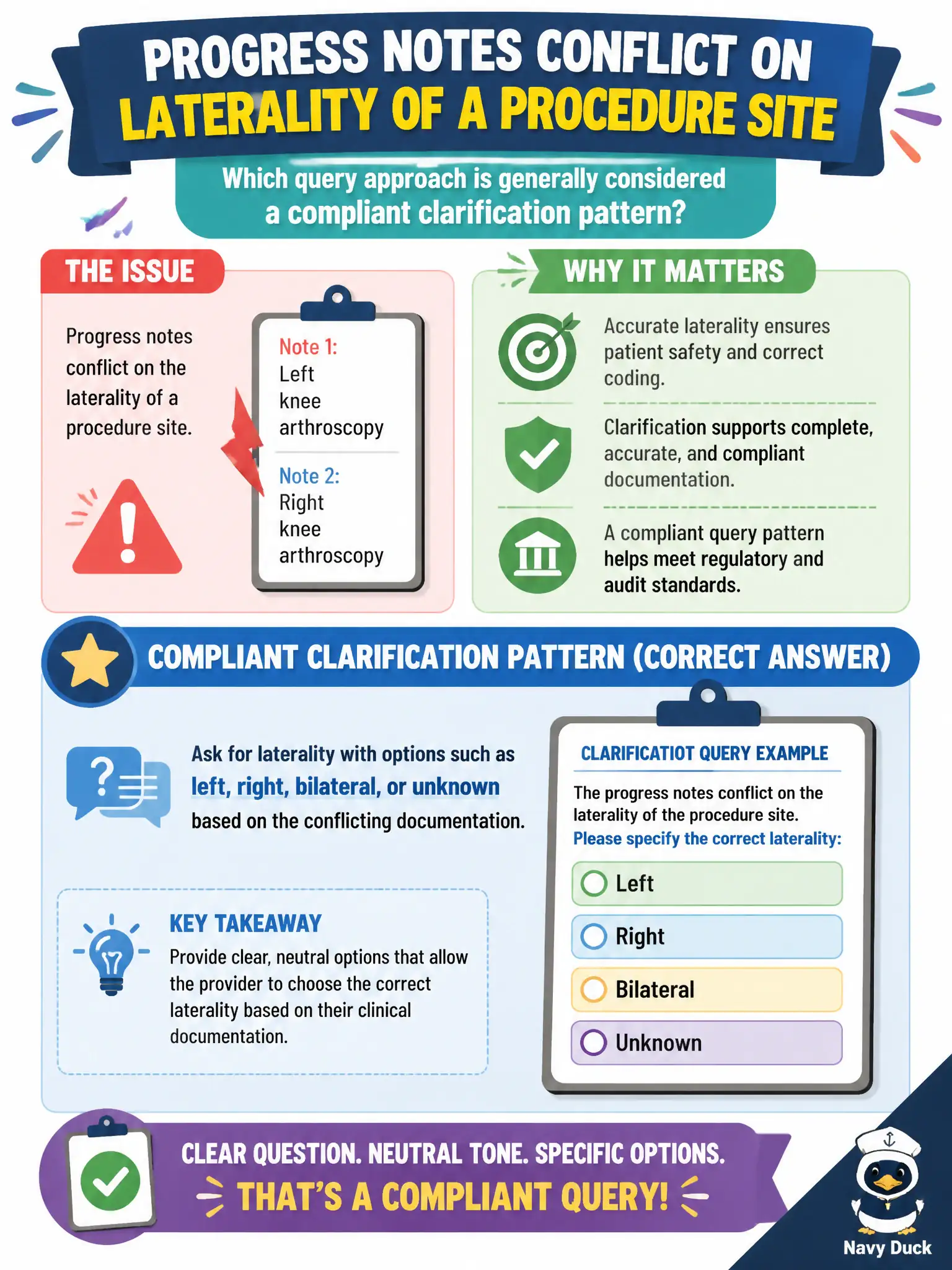
Progress notes conflict on laterality of a procedure site. Which query approach is generally considered a compliant clarification pattern?
Select an answer to reveal the explanation.
Short Explanation
Conflicting left-versus-right notes need a clean laterality question with open options—including unknown. That’s a classic compliant pattern. Don’t pick the lucrative side and move on.
Full Explanation
When progress notes conflict on laterality of a procedure site, a compliant clarification pattern asks for laterality with options such as left, right, bilateral, or unknown based on the conflicting documentation. That structure is nonleading, mirrors the chart conflict, and allows uncertainty. Asking only "please document left so coding can proceed" is leading because it nominates the preferred side. Omitting laterality coding permanently without contacting the provider abandons required specificity when clarification is obtainable. Selecting the laterality that maps to the higher-paying procedure code and skipping the query is reimbursement-driven assumption coding. Exam caveat: laterality conflicts between imaging, consents, and operative notes are common—resolve them before final PCS or CPT assignment rather than guessing. Operational check for county surgical cases: quote the conflicting laterality statements in the query, offer balanced side options plus unknown, and wait for an authenticated response before locking side-specific codes. This discipline protects patients, supports accurate public reporting for municipal hospitals, and keeps the coded abstract defensible when auditors compare codes to the authenticated record.