
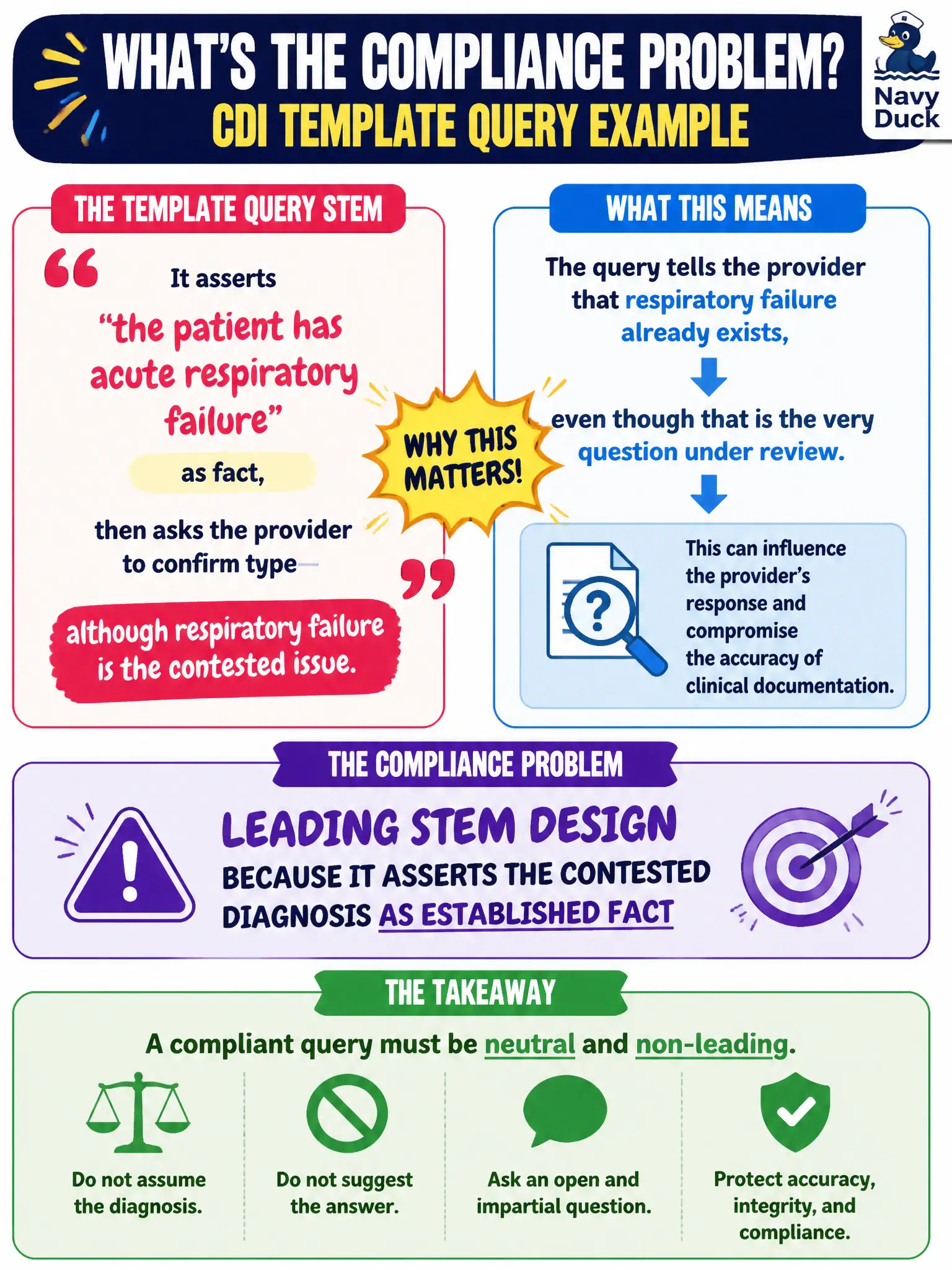
A CDI template query stem asserts “the patient has acute respiratory failure” as fact, then asks the provider to confirm type—although respiratory failure is the contested issue. What compliance problem does this create?
Select an answer to reveal the explanation.
Short Explanation
If the question already declares the diagnosis true, the “clarification” is theater. Stems must stay neutral on the contested point. Asserting it as fact is leading.
Full Explanation
A CDI template query stem that asserts "the patient has acute respiratory failure" as fact and then asks only to confirm type—although respiratory failure itself is the contested issue—creates a leading stem design problem. It presupposes the diagnosis under dispute and pressures the provider to accept existence while debating subtype. Templates are not automatically compliant merely because they are pre-approved formatting shells; content can still lead. Standardized fonts do not cure leading assertions. Labeling the issue as only formatting ignores the substantive leading-content defect. Exam caveat: when existence of acute respiratory failure is uncertain, ask whether the condition is present and, if so, what type, using indicators and nonleading options—do not declare it first. Operational check for civic templates: remove factual assertions of contested diagnoses from stems, insert chart indicators, and rephrase as clarification requests before use. This discipline protects patients, supports accurate public reporting for municipal hospitals, and keeps the coded abstract defensible when auditors compare codes to the authenticated record. This discipline protects patients, supports accurate public reporting for municipal hospitals, and keeps the coded abstract defensible when auditors compare codes to the authenticated record.