
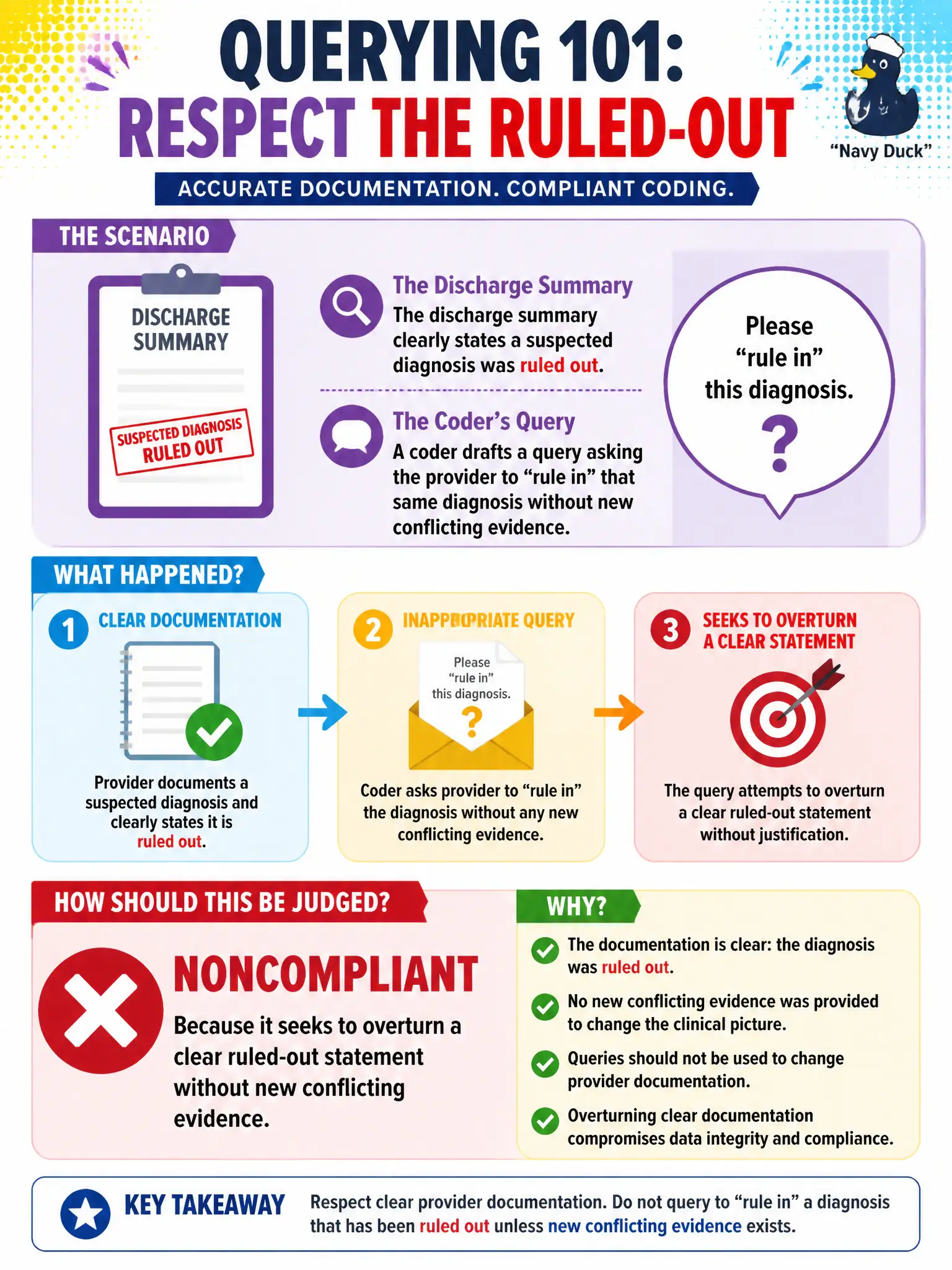
The discharge summary clearly states a suspected diagnosis was ruled out. A coder drafts a query asking the provider to “rule in” that same diagnosis without new conflicting evidence. How should this be judged?
Select an answer to reveal the explanation.
Short Explanation
If the provider already said “ruled out,” don’t ping them to rule it back in just for coding hope. No new conflicting evidence means leave it alone. That query fights the record.
Full Explanation
The discharge summary clearly stating that a suspected diagnosis was ruled out is authenticated clinical resolution. A coder draft that asks the provider to "rule in" that same diagnosis without new conflicting evidence is noncompliant because it seeks to overturn a clear ruled-out statement. Compliant queries clarify conflicts or missing specificity; they do not reopen settled ruled-out language to chase severity. Claiming ruled-out diagnoses should always be reopened at coding invents a duty that contradicts documentation integrity. Reopening solely because ruling the diagnosis back in would add an MCC is payment-driven and improper. Nursing still listing the condition on a care plan does not authorize overturning an attending's ruled-out discharge statement without new conflicting clinical evidence. Exam caveat: if later notes truly conflict with the ruled-out statement, a nonleading clarification may be appropriate—but absence of conflict means code the ruled-out status as documented. Operational check in civic hospitals: search for new contradictory indicators after the ruled-out statement; if none exist, do not query to resurrect the diagnosis. This discipline protects patients, supports accurate public reporting for municipal hospitals, and keeps the coded abstract defensible when auditors compare codes to the authenticated record.