
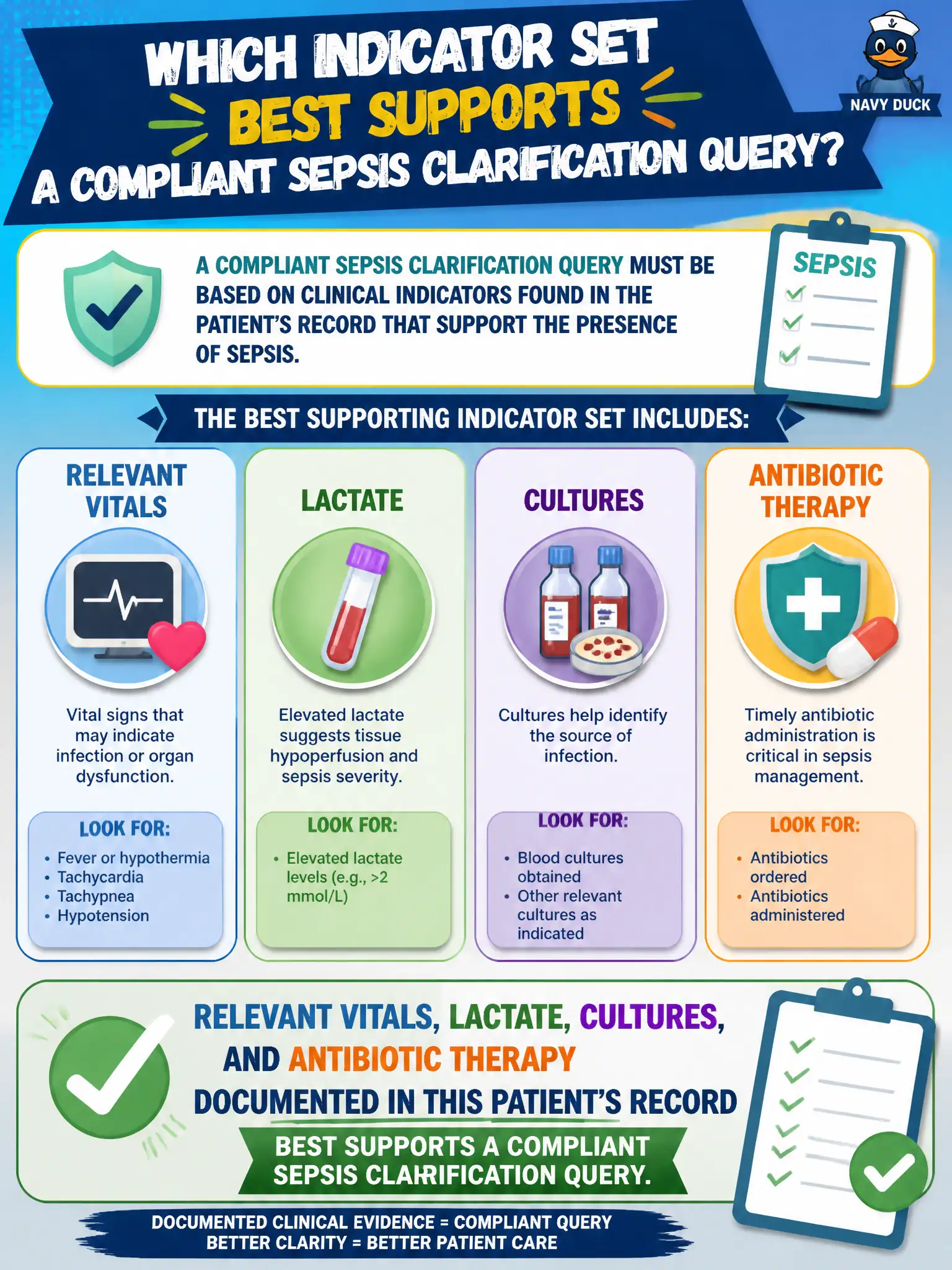
Which indicator set best supports a compliant sepsis clarification query?
Select an answer to reveal the explanation.
Short Explanation
Good sepsis queries point to this patient’s vitals, lactate, cultures, and antibiotics—not a poster on the break-room wall. Indicators must live in the chart. That’s what makes the clarification clinically grounded.
Full Explanation
The indicator set that best supports a compliant sepsis clarification query is relevant vitals, lactate, cultures, and antibiotic therapy documented in this patient's record. Those elements tie the question to observable care for the encounter and explain why clarification is requested without asserting sepsis as established fact. Saying only "please add sepsis for quality metrics" is payment- and scorecard-driven and noncompliant. A generic textbook list of sepsis criteria with no link to this encounter fails the patient-specific indicator standard expected in ethical CDI. Citing the hospital's average sepsis DRG weight for the fiscal year is openly financial and inappropriate for any ethical query. Exam caveat: indicators must be present in the record being coded; copying a unit poster or order-set checklist without chart linkage does not satisfy compliance expectations. Operational check in civic hospitals: harvest this patient's vitals, lactate, culture results, and antimicrobial therapy into the query; ask a nonleading clarification; file the response permanently before coding sepsis-related detail. This discipline protects patients, supports accurate public reporting for municipal hospitals, and keeps the coded abstract defensible when auditors compare codes to the authenticated record.