
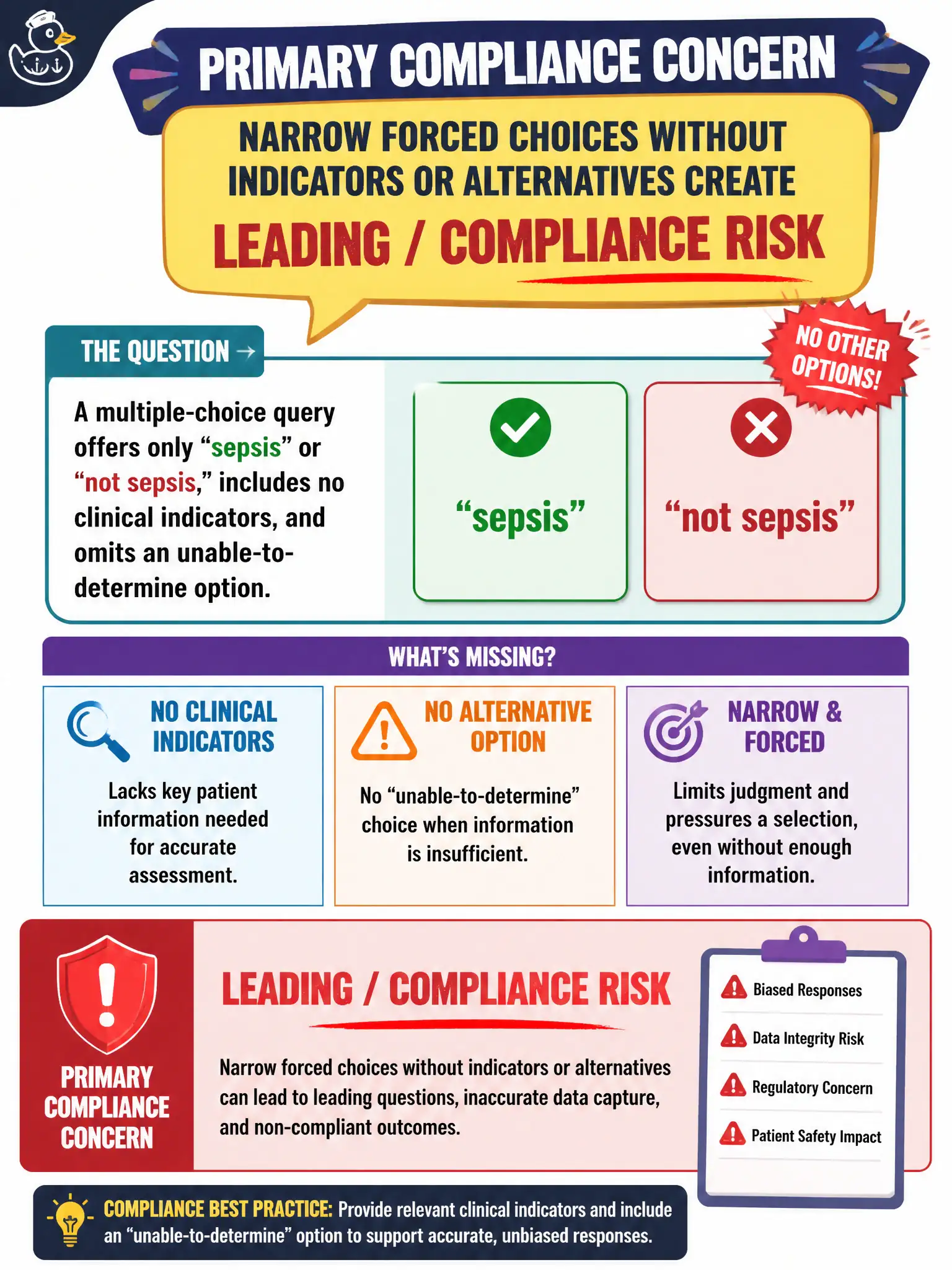
A multiple-choice query offers only “sepsis” or “not sepsis,” includes no clinical indicators, and omits an unable-to-determine option. What is the primary compliance concern?
Select an answer to reveal the explanation.
Short Explanation
Cornering a provider with only “sepsis” or “not sepsis” and no chart evidence is a forced funnel. Add indicators and a real alternative path. Otherwise it’s leading risk.
Full Explanation
A multiple-choice query that offers only "sepsis" or "not sepsis," includes no clinical indicators, and omits an unable-to-determine option creates leading and compliance risk through narrow forced choices. The design pressures a binary commitment without showing why clarification is needed and without allowing residual uncertainty that may be clinically honest. Calling the query ideal because binary choices speed provider response elevates turnaround time over integrity. MCC status for sepsis does not legalize indicator-free forced choices on hospital queries. Omitting indicators is not acceptable merely because the diagnosis name is short. Exam caveat: when infection-spectrum differentials exist, include clinically reasonable alternatives supported by the chart rather than a stark sepsis versus not-sepsis trap. Operational check for county CDI templates: add encounter-specific indicators, expand options beyond a single lucrative label, include other or unable to determine, and strip reimbursement cues before release. This discipline protects patients, supports accurate public reporting for municipal hospitals, and keeps the coded abstract defensible when auditors compare codes to the authenticated record.