
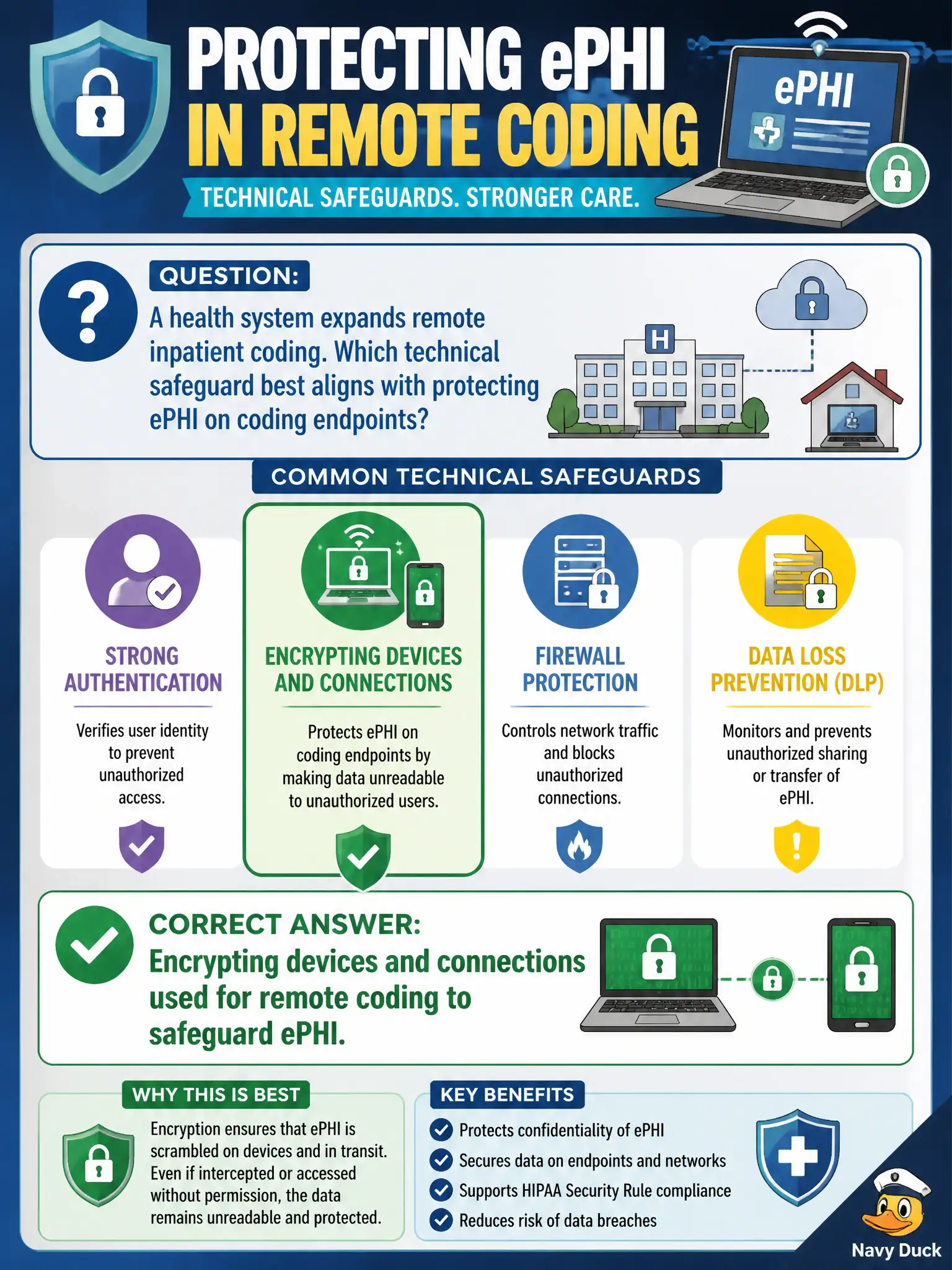
A health system expands remote inpatient coding. Which technical safeguard best aligns with protecting ePHI on coding endpoints?
Select an answer to reveal the explanation.
Short Explanation
Remote coding is fine; unprotected endpoints aren’t. Encrypt the laptop and the tunnel—treat ePHI like it can walk out of a coffee shop if you don’t lock it down.
Full Explanation
As a health system expands remote inpatient coding, encrypting devices and connections used for remote coding best aligns with protecting ePHI on coding endpoints. Civic remote programs must assume coffee shops and home networks are hostile unless tunnels and disk encryption protect PHI. Emailing unencrypted chart abstracts to personal webmail for after-hours convenience is an unsecured transmission. Storing production ePHI on unlocked shared USB drives passed between remote coders expands loss and disclosure risk. Posting temporary passwords on team chat channels undermines authentication security. Exam caveat: remote coding is permitted with safeguards; convenience workarounds are not safeguards. Operational check: mandate full-disk encryption and VPN/VDI, ban personal email and USB for ePHI, enforce password vault practices, and verify remote endpoint compliance before granting production access. Treat encoders, groupers, and CAC as assistants inside civic HIM: useful for speed, never a substitute for documentation review, Official Guidelines, or PHI safeguards. Re-read the authenticated record before finalizing whenever tools, payers, or dashboards push a result the documentation does not support.