
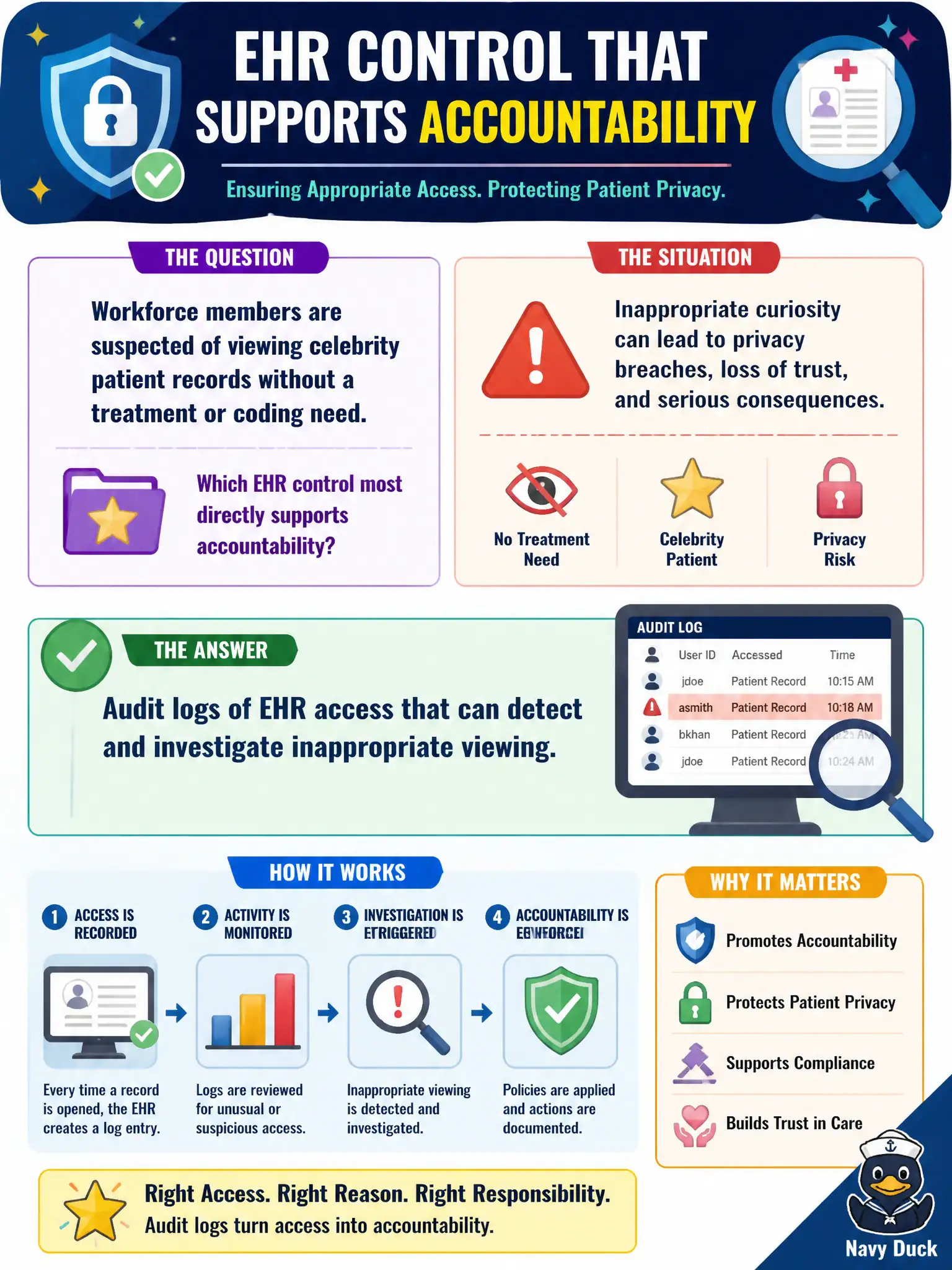
Workforce members are suspected of viewing celebrity patient records without a treatment or coding need. Which EHR control most directly supports accountability?
Select an answer to reveal the explanation.
Short Explanation
Audit logs are the hospital’s security camera for the chart—who opened what, and when. That’s how snooping gets caught, not by hoping people police themselves.
Full Explanation
When workforce members are suspected of viewing celebrity patient records without a treatment or coding need at a civic hospital, audit logs of EHR access that can detect and investigate inappropriate viewing most directly support accountability. Public figures still deserve private records; audit trails are the hospital's accountability camera. Disabling unique user IDs so staff share one generic login destroys the very attribution audits need. Publishing patient census lists on the public intranet for transparency creates additional impermissible exposure. Turning off break-glass access permanently so emergency care cannot be documented harms care rather than fixing curiosity access—break-glass should be logged, not abolished wholesale. Exam caveat: audit controls detect snooping; shared logins and public census posts worsen privacy risk. Operational check: maintain unique IDs, monitor VIP access reports, investigate anomalies, sanction confirmed curiosity viewing, and keep emergency break-glass available with heightened auditing. Treat encoders, groupers, and CAC as assistants inside civic HIM: useful for speed, never a substitute for documentation review, Official Guidelines, or PHI safeguards.