
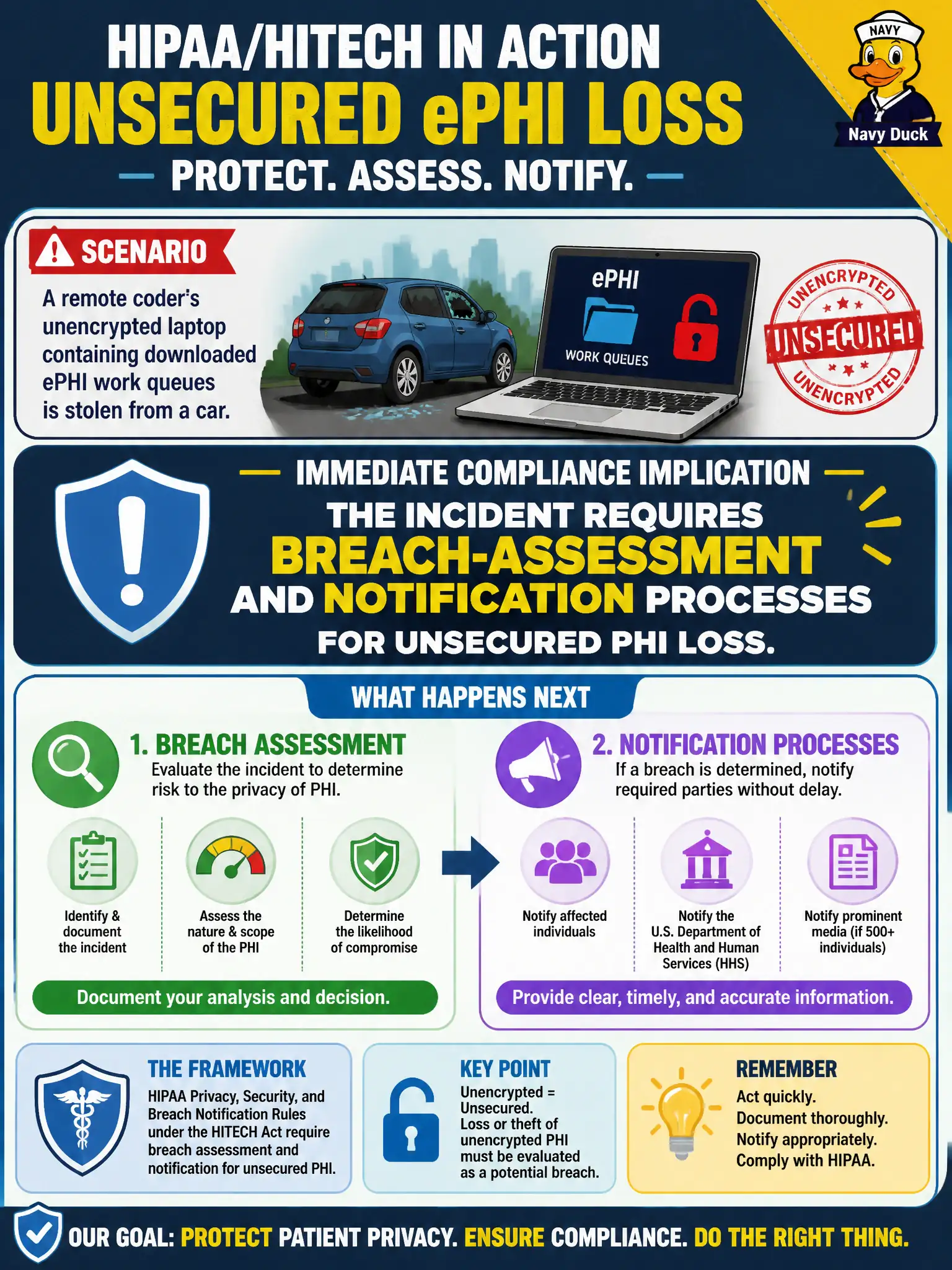
A remote coder’s unencrypted laptop containing downloaded ePHI work queues is stolen from a car. What is the immediate compliance implication under the HIPAA/HITECH framework?
Select an answer to reveal the explanation.
Short Explanation
Unencrypted laptop plus PHI plus theft equals “call privacy now,” not “hope nobody notices.” Unsecured PHI walking out the door starts the breach-assessment clock.
Full Explanation
A remote coder's unencrypted laptop containing downloaded ePHI work queues stolen from a car triggers breach-assessment and notification processes for unsecured PHI loss under the HIPAA/HITECH framework. Civic remote work expands access and risk; unencrypted devices are a classic incident trigger. Excluding theft from breach rules if the coder was off the clock invents a temporal loophole. Claiming only paper charts can trigger breach duties while electronic laptop loss is never reportable reverses modern ePHI reality. Recreating PHI from memory and avoiding privacy/security notification compounds the incident with concealment. Exam caveat: unsecured ePHI loss starts assessment clocks regardless of after-hours status. Operational check: immediately notify privacy/security, preserve facts about what data were on the device, assist risk assessment and notifications, encrypt all coding endpoints going forward, and prohibit local downloads of ePHI work queues when policy requires remote-view-only access. Treat encoders, groupers, and CAC as assistants inside civic HIM: useful for speed, never a substitute for documentation review, Official Guidelines, or PHI safeguards. Re-read the authenticated record before finalizing whenever tools, payers, or dashboards push a result the documentation does not support.