
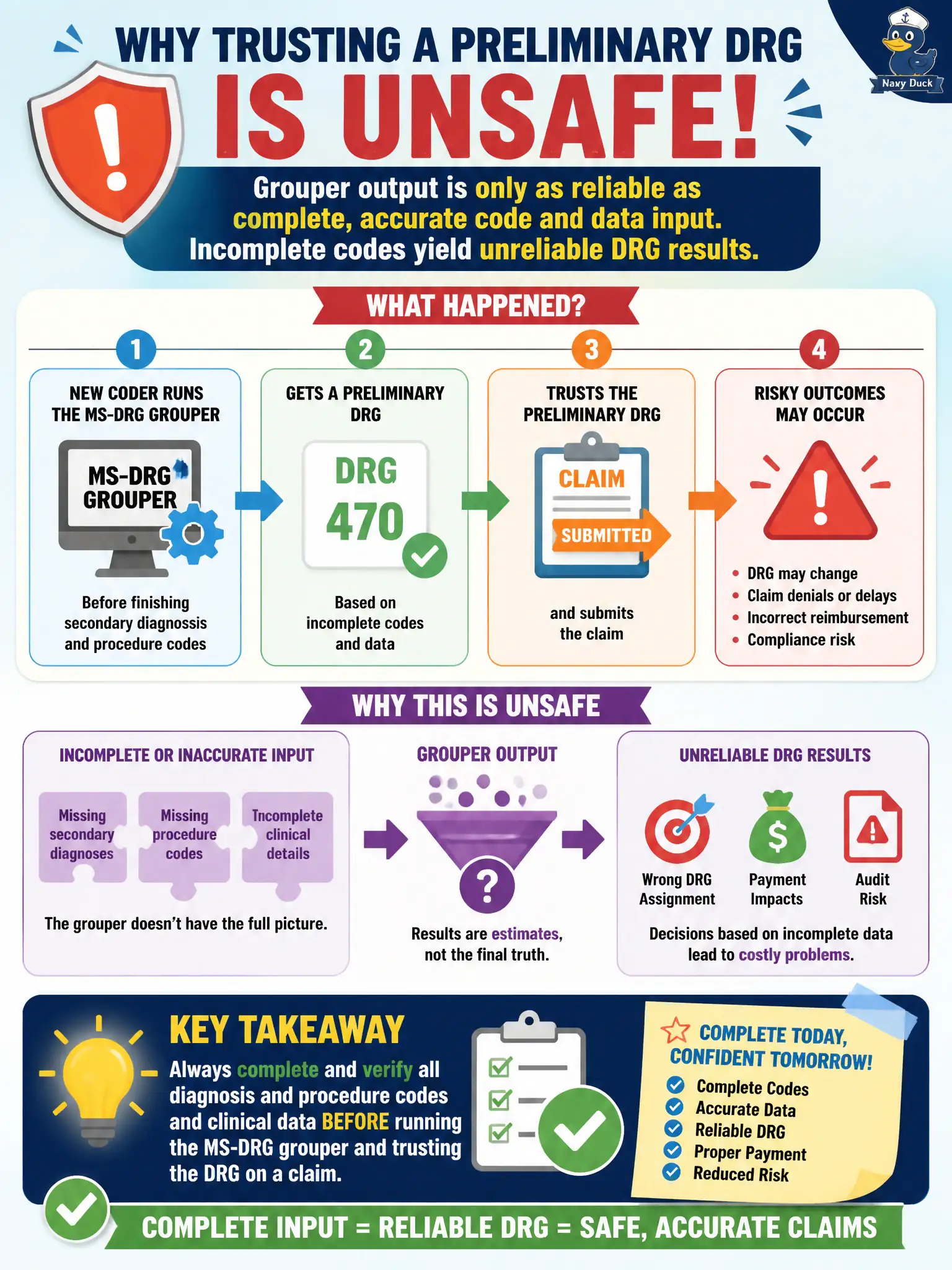
A new coder runs the MS-DRG grouper before finishing secondary diagnoses and procedure codes, then trusts the preliminary DRG on the claim. Why is this unsafe?
Select an answer to reveal the explanation.
Short Explanation
Running the grouper on a half-built code set is like weighing a suitcase before you’ve packed it. The number looks official, but it’s not trustworthy until every code that belongs is in there.
Full Explanation
Running the MS-DRG grouper before finishing secondary diagnoses and procedure codes, then trusting the preliminary DRG on a civic hospital claim, is unsafe because grouper output is only as reliable as complete, accurate code and data input; incomplete codes yield unreliable DRG results. Public payment estimates based on half-built abstracts mislead finance and compliance. Believing groupers never use secondary diagnoses so early runs are always final is false—CCs/MCCs and procedures matter. Assuming incomplete coding always increases payment preferred by compliance inverts integrity goals. Thinking preliminary DRGs freeze permanently ignores recalculation after code changes. Exam caveat: preliminary grouping is a draft, not a locked payment determination. Operational check: finish diagnoses, procedures, and required indicators before final group acceptance; re-group after amendments; and prohibit claim drop on known-incomplete code sets. Treat encoders, groupers, and CAC as assistants inside civic HIM: useful for speed, never a substitute for documentation review, Official Guidelines, or PHI safeguards. Re-read the authenticated record before finalizing whenever tools, payers, or dashboards push a result the documentation does not support.