
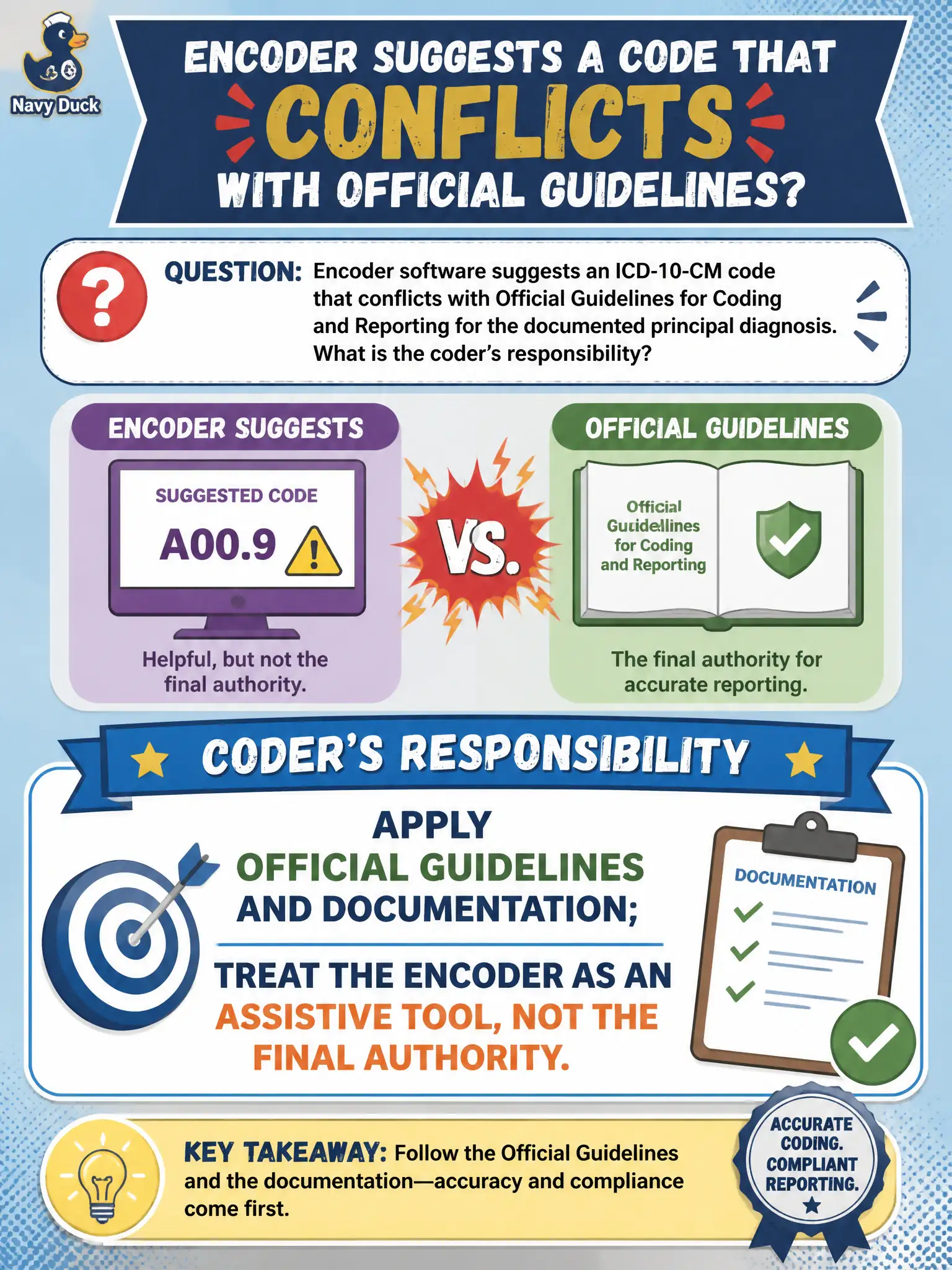
Encoder software suggests an ICD-10-CM code that conflicts with Official Guidelines for Coding and Reporting for the documented principal diagnosis. What is the coder’s responsibility?
Select an answer to reveal the explanation.
Short Explanation
An encoder is like GPS—great for finding routes, terrible if you follow it off a cliff when the road signs say otherwise. Guidelines and the chart still win; the software just helps you look things up.
Full Explanation
If encoder software suggests an ICD-10-CM code that conflicts with Official Guidelines for the documented principal diagnosis at a county hospital, the coder must apply Official Guidelines and documentation, treating the encoder as an assistive tool rather than the final authority. Civic coding integrity cannot be outsourced to defaults. Accepting the encoder because software is supposedly the authoritative standard elevates a tool above national guidelines. Changing clinical documentation to match the encoder so edits clear corrupts the record to please software. Disabling all encoder edits facility-wide to speed throughput removes useful alerts without fixing judgment. Exam caveat: encoders assist; Official Guidelines and the health record govern. Operational check: when suggestions conflict, re-read guidelines and notes, override unsupported suggestions, report recurring bad defaults to HIM/IT for content updates, and include encoder-override accuracy in quality reviews. Treat encoders, groupers, and CAC as assistants inside civic HIM: useful for speed, never a substitute for documentation review, Official Guidelines, or PHI safeguards. Re-read the authenticated record before finalizing whenever tools, payers, or dashboards push a result the documentation does not support.