
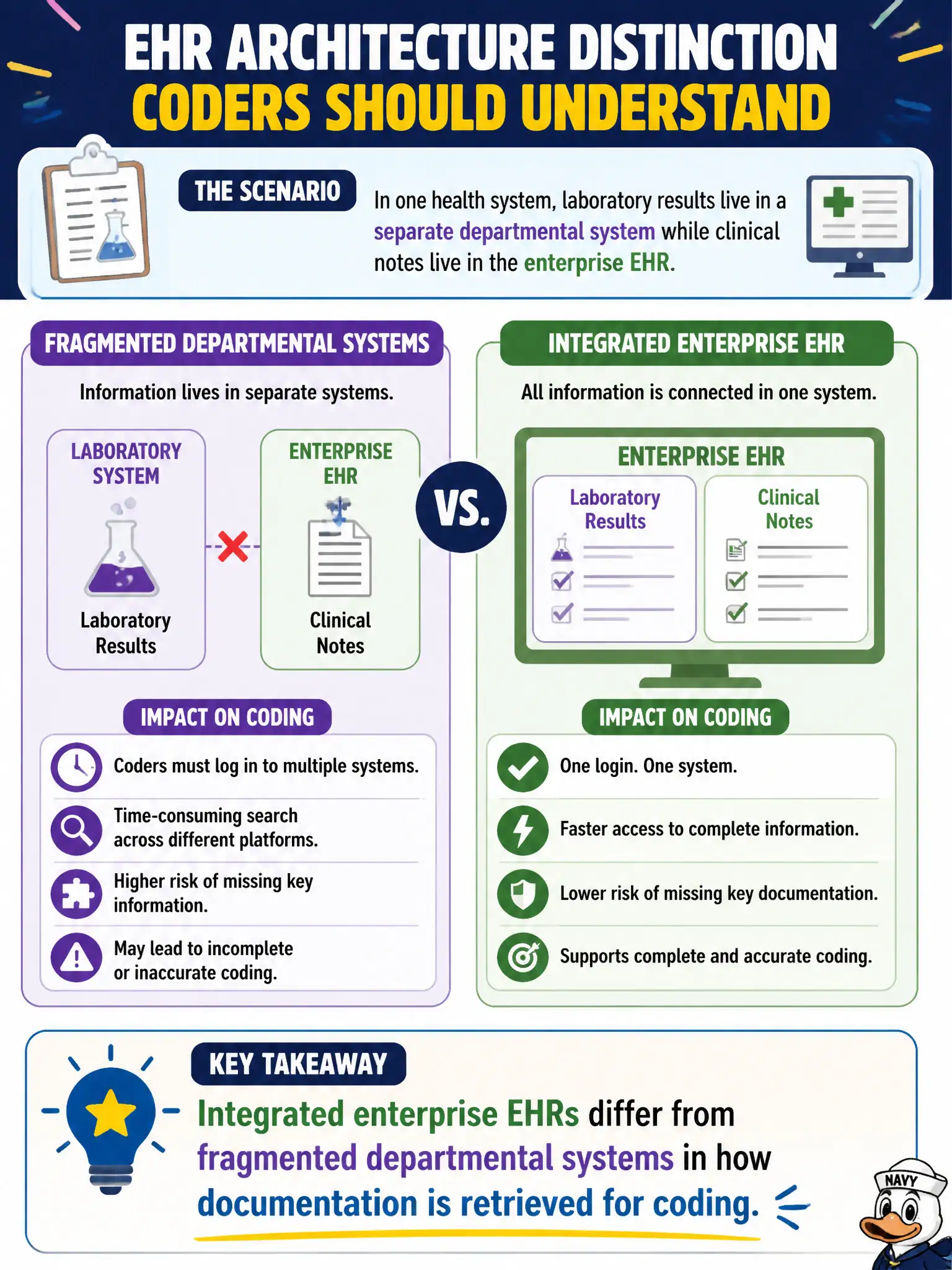
In one health system, laboratory results live in a separate departmental system while clinical notes live in the enterprise EHR. What basic EHR architecture distinction should a coder understand?
Select an answer to reveal the explanation.
Short Explanation
When lab lives in one silo and notes in another, you are in fragmented territory—not a single integrated EHR treasure chest. Coders may need extra hops to see the full story. Architecture shapes retrieval, not just IT pride.
Full Explanation
In a municipal health system where laboratory results live in a separate departmental system while clinical notes live in the enterprise EHR, coders must understand that integrated enterprise EHRs differ from fragmented departmental systems in how documentation is retrieved for coding. Civic interoperability gaps are common; architecture shapes whether labs appear in one view or require extra hops. Believing separate lab systems mean results are never part of the legal medical record is incorrect when results are used in care and filed appropriately. Assuming fragmented systems always auto-merge into a single coding view without interfaces overstates integration. Claiming only integrated EHRs can generate UB-04 claims confuses clinical architecture with billing systems. Exam caveat: fragmentation increases retrieval risk of missing coding-critical results. Operational check: confirm interface feeds or dual-system access for labs, review results relevant to diagnoses before final coding, escalate missing interfaces to IT/HIM, and document retrieval steps in coding procedures. Treat encoders, groupers, and CAC as assistants inside civic HIM: useful for speed, never a substitute for documentation review, Official Guidelines, or PHI safeguards.